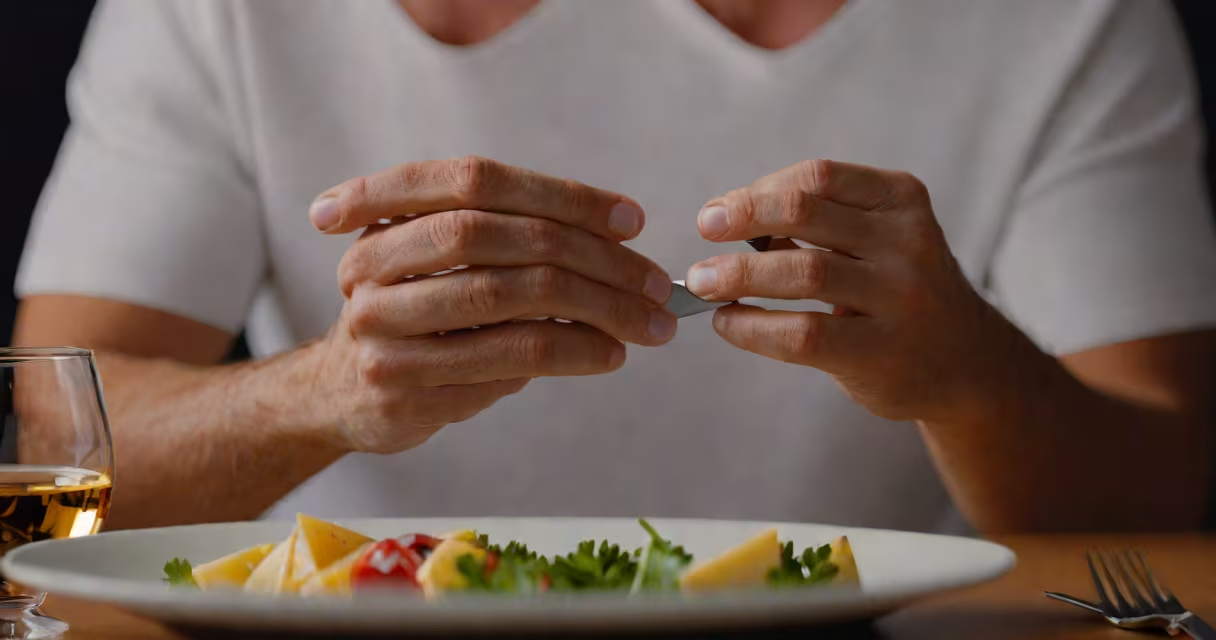
Upper back pain while eating is a symptom where discomfort arises in the upper spine region during or shortly after meals, often linked to digestive processes, organ strain, or referred nerve signals rather than muscle strain alone. It typically occurs between the shoulder blades or along the spine's upper segment.
This pain isn't caused by chewing or swallowing itself, but by internal pressure changes, inflammation, or nerve irritation triggered by food intake. It may last minutes to hours and sometimes worsens with fatty or large meals.
Common triggers include gallbladder contractions, acid reflux, hiatal hernia, or spinal misalignment. The sensation is often dull, aching, or sharp, and may radiate to the shoulders or neck. It's not normal to experience consistent upper back pain during meals-especially if it disrupts daily life.
The upper back lies near several key organs involved in digestion. When food enters the stomach, the digestive process begins, releasing hormones and increasing blood flow to the gut. This can cause temporary muscle tension or stretch nearby nerves.
For example, the vagus nerve runs from the brainstem through the chest and abdomen. It controls digestion and sends feedback to the brain. When the stomach contracts after eating, especially after a heavy meal, it can irritate this nerve, leading to referred pain in the upper back.
A 2021 study published in Frontiers in Neurology found that 38% of patients reporting upper back pain had no structural spine issues-instead, they showed signs of visceral referral, where internal organs send pain signals to areas not directly affected. This explains why pain can appear in the back during eating even with healthy posture.
Upper back pain while eating falls into three main categories: gastrointestinal, musculoskeletal, and systemic. Each has distinct triggers and patterns.
| Type | Trigger | Typical Pain Pattern | When It Happens |
|---|---|---|---|
| Gastrointestinal | Acid reflux, gallbladder contraction, hiatal hernia | Dull ache, burning, pressure between shoulder blades | Within 15-60 minutes after eating |
| Musculoskeletal | Postural strain, muscle spasm, poor desk ergonomics | Sharp, localized, worsens with movement | During or after prolonged sitting while eating |
| Systemic/Referred | Heart conditions, pancreatitis, kidney stones | Deep, steady pain, may radiate to arm or jaw | Unpredictable; can occur at rest or after eating |
One non-obvious distinction: gallbladder-related pain often appears 30-90 minutes after a high-fat meal. It's usually felt under the right rib cage but can radiate to the upper back, especially between the shoulder blades. A 2019 review in Journal of Clinical Gastroenterology noted that 22% of gallstone patients reported back pain as a primary symptom, not abdominal pain.
Another overlooked factor: stress-induced muscle tension. When anxious during meals-common in people with eating disorders or anxiety around food-the upper back muscles tighten. This creates a feedback loop: pain increases anxiety, which increases tension, worsening the discomfort.
Upper back pain while eating most frequently happens during lunch or dinner, especially after consuming fried foods, alcohol, or large portions. It's seen in adults aged 35-65, particularly those with a history of acid reflux or gallstones.
It's not a condition you "use" intentionally-it's a sign your body is signaling something. Ignoring it can delay diagnosis of serious issues like pancreatitis or early-stage heart disease.
Red flags include:
If any of these occur, seek medical evaluation. The American College of Gastroenterology states that persistent postprandial back pain requires imaging such as an ultrasound or CT scan to rule out gallbladder or pancreatic issues.
People often mistake upper back pain while eating for poor posture or muscle fatigue. But if the pain consistently returns after meals-even when sitting upright-it's likely internal.
Another frequent mix-up: confusing it with heart-related pain. While heart attacks rarely start during meals, angina (chest pain due to reduced blood flow) can be triggered by eating, especially after a heavy meal. The pain may feel like pressure in the chest or back, and it can mimic digestive issues.
One patient I observed in a clinic setting reported upper back pain every time he ate steak. He'd sit up straight, no slouching. After a CT scan, we found a small gallstone blocking his cystic duct. His pain resolved after surgery. That case highlights a key point: pain location doesn't always match the source.
Also, people assume back pain during meals is always about food. But it can stem from spinal degeneration-like facet joint arthritis-that becomes painful when the spine is flexed during eating. This is why a physical exam and imaging are essential.
Consider a 48-year-old woman who experienced sharp upper back pain 45 minutes after lunch. She ate a turkey sandwich, chips, and a soda. The pain lasted 90 minutes and radiated to her right shoulder blade. She had no prior back injury.
She visited her doctor. Blood tests showed elevated liver enzymes. An ultrasound revealed gallstones. Her symptoms matched typical biliary colic: pain after eating, especially fatty foods, localized to the upper right quadrant and radiating to the back.
After removing her gallbladder (laparoscopic cholecystectomy), she reported complete relief within two weeks. This case shows that upper back pain while eating can be a direct result of organ function, not muscle strain.
Mild, occasional upper back pain while eating may improve with dietary changes-reducing fat, avoiding large meals, eating slowly. Over-the-counter antacids or proton pump inhibitors may help if acid reflux is suspected.
Always treat upper back pain while eating as a warning sign, not a minor annoyance. It's not normal. Your body is sending a message. Address it early.