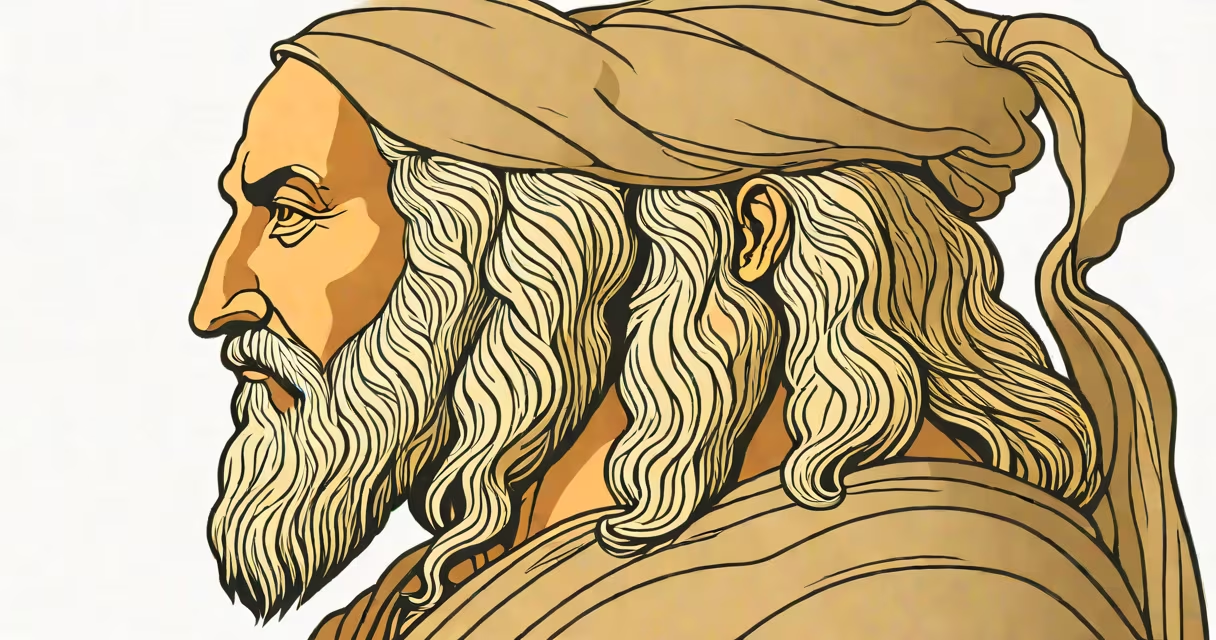
Leonardo da Vinci was not gay by modern definition, but historical records suggest he engaged in same-sex relationships common in Renaissance Italy. His life reflects cultural norms of his time rather than contemporary identity categories.
Da Vinci lived in 15th- and early 16th-century Florence and Milan, where male-male intimacy was socially tolerated among artists, scholars, and nobility. The term "gay" did not exist then. Sexual identity as a fixed label emerged only in the late 19th century. Da Vinci's behavior fits patterns seen in other men of his era who formed close emotional and physical bonds with peers, especially younger men.
Art historians have long studied his drawings of nude male figures. Over 1,000 surviving sketches include detailed anatomical studies of young men, often posed in ways suggesting intimate familiarity. These were not erotic fantasies but professional work-part of his scientific inquiry into human form. Still, the frequency and intensity of these depictions stand out compared to other artists of the period.
Da Vinci left no personal writings that explicitly describe his romantic or sexual preferences. His notebooks contain observations on anatomy, engineering, and nature-but no confessions about love or desire. This absence doesn't prove anything. Many Renaissance figures kept private lives, and personal letters were rarely preserved.
However, court records from 1476 show he was accused of "sodomy" along with three other young men. The charge stemmed from a complaint by a male model, Jacopo Saltarelli, who claimed they had sex together. The case was dismissed due to lack of evidence. The accusation itself is significant-it shows that same-sex relations were legally recognized and punishable under Florentine law.
Modern scholars like Kenneth G. Wilson, author of The Renaissance Man: Leonardo da Vinci and the Culture of the Italian Renaissance, note that such charges were common among elite men. They often reflected social tensions more than actual behavior. Being accused didn't mean guilt-and many men faced false accusations during periods of political scrutiny.
People ask whether da Vinci was gay because his art features idealized male forms. The Vitruvian Man, drawn around 1490, shows a man inscribed in a circle and square-a symbol of perfect proportion. The figure is naked, balanced, and serene. Some interpret this as a celebration of masculine beauty, possibly reflecting personal admiration.
But the Vitruvian Man was based on Roman architect Vitruvius's treatise on symmetry. Da Vinci's goal was mathematical precision, not emotional expression. The pose appears in classical texts and was widely copied by artists. Its presence in da Vinci's work reflects scholarly interest, not personal orientation.
A key distinction often missed: Renaissance Italy did not categorize people by sexual identity. Men could have close male companionships without being labeled "homosexual." The concept of homosexuality as a fixed identity came later. So while da Vinci may have had emotional or physical attachments to men, calling him "gay" imposes a modern structure onto a past that didn't use it.
One widespread error is assuming that artistic focus on male bodies equals sexual preference. Da Vinci drew hundreds of male figures-not just for aesthetic reasons, but because he needed accurate references for sculpture, painting, and anatomy studies. He dissected cadavers to understand muscle structure, nerve pathways, and bone alignment. His drawings were tools of science, not expressions of desire.
Another misconception is that same-sex relationships in the Renaissance were always romantic or sexual. Many were mentorship-based, like the bond between da Vinci and his patron Ludovico Sforza. Or they were friendships rooted in shared intellectual pursuit, such as his collaboration with Luca Pacioli on mathematics and geometry.
Even the idea that da Vinci was celibate is unsupported. There's no evidence he took vows or avoided women entirely. He worked with female models, including for portraits like the Virgin and Child with Saint Anne. His notebooks contain sketches of women's heads and hands, though fewer than those of men.
Historians agree that da Vinci likely experienced attraction to men, but not in a way we'd define today. His lifestyle aligns with the concept of "homosociality"-close bonds between men without necessarily involving sex. This was normal in male-dominated environments like artist studios and noble courts.
According to the Encyclopedia Britannica, "Leonardo's relationships with young men were typical of the social environment in which he lived." The entry notes that "same-sex relationships were not stigmatized in the same way they are in some cultures today," particularly among educated elites.
Da Vinci's personal habits-living alone, avoiding marriage, spending decades on unfinished projects-don't indicate sexual orientation. Many Renaissance artists chose solitary lives for creative or spiritual reasons. His lack of known children or marriages is consistent with that pattern, not proof of any particular identity.
In April 1476, da Vinci and three others were arrested in Florence on suspicion of sodomy. The charge came from a male apprentice named Jacopo Saltarelli, who alleged they had sex in a rented room. The case went to trial, but the court dismissed it after four months. No verdict was recorded.
Why was it dropped? Because the accuser failed to provide witnesses or physical evidence. The legal system required credible testimony. Without it, the case collapsed. This mirrors dozens of similar cases from the era-many were filed, few resulted in punishment.
Still, the accusation matters. It confirms that same-sex activity was visible enough to be reported and prosecuted. It also shows that da Vinci operated in a world where such acts were discussed openly-even if not widely accepted.
Using "gay" to describe da Vinci misapplies a modern identity label to someone living in a pre-modern context. Identity politics evolved over centuries. The word "gay" began appearing in English in the 19th century to describe men attracted to men. It gained public usage in the 20th century through LGBTQ+ movements.
Da Vinci lived in a culture where gender roles, honor codes, and religious doctrine shaped behavior. Men could have lovers without being "gay" in our sense. Their relationships were often transient, hierarchical, or tied to status rather than identity.
So while da Vinci may have felt attraction to men, and may have participated in same-sex relationships, labeling him "gay" reduces complex historical realities to a single term. It risks erasing the differences between past and present.