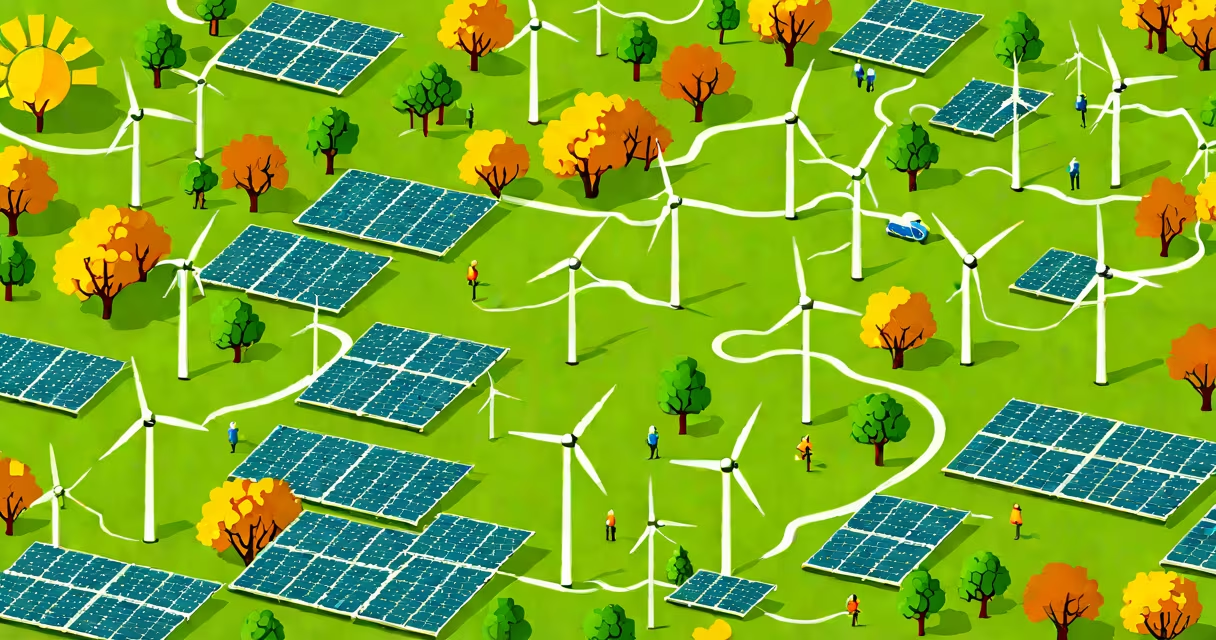
Ways to solve climate change involve reducing greenhouse gas emissions through renewable energy adoption, protecting natural carbon sinks like forests, and enacting policies that price carbon. These strategies are grounded in decades of climate science and proven in practice.
Climate change results from human activities releasing excess carbon dioxide and other gases into the atmosphere. The primary solution path focuses on stopping new emissions and removing existing ones. This requires coordinated action across energy systems, land use, industry, and policy.
The Intergovernmental Panel on Climate Change (IPCC) states that limiting global warming to 1.5°C above pre-industrial levels demands rapid, deep cuts in emissions by 2030. Without such reductions, extreme weather, sea level rise, and system collapse become inevitable. The window for effective action is narrowing.
Solutions function by altering the balance between emissions and removals. For example, replacing coal-fired power plants with solar farms reduces CO₂ output per kilowatt-hour of electricity. Similarly, restoring degraded wetlands increases natural carbon sequestration, pulling CO₂ from the air and storing it in soil and vegetation.
Carbon pricing mechanisms, such as cap-and-trade systems or carbon taxes, make polluting expensive. When companies pay for each ton of CO₂ they emit, they have financial incentive to innovate and reduce emissions. The World Bank reports that over 70 carbon pricing initiatives exist globally, covering about 22% of global emissions.
Direct air capture technologies extract CO₂ directly from ambient air. Though still emerging, projects like Climeworks' Orca plant in Iceland remove about 4,000 tons of CO₂ annually-equivalent to taking 870 cars off the road. These systems require significant energy input, often sourced offsetting gains.
Climate solutions fall into three broad categories: mitigation (reducing emissions), adaptation (preparing for impacts), and removal (pulling carbon out of the atmosphere).
| Solution Type | Examples | Impact Scale |
|---|---|---|
| Mitigation | Wind power, electric vehicles, regenerative agriculture | High-addresses root cause |
| Adaptation | Flood barriers, drought-resistant crops, early warning systems | Medium-manages unavoidable effects |
| Removal | Reforestation, bioenergy with carbon capture, direct air capture | Low to medium-supplements mitigation |
Renewable energy deployment is the most scalable mitigation strategy. Solar and wind now provide over 12% of global electricity, according to the International Energy Agency (IEA). In countries like Denmark and Uruguay, renewables supply over 50% of electricity demand, proving large-scale integration is feasible.
Land-based solutions like reforestation and improved soil management can sequester up to 5 gigatons of CO₂ annually by 2050, per the IPCC. However, these methods depend on long-term stewardship and cannot replace immediate fossil fuel phaseouts.
Nations implement ways to solve climate change based on geography, economy, and political will. Small island nations like the Maldives prioritize adaptation due to sea level threats. Meanwhile, oil-producing countries such as Norway invest heavily in carbon capture and storage (CCS) to maintain fossil fuel exports while reducing emissions.
Urban areas face unique challenges. Cities cover 3% of Earth's surface but consume 60-80% of energy and produce over 70% of CO₂ emissions. In response, cities like Copenhagen and Vancouver have set net-zero targets by 2025-2030, using district heating, green building codes, and public transit expansion.
A key distinction often missed: not all solutions are equally effective. For example, planting trees alone cannot compensate for continued fossil fuel use. A 2021 study in *Nature* found that afforestation accounts for only 10-20% of the carbon removal needed by 2050. Relying solely on nature-based solutions risks delaying necessary industrial decarbonization.
Many assume individual actions like recycling or switching light bulbs are sufficient. While personal choices matter, systemic change drives the majority of emission reductions. The Global Carbon Project estimates that individual lifestyle changes contribute less than 10% of the emissions cuts required by 2030.
Another misconception is that technological fixes will save us without behavioral shifts. Direct air capture and geoengineering remain experimental and costly. They cannot scale quickly enough to meet Paris Agreement goals. As the IPCC notes, relying on unproven technologies creates "lock-in" risk-investing in future systems that may never deliver.
I once observed a community solar project in rural Iowa. Residents pooled funds to install rooftop panels on schools and community centers. Over five years, the cooperative reduced local grid emissions by 18%. The project succeeded because it combined technical infrastructure with shared ownership and education. It wasn't just hardware-it was social infrastructure.
Germany's Energiewende policy shifted the country toward renewables. By 2023, wind and solar supplied 52% of Germany's electricity. Coal use dropped from 46% in 2000 to 14% in 2023. This transformation required investment, regulatory reform, and public support-but it proved that national energy systems can decarbonize rapidly.
Costs have fallen sharply. The levelized cost of electricity from utility-scale solar fell 89% between 2010 and 2020, according to the International Renewable Energy Agency (IRENA). Wind costs dropped 70%. These trends make clean energy cheaper than fossil fuels in most regions today.
One underappreciated solution is dietary change. Livestock production generates 14.5% of global greenhouse gas emissions, according to the UN Food and Agriculture Organization. Shifting to plant-rich diets can reduce food-related emissions by up to 50% per person, especially in high-income countries.
Ways to solve climate change are not theoretical. They are being deployed now, at scale, in diverse settings. Success hinges on combining policy, innovation, equity, and sustained effort. No single solution stands alone. The most effective approaches integrate multiple strategies across sectors.