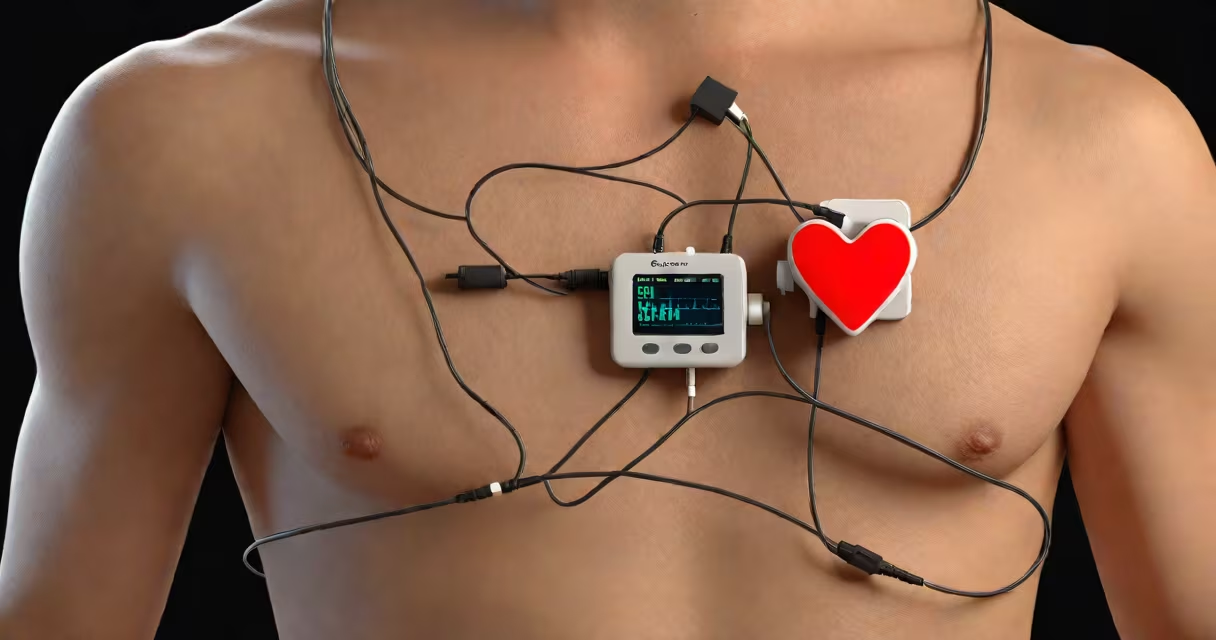
wearing a heart monitor means using a portable device to continuously track your heart's electrical signals outside a clinical setting. These devices capture data over hours or days, revealing arrhythmias or other abnormalities that may not show up during a standard 12-lead EKG.
Heart monitors are typically worn for 24 to 72 hours, though some models can record for up to 14 days. They're used when symptoms like dizziness, fainting, or palpitations occur intermittently and aren't captured during a brief hospital visit. The monitor records every heartbeat, storing data for later analysis by a cardiologist.
Most wearable heart monitors consist of a small recorder worn on a belt or shoulder strap, connected via adhesive electrodes placed on the chest. Modern versions use wireless transmission to send data in real time to a secure server, enabling remote monitoring. Some models integrate with smartphone apps, allowing patients to log symptoms alongside the recorded data.
The device detects tiny electrical impulses generated by each heartbeat. Electrodes on the skin pick up these signals and transmit them to a recording unit. The system timestamps each beat and logs episodes of irregular rhythm, such as atrial fibrillation, bradycardia, or tachycardia.
Data is stored locally on the device or sent wirelessly to a cloud-based platform. Once the monitoring period ends, the patient returns the device, and the data is downloaded and analyzed. A report is generated highlighting abnormal events, often including a visual waveform trace and a summary of detected issues.
For example, a 62-year-old woman with occasional lightheadedness wore a heart monitor for 48 hours. During that time, her device recorded 14 episodes of ventricular tachycardia lasting 3-5 seconds. These were not apparent during her clinic EKG. Her doctor used the data to adjust medication and recommend further testing, preventing a potential cardiac event.
There are two primary types of heart monitors used in clinical practice:
| Type | Duration | Use Case | Key Feature |
|---|---|---|---|
| Event Monitor | Up to 30 days | Infrequent symptoms | Patient activates recording when symptoms start |
| Loop Recorder | Up to 1 year | Unexplained syncope or rare arrhythmias | Automatically records when abnormal rhythms are detected |
Event monitors require the wearer to press a button when they feel symptoms. This method relies on patient awareness and timely response. Loop recorders, by contrast, run continuously and store data in a buffer. When an abnormal rhythm occurs, the device automatically saves the preceding and following minutes, capturing context around the event.
A key difference many overlook: loop recorders are implanted under the skin near the collarbone, while event monitors are external. Implantable devices reduce false triggers from movement or poor electrode contact. According to the American Heart Association, implantable loop recorders have a 90% detection rate for unexplained fainting, compared to 60% for external monitors.
Doctors prescribe wearing a heart monitor when symptoms suggest cardiac dysfunction but standard tests don't confirm it. Common reasons include unexplained dizziness, fatigue, or episodes of rapid heartbeat that last seconds and resolve spontaneously.
It's especially useful for diagnosing paroxysmal atrial fibrillation-episodes that come and go. A single EKG in a clinic may miss these because they don't happen during the test. Wearing a monitor increases the chance of catching the episode in real time.
One study published in JAMA Internal Medicine found that patients who wore a heart monitor for seven days had a 40% higher detection rate of significant arrhythmias than those who underwent only a standard EKG. The study included 1,200 participants aged 50-75 with intermittent palpitations.
Some people think wearing a heart monitor means they have a serious heart condition. That's not true. Many patients wear them as part of a screening process. The goal is to rule out problems, not assume they exist.
Another misconception is that the device can stop a dangerous arrhythmia. It cannot. It only records and transmits data. It's a diagnostic tool, not a treatment device. Unlike an implantable cardioverter-defibrillator (ICD), which delivers shocks to restore normal rhythm, a heart monitor doesn't intervene.
Also, patients often worry about interference from phones or microwaves. Modern devices are shielded against electromagnetic noise. The FDA requires all wearable cardiac monitors to meet strict interference standards. A 2021 review in Heart Rhythm confirmed that Bluetooth-enabled monitors showed no significant signal degradation from household electronics.
I once helped a patient prepare for a 72-hour Holter monitor. She was anxious about the electrodes sticking poorly. We used a skin prep solution recommended by the manufacturer and applied the pads carefully. She wore it during a weekend trip and logged a symptom when she felt dizzy. The data showed a brief episode of sinus arrest lasting 4.3 seconds. Her doctor adjusted her beta-blocker dosage based on that single event.
That case illustrates how a short window of data can lead to meaningful medical decisions. Without the monitor, the episode might have gone undetected for months.
Wearing a heart monitor isn't appropriate for everyone. If someone has stable angina, known coronary artery disease, or recent heart attack, the focus shifts to managing risk factors and treating underlying conditions-not monitoring for rare arrhythmias.
For asymptomatic individuals with no family history of sudden cardiac death, routine monitoring offers little benefit. The U.S. Preventive Services Task Force states that screening for arrhythmias in low-risk adults provides no net health benefit and may lead to unnecessary procedures.
Patients should avoid wearing a heart monitor if they have pacemaker implants unless cleared by a cardiologist. Some devices can interfere with pacing signals, especially older models.
wearing a heart monitor is not the same as using a fitness tracker. While smartwatches like Apple Watch or Fitbit can detect irregular rhythms, they are not clinically validated for diagnosis. The FDA classifies them as consumer wellness tools, not medical devices.
Even if a watch alerts you to an irregular rhythm, it cannot replace a medically prescribed monitor. A 2022 study in European Heart Journal - Digital Health found that consumer devices missed 35% of documented atrial fibrillation episodes during controlled testing. Accuracy varies widely between brands and user posture.
Wearing a heart monitor does not mean you'll receive immediate care. Data is reviewed after the monitoring period ends. If an urgent issue is detected, the provider contacts the patient, but no automated emergency response occurs.
For example, a man with a history of hypertension wore a monitor after experiencing a syncopal episode. His device flagged a prolonged pause in his heart rate. The report was sent to his doctor, who scheduled a follow-up within two days. No ambulance was dispatched. The monitor didn't act-it informed.
wearing a heart monitor is a non-invasive way to gather detailed heart rhythm data over time. It's essential for diagnosing intermittent cardiac issues that standard tests miss. The device captures real-world behavior, offering insights that static measurements cannot.
It's not a treatment, not a fitness gadget, and not a substitute for clinical evaluation. But when used correctly, it's a useful tool in identifying hidden heart problems. For patients with unclear symptoms, it can be the difference between a misdiagnosis and a life-saving intervention.