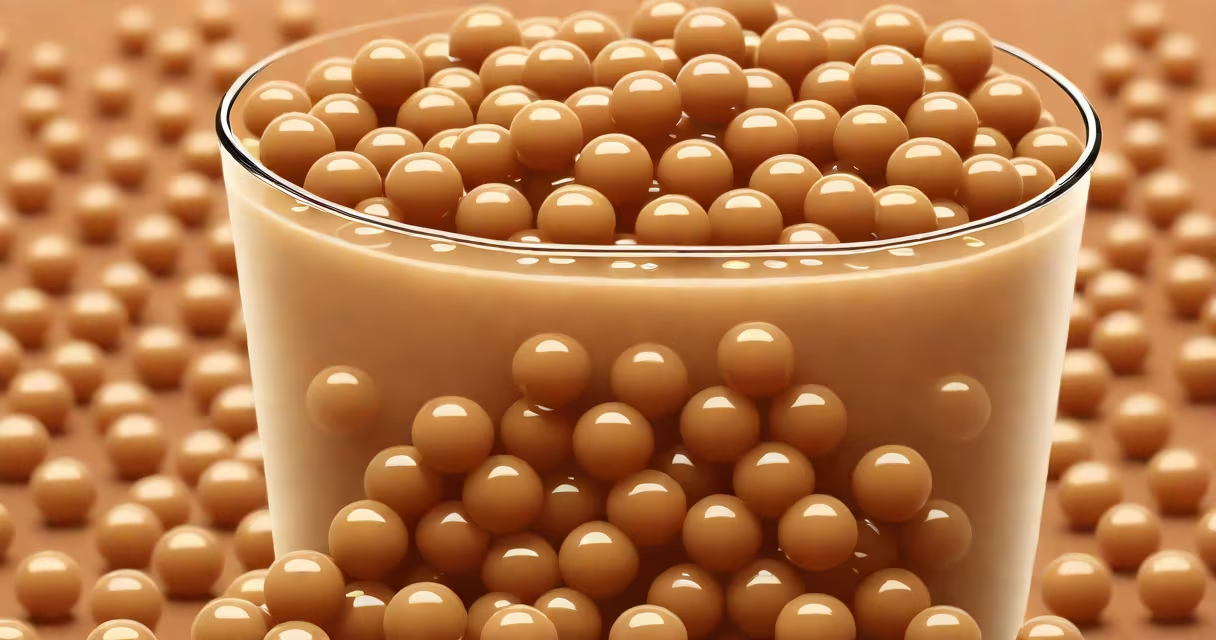
Boba balls are small, chewy spheres made mainly from tapioca starch and water, with added sweeteners and sometimes coloring. They are the signature component of bubble tea, known for their soft yet firm bite.
Tapioca starch, derived from the root of the cassava plant, forms the base of boba. When cooked, this starch gelatinizes, creating a resilient, elastic texture. The process involves mixing the starch with water and sugar, shaping the mixture into tiny balls, then boiling them until translucent and firm.
Commercial boba often includes additives such as food-grade caramel color (E150d) to achieve a consistent dark brown appearance. Some brands use natural colorants like beet juice or activated charcoal for variation. The sugar content typically ranges from 10% to 15% by weight, depending on the recipe.
The production of boba begins with a slurry of tapioca starch and water. This mixture is heated to form a dough-like consistency. The dough is then rolled into thin ropes, cut into uniform segments, and shaped into balls using a rotating drum or hand tool.
These raw balls are boiled in water for 15 to 20 minutes until they turn clear and float to the surface. After boiling, they are cooled in cold water to stop cooking and prevent sticking. A final step involves soaking them in a syrup solution-usually sugar water or honey-to improve sweetness and maintain texture.
For mass production, machines handle every stage. Automated extruders shape the dough, rotary cutters slice it, and tumbling dryers ensure even drying. Small-scale producers may hand-shape and boil batches manually, resulting in slight variations in size and chewiness.
Different boba varieties exist based on texture, flavor, and ingredient mix. The most common type is standard black boba, made from pure tapioca starch and sugar. Other variants include:
| Type | Base Material | Key Additives | Texture |
|---|---|---|---|
| Standard Black Boba | Tapioca starch, water | Sugar, caramel color (E150d) | Firm, chewy |
| White Boba | Tapioca starch, water | Sugar, no coloring | Translucent, slightly softer |
| Chocolate Boba | Tapioca starch, water | Sugar, cocoa powder, vanilla extract | Rich, slightly dense |
| Matcha Boba | Tapioca starch, water | Sugar, matcha powder, green tea extract | Earthy, mildly bitter |
Black boba is the most widely used due to its visual appeal and neutral taste. White boba lacks coloring and appears clearer, making it ideal for drinks with light-colored bases. Flavored boba introduces additional ingredients but maintains the core tapioca structure.
Many assume boba contains gelatin or animal products. This is false. All traditional boba is plant-based and suitable for vegetarians and vegans. The chewiness comes entirely from the starch network formed during cooking, not from animal-derived gelling agents.
Another myth is that boba is high in calories or unhealthy. While boba contains sugar and carbohydrates, a typical serving of 100 grams (about 1/2 cup) contains roughly 300-350 calories. Most health-conscious consumers limit intake to occasional consumption, especially when paired with low-sugar beverages.
A lesser-known fact: boba can absorb liquid flavors over time. When stored in a flavored syrup, boba can take on subtle notes from the liquid-such as vanilla or fruit extracts-without changing its structural integrity. This property allows for creative drink customization.
To illustrate the process, consider a basic homemade boba recipe using 100g tapioca starch, 60ml water, and 15g sugar. Mix the starch and sugar in a bowl. Gradually add water while stirring until a thick dough forms. Knead for 3-5 minutes until smooth and pliable.
Roll the dough into thin ropes, cut into 1cm pieces, and roll each piece between palms to form round balls. Boil in 1 liter of water for 15 minutes until fully translucent and floating. Drain and cool in ice water for 1 minute. Soak in 100ml sugar syrup (equal parts sugar and water) for 10 minutes before use.
This batch yields about 120-140 small boba balls. The result is chewy, sweet, and ready for use in drinks. The texture remains stable for up to 24 hours when refrigerated.
I once made boba at home during a weekend project and was surprised by how much control over texture I gained. Adjusting the water-to-starch ratio by just 5% changed the firmness. Too little water led to brittle balls; too much caused them to fall apart during boiling.
Boba's popularity stems from its contrast in texture. While most drinks are liquid, boba adds a tactile element-crunchy on the outside, yielding inside. This sensory contrast enhances the drinking experience, particularly in beverages like milk tea, fruit teas, and coffee-based drinks.
According to the U.S. Department of Agriculture (USDA), tapioca starch is classified as a resistant starch when cooked and cooled, meaning it resists digestion in the small intestine. This property contributes to slower glucose release, though the effect is minimal in high-sugar preparations like boba.
For those avoiding refined sugars, alternatives like monk fruit or stevia can replace sugar in boba recipes. However, these substitutes don't caramelize or contribute to the same texture development, so results vary. Commercial brands often use a blend of cane sugar and corn syrup for balance.
Understanding what boba balls are made out of clarifies their role in beverages and informs better dietary decisions. They are not a health food, but they are a product of precise starch chemistry and culinary tradition.