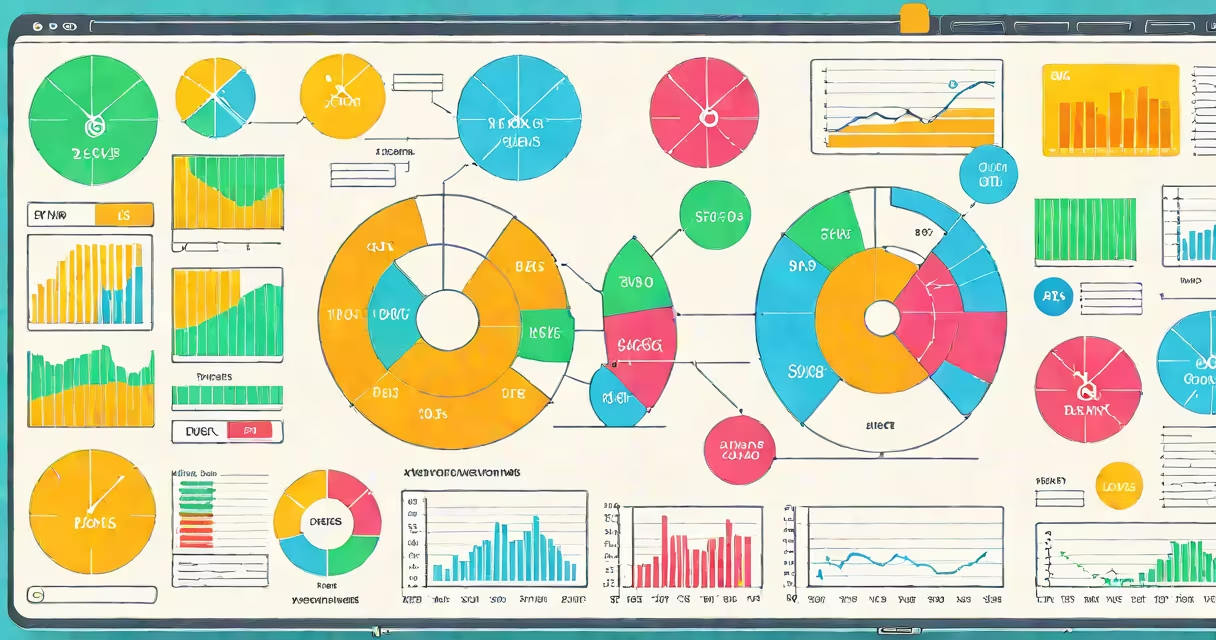
KPI indicators are measurable values that show how effectively an organization achieves key objectives. They track progress toward strategic goals using specific, quantified data points tied to business outcomes.
Unlike vague benchmarks, KPI indicators deliver clear insight into performance. For example, a retail store might track "average transaction value" as a KPI indicator to assess upselling effectiveness. This metric directly reflects revenue efficiency and informs staffing, product placement, and training decisions.
According to the Harvard Business Review, effective KPIs align with organizational strategy and are reviewed regularly to ensure relevance. Poorly designed KPIs lead to misaligned incentives and wasted effort. A well-chosen KPI indicator focuses attention on what truly matters.
KPI indicators operate by linking a specific business objective to a numeric benchmark. The process begins with defining a goal-such as increasing customer retention-and then selecting a measurable outcome, like "reduced churn rate below 8% quarterly."
Data collection happens through systems like CRM software, analytics platforms, or manual reporting. Once gathered, the data is compared against the target. If the actual result falls short, teams investigate root causes and adjust tactics.
For instance, a SaaS company sets a KPI indicator of "monthly recurring revenue (MRR) growth at 12%." If MRR grows only 6%, leadership investigates whether onboarding delays, feature gaps, or pricing issues are affecting adoption. This feedback loop enables continuous improvement.
Organizations use different categories of KPI indicators based on function. The most common types include operational, financial, customer, and employee performance metrics.
| Type | Focus Area | Example | Source |
|---|---|---|---|
| Operational | Process efficiency | Order fulfillment time under 24 hours | Gartner |
| Financial | Revenue and profitability | Net profit margin above 15% | Harvard Business Review |
| Customer | Satisfaction and loyalty | Customer satisfaction score (CSAT) ≥ 4.5/5 | Gartner |
| Employee | Team productivity and engagement | Employee turnover rate ≤ 10% annually | Harvard Business Review |
Each type serves a distinct purpose. Operational KPI indicators reveal bottlenecks in workflows. Financial KPIs confirm sustainability. Customer KPIs reflect brand health. Employee KPIs show team stability.
Businesses deploy KPI indicators across departments to monitor results and guide decisions. Marketing teams track conversion rates from campaigns. Sales leaders watch quota attainment. Product managers analyze feature usage frequency.
A nonprofit focused on literacy programs uses "number of children reading at grade level after six months" as a core KPI indicator. This metric reflects program impact better than total hours delivered or number of books distributed. It ties directly to the mission: improving educational outcomes.
One common mistake is treating all metrics as KPIs. Vanity metrics-like website page views or social media likes-can inflate perception without revealing real progress. A startup may boast 100,000 app downloads but fail to convert users into paying customers. That's why KPI indicators must be outcome-focused, not activity-based.
Many assume KPI indicators must be complex or high-tech. In reality, simplicity often increases reliability. A bakery tracking "daily pastry sales exceeding 50 units" provides actionable insight without requiring dashboards or algorithms.
Another error is setting too many KPI indicators. Research from McKinsey shows organizations with more than 15 KPIs struggle with focus and consistency. Teams spread thin across competing targets lose sight of priorities. Best practice: limit KPI indicators to 5-7 per department.
There's also confusion between KPI indicators and goals. A goal is a desired outcome ("increase customer retention"). A KPI indicator is the measurable method to verify progress toward that goal ("retention rate reaches 75% within 12 months"). Confusing the two leads to ambiguous tracking and poor accountability.
A small e-commerce store sells handmade candles. Their primary business goal is sustainable growth. They define three KPI indicators:
These KPI indicators allow the owner to make informed choices. When AOV dipped in June, they ran a targeted email campaign offering free shipping on orders over $50. Conversion rose to 3.6% the following month. Data confirmed the tactic worked.
I've personally managed a team that relied solely on daily sales numbers. After adding a KPI indicator for "customer return rate," we discovered a packaging flaw causing 12% of orders to arrive damaged. Fixing the issue reduced returns by 70% and improved net revenue by 18% over three months.
What are KPI indicators? They are precise, outcome-oriented measurements that reveal whether an organization is moving toward its goals. They turn strategy into observable results.
Use them to cut through noise. Avoid chasing activity. Focus on what drives real impact. leading a team, KPI indicators provide clarity.
Understanding what are KPI indicators helps avoid misleading data traps. Build your KPI indicators around outcomes, not outputs. Test them regularly. Update them when strategies evolve.