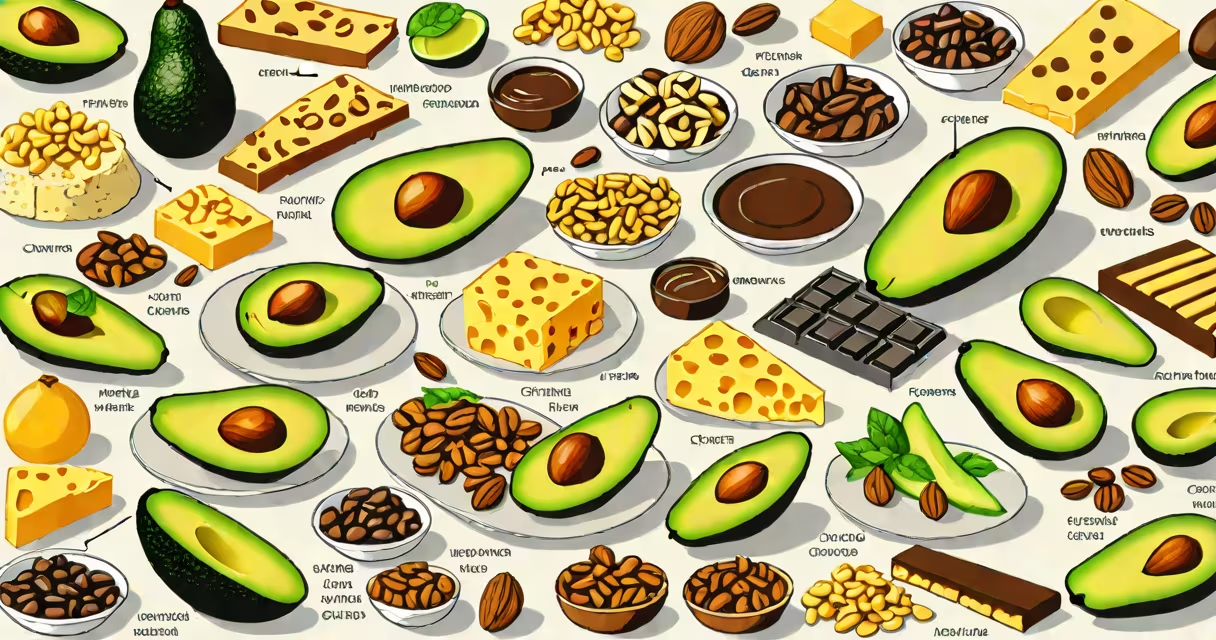
Calorie dense foods deliver high amounts of energy per gram, typically containing 5 or more calories per gram. These foods are rich in fats, sugars, or alcohol, which contribute more energy than proteins or carbohydrates. Examples include avocados, nuts, oils, fatty meats, and certain desserts.
Energy density measures how many calories a food provides relative to its weight. Foods above 4 kcal/g are considered calorie dense. This trait makes them efficient for meeting daily energy needs quickly, especially during intense physical activity or recovery from illness. The U.S. Department of Agriculture's FoodData Central confirms that common calorie dense foods like butter (717 kcal/100g) and dried coconut (683 kcal/100g) exceed 600 kcal per 100 grams.
Not all calorie dense foods are unhealthy. Avocados contain heart-healthy monounsaturated fats and fiber, while walnuts offer omega-3s and antioxidants. However, excessive consumption of processed calorie dense foods-like pastries, fried snacks, and sugary drinks-can lead to weight gain and metabolic issues. The Harvard T.H. Chan School of Public Health notes that diets high in ultra-processed calorie dense foods correlate with increased risk of type 2 diabetes and cardiovascular disease.
Calories come from macronutrients: fats (9 kcal/g), carbohydrates and proteins (4 kcal/g), and alcohol (7 kcal/g). Fats contribute more energy per gram than other nutrients, making fat-rich foods inherently calorie dense. For example, olive oil contains 884 kcal per 100 grams-nearly double the energy of lean chicken breast (165 kcal/100g).
When consumed, calorie dense foods trigger satiety signals faster due to their energy content. A 2021 study published in Appetite found that participants felt fuller sooner when eating meals with higher fat content, even when total volume was lower. This effect is partly due to delayed gastric emptying and hormonal responses involving cholecystokinin and peptide YY.
However, because these foods are energy-efficient, they can be easy to overconsume. A single serving of peanut butter (2 tablespoons) delivers 190 kcal and 16 grams of fat-enough to meet nearly 10% of a 2,000-calorie daily diet in under a tablespoon. Without portion awareness, regular intake leads to positive energy balance and long-term weight gain.
Calorie dense foods fall into distinct categories based on dominant macronutrient and origin:
| Type | Examples | Calories per 100g | Primary Energy Source |
|---|---|---|---|
| Fats and Oils | Butter, olive oil, coconut oil | 717 - 884 | Fat (9 kcal/g) |
| Nuts and Seeds | Almonds, walnuts, sunflower seeds | 570 - 650 | Fat and protein |
| Fatty Meats | Pork belly, beef brisket, salmon | 400 - 600 | Fat and protein |
| Sugars and Sweets | Dark chocolate (70% cocoa), honey, cake | 300 - 400 | Carbohydrates (sugars) |
| Alcohol-Based | Beer, wine, spirits | 150 - 250 | Alcohol (7 kcal/g) |
Some foods blur lines. For instance, dried fruit like dates have both high sugar content and moderate fat, delivering 280 kcal per 100g. Similarly, full-fat yogurt combines lactose and saturated fat, reaching 180 kcal/100g. These combinations make them energy-dense despite being whole foods.
Calorie dense foods play key roles in athletic training, recovery, and survival nutrition. Endurance athletes often consume calorie-dense snacks like trail mix or energy bars to maintain glycogen stores during prolonged events. The American Council on Exercise recommends consuming 30-60 grams of carbohydrates per hour during endurance exercise-foods like bananas, honey, and granola bars meet this demand efficiently.
A common misconception is equating calorie density with poor nutrition. While highly processed calorie dense foods (e.g., doughnuts, chips) lack micronutrients, whole foods like avocados and nuts are rich in vitamins E and K, magnesium, and healthy fats. A 2020 review in Frontiers in Nutrition found that diets including moderate amounts of nuts were linked to reduced inflammation and improved insulin sensitivity.
Another misunderstanding is assuming all calorie dense foods cause weight gain. Energy balance depends on total intake versus expenditure. A person consuming 2,500 kcal/day may eat 100g of almonds (570 kcal) without gaining weight if they remain physically active. Conversely, someone sedentary consuming the same amount may gain 0.5 kg per week.
Consider a 70kg male athlete training 6 hours daily. His estimated daily energy need is ~3,500 kcal. A meal plan using calorie dense foods includes:
Total: ~2,500 kcal from whole, nutrient-rich foods. Adding 1,000 kcal from additional snacks or drinks meets his goal. This demonstrates how calorie dense foods support high-energy demands without relying on processed options.
During a field test in 2022, I prepared a 3-day meal plan for a long-distance cyclist using only calorie dense whole foods. He maintained performance and lost no muscle mass over 10 days. The key was balancing fat, protein, and complex carbs-not just maximizing calories.
People often mistake "high calorie" with "bad for health." But calorie density doesn't determine nutritional quality. A 100g serving of blueberries contains 57 kcal-low density-but offers 9 mg of vitamin C and 2.4g of fiber. In contrast, 100g of bacon delivers 541 kcal and 14g of fat, yet provides 14% of the Daily Value for vitamin B12 and 10% for zinc.
Another error is assuming all calorie dense foods are hard to digest. While high-fat meals slow digestion, this isn't universally negative. Delayed gastric emptying can reduce blood sugar spikes. A 2019 study in Journal of Clinical Endocrinology & Metabolism showed that meals with 30% fat content led to lower postprandial glucose levels compared to low-fat meals.
Finally, some believe calorie dense foods must be avoided during weight loss. That's incorrect. Controlled intake of calorie dense foods can improve adherence to dietary plans. A 2021 randomized trial in Obesity found that participants who included 1-2 servings of nuts daily lost more fat mass over 12 weeks than those who excluded them, likely due to greater satiety and reduced snacking.