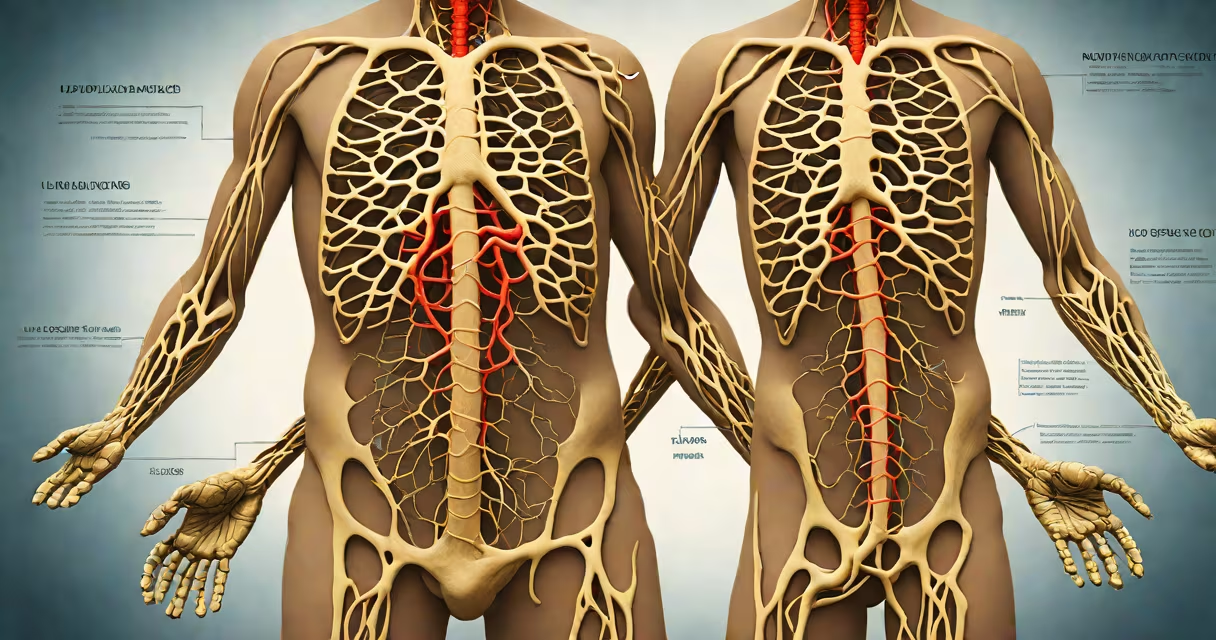
Diseases of the lymphatic system disrupt immune function, fluid regulation, or structural integrity of lymph nodes, vessels, and organs like the spleen and thymus. These conditions include cancers such as lymphoma, chronic swelling due to lymphedema, and autoimmune disorders like systemic lupus erythematosus that impair lymphocyte activity.
The lymphatic system maintains fluid balance, filters pathogens, and supports adaptive immunity. When it fails, infections spread unchecked, tissues swell, or immune responses misfire. Disorders arise from genetic mutations, infections, cancerous cell proliferation, or autoimmune attacks on lymphatic components.
Common issues include impaired lymph flow leading to edema, malignant transformation of lymphocytes causing lymphomas, and inherited defects in immune cell development. Diagnosis relies on imaging, biopsy, blood tests, and clinical signs like persistent swelling or unexplained fatigue.
Lymphatic dysfunction begins when lymph fluid cannot drain properly through vessels or nodes. Obstruction causes protein-rich fluid to accumulate in tissues, resulting in swelling-especially in limbs. This condition is known as lymphedema and may follow surgery, radiation, or infection.
Infections like filariasis, caused by parasitic worms transmitted by mosquitoes, block lymphatic vessels in tropical regions. The World Health Organization estimates over 120 million people are affected globally, with 40 million experiencing severe disfigurement. Without treatment, chronic inflammation leads to fibrosis and tissue hardening.
Cancer arises when B or T cells multiply uncontrollably. Hodgkin lymphoma features Reed-Sternberg cells in lymph nodes; non-Hodgkin types vary widely in behavior and prognosis. The American Cancer Society reports about 81,500 new cases annually in the U.S., with survival rates exceeding 85% for early-stage disease.
Conditions fall into four categories: congenital, infectious, neoplastic, and autoimmune. Each affects different parts of the system and presents distinct symptoms.
| Type | Examples | Key Features |
|---|---|---|
| Congenital | Primary lymphedema, DiGeorge syndrome | Present at birth; caused by developmental defects in lymph vessel formation or thymic underdevelopment. |
| Infectious | Filariasis, tuberculosis of lymph nodes | Pathogens invade nodes or vessels; often regional and treatable with antibiotics or antiparasitics. |
| Neoplastic | Hodgkin lymphoma, Burkitt lymphoma | Malignant transformation of lymphocytes; diagnosed via biopsy and staging. |
| Autoimmune | Systemic lupus erythematosus, Sjögren's syndrome | Immune system attacks lymphatic tissues; associated with fatigue, joint pain, and organ involvement. |
One lesser-known fact: lymphedema is not always visible. Early stages involve subtle changes in skin texture and reduced sensation. Patients may report tightness in socks or rings that no longer fit-even without obvious swelling. This makes early detection difficult without routine screening.
Lymphatic diseases occur worldwide but vary by region. Filariasis is endemic in sub-Saharan Africa, Southeast Asia, and parts of Latin America. In contrast, lymphomas are most common in North America and Western Europe, with incidence rising in older adults.
Genetic factors play a role in primary immunodeficiencies. For example, mutations in the IL2RG gene cause X-linked severe combined immunodeficiency (SCID), which results in absent T-cell function and fatal infections without early intervention. Newborn screening programs now detect SCID in 30 U.S. states, improving survival rates.
Environmental triggers also contribute. Exposure to benzene, pesticides, or radiation increases risk for certain lymphomas. The National Cancer Institute notes a 20% higher incidence among agricultural workers compared to the general population.
Many assume lymphedema is simply "swelling" and treat it as cosmetic. In reality, it is a progressive medical condition requiring compression therapy, manual lymph drainage, and lifestyle management. Left untreated, it increases infection risk and reduces mobility.
Another error is equating swollen lymph nodes with cancer. While enlarged nodes can signal lymphoma, they more often result from viral infections like mononucleosis or bacterial illnesses such as strep throat. A study in JAMA Internal Medicine found that over 70% of patients with palpable nodes had benign causes.
Some confuse lymphatic disorders with circulatory problems. Unlike venous insufficiency, which involves blood pooling, lymphedema stems from failure in fluid clearance by lymphatics. Distinguishing them requires Doppler ultrasound and lymphoscintigraphy-a nuclear medicine scan showing lymph flow patterns.
A 42-year-old man presented with painless cervical lymphadenopathy, night sweats, and 10-pound weight loss over six weeks. Initial blood work showed elevated lactate dehydrogenase (LDH) and mild anemia. A CT scan revealed multiple enlarged mediastinal nodes.
An excisional biopsy of a cervical node confirmed Hodgkin lymphoma, nodular sclerosis subtype. Immunohistochemistry revealed CD30+ and CD15+ Reed-Sternberg cells. Staging PET-CT showed stage II disease. He received ABVD chemotherapy (doxorubicin, bleomycin, vinblastine, dacarbazine) and achieved complete remission after four cycles.
This case illustrates how lymphatic system diseases require multidisciplinary evaluation. Pathology, radiology, and oncology collaborate to confirm diagnosis and tailor treatment. Survival rates exceed 90% for stage II Hodgkin lymphoma with modern protocols.
Disorders of the lymphatic system often coexist with other systemic diseases. For example, chronic lymphedema increases risk for cellulitis and lymphangiosarcoma-a rare soft-tissue cancer. Monitoring is essential to prevent complications.
Understanding how immune dysfunction affects the entire body helps explain why some patients develop multiple autoimmune conditions. Research shows that individuals with one autoimmune disorder have a 30% higher chance of developing another within five years.
Early recognition of lymphatic system diseases improves outcomes. Symptoms like persistent swelling, unexplained fevers, or recurring infections should prompt medical evaluation. Advances in molecular diagnostics now allow earlier detection of lymphoma subtypes and better prediction of treatment response.