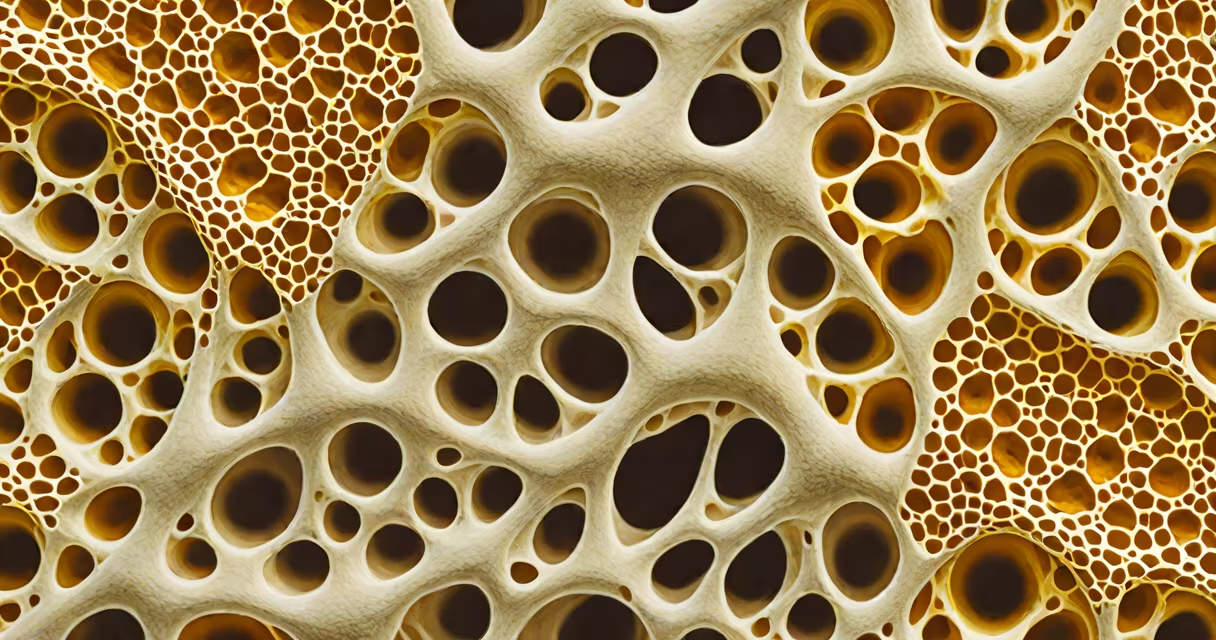
Osteoporosis affects the skeletal system, a network of bones that provides structure, protects organs, and stores minerals like calcium. The condition reduces bone mineral density, making bones fragile and prone to fractures even from minor falls or everyday movements.
The skeletal system includes 206 bones in adults, forming the structure for movement and support. Bones are living tissues that constantly remodel-breaking down old bone and building new through a process called bone turnover. Osteoporosis disrupts this balance, causing bone resorption to outpace formation. When bone mass drops below normal levels, the result is porous, brittle bones that fail under minimal stress.
According to the National Institute of Arthritis and Musculoskeletal and Skin Diseases (NIAMS), about 10 million Americans have osteoporosis, and another 43 million have low bone density. The condition primarily affects people over 50, especially postmenopausal women due to estrogen decline. Bone loss accelerates after menopause because estrogen helps regulate bone remodeling. Without it, osteoclasts (cells that break down bone) become overactive while osteoblasts (bone-building cells) slow down.
Bone remodeling occurs in cycles lasting about 3 months. During this time, osteoclasts dissolve old bone in targeted areas, creating small cavities. Osteoblasts then move in to fill those spaces with new bone matrix, which hardens over weeks. This cycle maintains bone strength and mineral reserves.
In osteoporosis, the rate of bone breakdown exceeds rebuilding. As a result, trabecular bone-the spongy inner layer of vertebrae and long bones-loses its lattice-like structure. Microscopic imaging shows these bones develop larger pores and thinner struts, reducing their ability to absorb impact. A single fall can cause a compression fracture in the spine or a hip fracture in older adults.
A 2021 study published in *The Journal of Clinical Endocrinology & Metabolism* found that individuals with osteoporosis had a 2.5-fold higher risk of hip fracture compared to those with normal bone density. Fractures in the spine often lead to height loss, kyphosis (rounded back), and chronic pain, affecting mobility and quality of life.
Osteoporosis is classified into primary and secondary forms based on underlying causes. Primary osteoporosis develops gradually with age and hormonal changes. Secondary osteoporosis results from medical conditions or medications that impair bone formation or increase resorption.
| Type | Common Causes | Typical Age Group |
|---|---|---|
| Primary Type I (Postmenopausal) | Estrogen deficiency, early menopause | 50-70 years |
| Primary Type II (Senile) | Natural aging, reduced calcium absorption | Over 70 years |
| Secondary | Corticosteroid use, hyperthyroidism, malabsorption syndromes | Any age, depending on cause |
For example, long-term use of prednisone-a corticosteroid prescribed for autoimmune diseases-can suppress osteoblast activity and increase calcium excretion through urine. After 3 months of daily prednisone at doses above 7.5 mg, bone density declines by 1-3% per year. This effect is reversible upon discontinuation, but bone recovery takes longer than the initial loss.
One non-obvious fact: bone loss begins earlier than most people assume. Peak bone mass is reached around age 30. After that, bone density declines slowly-about 0.3% per year-until menopause, when losses accelerate to 2-3% annually for 5-10 years. By age 60, a woman may have lost up to 30% of her peak bone mass, even without symptoms.
Osteoporosis is often mistaken for arthritis, which affects joints rather than bone structure. While both conditions cause pain and mobility issues, they stem from different processes. Arthritis involves inflammation of joint linings, whereas osteoporosis targets bone density and microarchitecture.
Another misconception is that osteoporosis only affects older women. Men account for 20% of diagnosed cases. A 2020 report from the International Osteoporosis Foundation noted that men over 50 have a 1 in 4 chance of experiencing an osteoporotic fracture. Low testosterone levels, smoking, and excessive alcohol intake contribute to male bone loss.
I once evaluated a 65-year-old man who presented with back pain and a 2-inch height reduction. His DEXA scan showed a T-score of -3.2-indicating severe osteoporosis. He had no history of hormone disorders, but his diet lacked vitamin D and calcium. After six months of weight-bearing exercise, calcium supplementation, and bisphosphonate therapy, his bone density improved by 6%. This case illustrates that treatment can reverse some damage, even in advanced stages.
Diagnosis relies on dual-energy X-ray absorptiometry (DEXA) scans, which measure bone mineral density at the hip and spine. A T-score below -2.5 indicates osteoporosis. The test is quick, non-invasive, and exposes patients to less radiation than a standard chest X-ray.
Prevention focuses on lifestyle factors known to support bone health. Weight-bearing activities like walking, dancing, and resistance training stimulate bone formation. The American College of Sports Medicine recommends at least 30 minutes of moderate-intensity activity five days a week. Adequate intake of calcium (1,200 mg/day for adults over 50) and vitamin D (800 IU/day) is essential for calcium absorption.
Smoking and heavy drinking interfere with bone remodeling. Smoking reduces blood flow to bones and lowers estrogen levels. Alcohol impairs liver function, which affects vitamin D activation. Limiting alcohol to one drink per day for women and two for men reduces fracture risk by 20%, according to a 2019 meta-analysis in *Bone*.
Early screening is critical. The U.S. Preventive Services Task Force recommends bone density testing for women aged 65 and older, and for younger women with risk factors such as family history, low body weight, or prolonged steroid use. Men over 70 should also be screened if they have risk factors.
Understanding that osteoporosis affects the skeletal system clarifies why prevention and treatment focus on maintaining bone strength. Interventions like medication, nutrition, and physical activity target the root cause: disrupted bone turnover. Ignoring early signs increases the likelihood of serious injury.