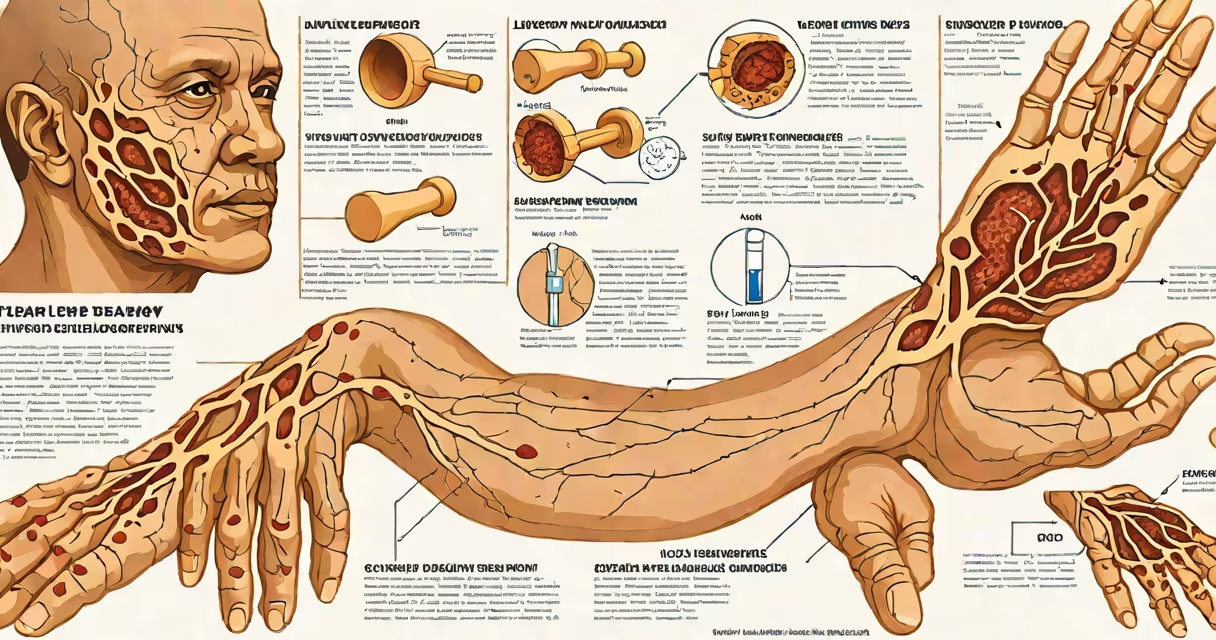
Leprosy, also known as Hansen's disease, is a chronic bacterial infection caused by Mycobacterium leprae that primarily damages the skin, peripheral nerves, and mucosal surfaces of the upper respiratory tract. It is not easily spread and requires prolonged, close contact with an untreated individual to transmit.
The bacterium responsible for leprosy grows slowly, with an incubation period ranging years. This long latency makes early detection difficult. M. leprae targets Schwann cells in peripheral nerves, leading to progressive nerve damage and loss of sensation. Without treatment, this can result in irreversible deformities, such as clawed fingers or foot drop.
Transmission occurs mainly through respiratory droplets during extended exposure-such as living in the same household with someone who has untreated multibacillary leprosy. The risk to casual contacts, including brief conversations or touching, is negligible. According to the World Health Organization (WHO), less than 10% of people exposed to the bacterium develop the disease, indicating that genetic factors and immune response play a major role in susceptibility.
Mycobacterium leprae thrives in cooler body regions-skin and peripheral nerves-because it cannot survive at normal core temperatures. Once inhaled or introduced through broken skin, the bacteria migrate to the dermis and peripheral nerves. They replicate inside macrophages and Schwann cells, evading immune detection by suppressing inflammatory responses.
As the infection progresses, patients may develop hypopigmented skin patches with reduced sensation. These patches often appear on the face, arms, or legs. Nerve involvement leads to numbness, weakness, and muscle atrophy. In advanced cases, ulcers form due to lack of pain perception, increasing the risk of secondary infections and tissue loss.
A 2020 study published in Nature Microbiology revealed that M. leprae has undergone significant genome reduction over time, losing many metabolic genes. This adaptation allows it to survive in host cells but limits its ability to grow outside the human body, further reducing transmission potential.
Leprosy is classified into two main types based on bacterial load and immune response: tuberculoid and lepromatous. The classification system, developed by Dr. Robert Ridley and Dr. Thomas Jopling, remains clinically relevant today.
| Type | Bacterial Load | Immune Response | Common Symptoms | Contagiousness |
|---|---|---|---|---|
| Tuberculoid | Low | Strong cell-mediated immunity | Few skin patches, asymmetric nerve damage, minimal bacilli | Very low |
| Lepromatous | High | Weak immune response | Widespread skin nodules, symmetric nerve damage, high bacilli count | Higher, especially in untreated cases |
Patients with tuberculoid leprosy typically have fewer lesions and better nerve function. Their immune systems contain the infection effectively. Those with lepromatous leprosy show widespread skin infiltration and facial disfigurement due to poor immune control. The latter form is more likely to cause disability and is more transmissible.
Many people still believe leprosy is highly contagious or a punishment for sin. This myth persists despite evidence showing that over 95% of the global population is naturally resistant to M. leprae. Infection rates remain below 1 per 10,000 people in most countries.
Historical stigma led to isolation of patients in leper colonies, particularly in Europe and Asia during the Middle Ages. Modern medicine has dispelled these fears. Multidrug therapy (MDT)-a combination of dapsone, rifampicin, and clofazimine-cures both forms within 6 to 12 months. WHO reports a 95% cure rate with proper treatment.
I once observed a patient in a rural clinic in Nepal who had lived with undiagnosed leprosy for 15 years. He had lost feeling in his hands and feet, leading to severe injuries from burns and cuts he didn't feel. After starting MDT, his skin lesions improved within six weeks, and nerve function stabilized. His story underscores how late diagnosis leads to preventable suffering.
Leprosy is not the same as leishmaniasis, a parasitic disease transmitted by sandflies. It is also unrelated to psoriasis or eczema, which are autoimmune skin conditions. Unlike tuberculosis, which is caused by Mycobacterium tuberculosis and spreads rapidly through airborne droplets, leprosy requires prolonged, intimate contact.
Another misconception is that leprosy causes limbs to fall off. This is false. Deformities arise from nerve damage leading to unnoticed trauma-such as stepping on a hot surface without feeling pain-resulting in ulcers and tissue loss. Amputations are rare and avoidable with early care.
According to the Centers for Disease Control and Prevention (CDC), there were 197 new leprosy cases reported in the United States between 2010 and 2020. Most were acquired abroad or in endemic areas like Hawaii and Texas. The CDC emphasizes that no known cases resulted from casual contact.
There is no vaccine for leprosy, but early diagnosis and treatment prevent disability. The WHO recommends screening household contacts of diagnosed individuals to identify asymptomatic carriers. Skin smears and nerve biopsies confirm diagnosis.
MDT is free and available globally through national health programs. Treatment duration varies: 6 months for paucibacillary (tuberculoid) cases and 12 months for multibacillary (lepromatous) cases. Patients are non-infectious after the first month of treatment.
While leprosy is not highly contagious, it remains a public health concern in parts of India, Brazil, and Indonesia. Global efforts focus on eliminating stigma and expanding access to diagnostic tools. Early intervention prevents lifelong disability and restores quality of life.
What causes leprosy and is it contagious? The answer lies in understanding the biology of Mycobacterium leprae and the role of immune response. With accurate information, fear gives way to empathy and effective action.