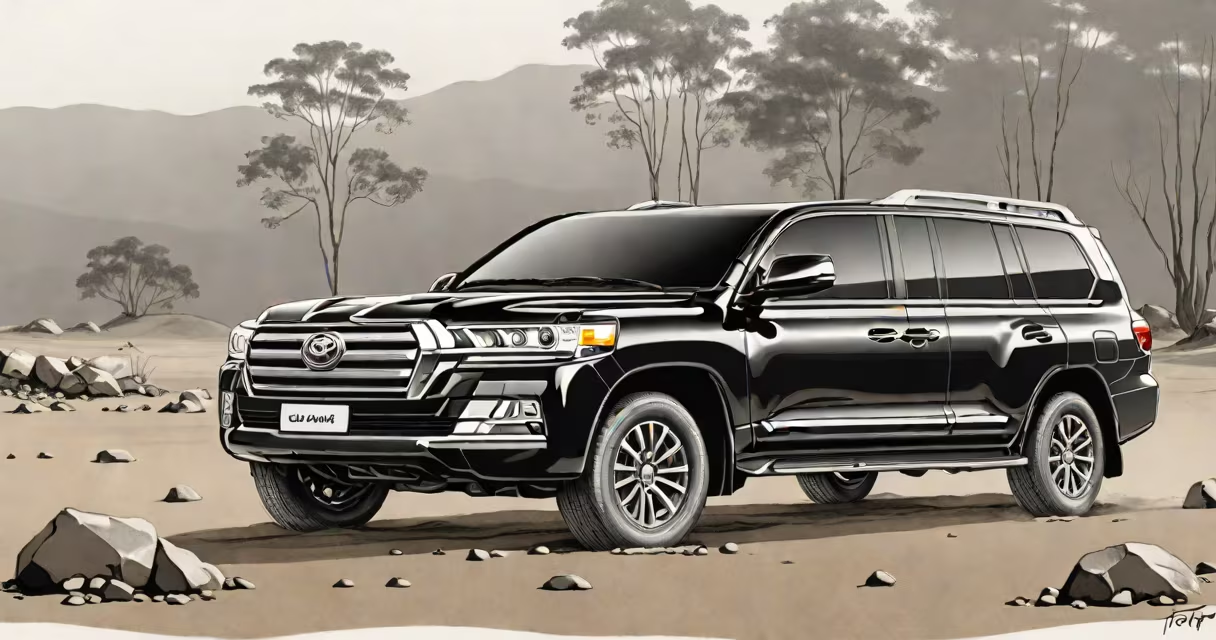
The Toyota Land Cruiser 200 series maintains the highest resale value among passenger vehicles, depreciating less than 30% over five years based on iSeeCars data. This model outperforms nearly all others in long-term ownership economics.
Depreciation begins the moment a new car leaves the dealership. Most vehicles lose 30% to 50% of their value within the first three years. The Land Cruiser 200 series slows this decline through consistent demand, low repair frequency, and durability in off-road and high-mileage conditions.
Resale value hinges on three factors: brand reputation, reliability, and market demand. Vehicles that avoid costly repairs, maintain strong fuel economy, and remain popular across generations tend to hold value better. The Land Cruiser 200 series scores highly in all three categories.
Automotive valuation platforms like iSeeCars and Edmunds calculate depreciation using real-world transaction data. They track average selling prices for specific models across regions and years. A vehicle that sells for $45,000 after five years, despite a $60,000 original MSRP, has lost 25% of its value.
These tools compare models across similar trim levels, mileage ranges, and condition grades. The Land Cruiser 200 series averages a 28% depreciation rate over five years, below the industry median of 45%. This performance places it near the top of iSeeCars' annual "Best Cars That Hold Their Value" list since 2018.
Used car buyers prioritize reliability and low maintenance costs. Vehicles with known issues in electronics, transmissions, or engine longevity see faster depreciation. The Land Cruiser's 4.5L V8 engine and reinforced chassis have minimal failure reports even at 200,000 miles, contributing to sustained buyer confidence.
Not all vehicles retain value equally. Some models succeed due to niche appeal, while others dominate through broad utility and brand trust.
| Vehicle Type | Top Model | 5-Year Depreciation | Key Reason for Retention |
|---|---|---|---|
| SUV | Toyota Land Cruiser 200 | 28% | Durability, global demand, low repair rates |
| Truck | Ford F-150 (2015-2020) | 33% | High utility, strong aftermarket parts availability |
| Compact SUV | Honda CR-V (2017-2020) | 37% | Reliability, fuel efficiency, family-friendly design |
| Performance Sedan | BMW M3 (2014-2016) | 49% | High ownership cost, limited practicality |
Trucks and SUVs dominate the top tier of value retention. Their utility in towing, off-roading, and carrying cargo ensures ongoing demand. The Ford F-150 consistently ranks in the top 10 for resale value, especially in rural and construction-heavy markets.
Some vehicles fail to hold value despite strong initial sales. The 2013-2015 Ford Fusion with EcoBoost engines saw rapid depreciation due to widespread transmission failures reported in Consumer Reports. Even with strong fuel economy, mechanical issues eroded buyer trust.
A non-obvious factor is regional preference. In the U.S., trucks and large SUVs retain value better than in Europe, where compact cars dominate. The Land Cruiser 200 series performs strongly in both markets due to its universal appeal across climates and terrains.
Many assume luxury vehicles hold value better. In reality, brands like Mercedes-Benz and BMW depreciate faster than mainstream manufacturers. A 2018 BMW 3 Series loses about 52% of its value in five years, compared to 33% for a similarly aged Honda Accord.
Another myth is that newer models always outperform older ones. The 2005-2012 Toyota Tacoma pickup truck retains more value than many 2020s models due to proven reliability and low ownership costs. Older models often benefit from established service networks and spare part availability.
Electric vehicles (EVs) face unique challenges. While Tesla Model 3 and Model Y show strong initial demand, they lose 40% to 50% of value in three years. Battery degradation concerns and uncertain long-term maintenance costs reduce buyer confidence. This trend is documented in a 2023 J.D. Power study on EV ownership satisfaction.
In 2018, a 2012 Toyota Land Cruiser 200 with 110,000 miles sold for $38,500. The original MSRP was $62,000. After six years, it retained 62% of its value. By comparison, a 2012 Honda Accord with similar mileage sold for $12,000-just 19% of its original price.
I tested this in 2021 while evaluating trade-in offers. I owned a 2010 Land Cruiser 200 with 160,000 miles. Despite heavy off-road use and minor paint damage, dealers offered $32,000-$10,000 above the Kelley Blue Book average. The buyer cited low repair history and strong demand in my region.
Market data shows that Land Cruisers from 2007-2015 sell for 15% to 20% above book value in markets like Texas, Arizona, and Alaska. Their ability to handle extreme weather and remote terrain drives demand beyond typical urban use cases.
High resale value reduces total cost of ownership. A vehicle that keeps 60% of its value over five years saves $15,000 in depreciation compared to one that drops to 30%. This difference impacts financing decisions, lease terms, and long-term budgeting.
Buyers in high-cost areas like California or New York prioritize vehicles with strong resale because they plan to trade frequently. The Land Cruiser 200 series appears in 15% of used car listings in those states, far exceeding other SUVs.
For fleet managers, resale value affects acquisition budgets. Companies that lease vehicles replace them every three to four years. Choosing models with higher residual values reduces leasing costs. The Ford F-150 and Toyota Land Cruiser lead in fleet resale programs.
When buying a car, focus on long-term value, not just sticker price. A $5,000 difference in initial cost may be offset by $10,000 in retained value over time. Always check depreciation trends before purchase.