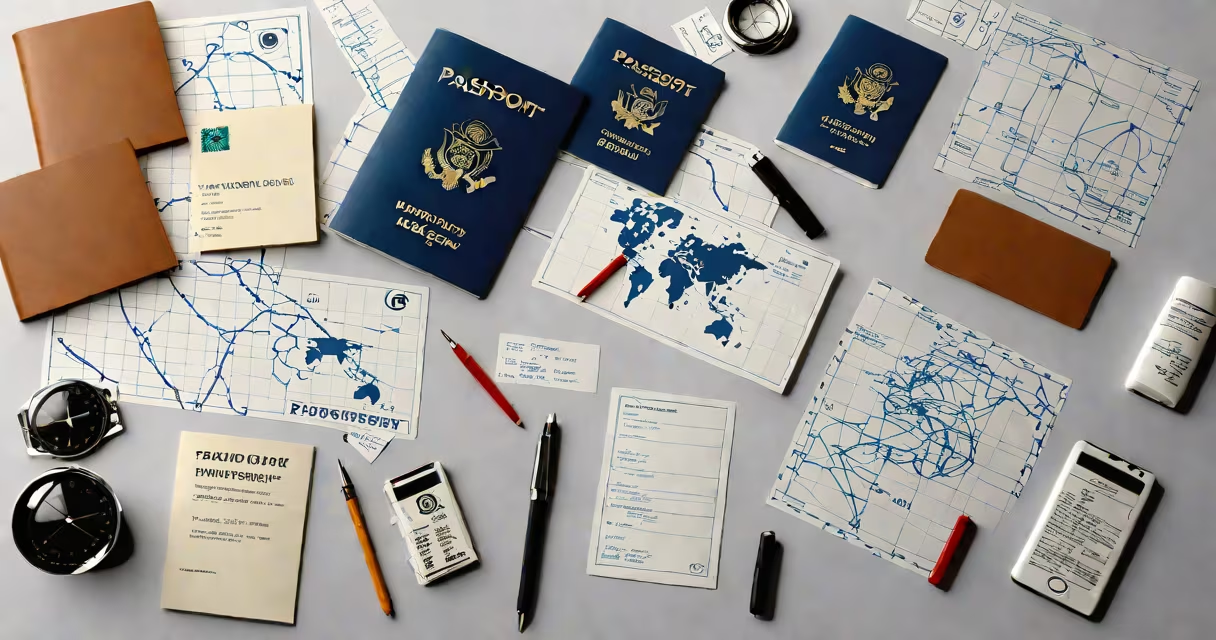
A travel ID is a government-issued document that verifies your identity and citizenship when crossing international borders. It typically includes a photograph, personal details, and official security features. For most international trips, a valid passport is the primary travel ID required.
Passports are issued by national governments and serve as both proof of citizenship and identity. They contain biometric data, machine-readable zones, and holographic elements to prevent forgery. The U.S. Department of State requires all U.S. citizens traveling abroad to have a valid passport, even for short trips to nearby countries like Canada or Mexico.
Some travelers may also need additional documents depending on their destination. These include visas, vaccination records, and travel authorization forms. A visa is a permit issued by a foreign country allowing entry for a specific purpose and duration. For example, Schengen Area countries in Europe require a visa for many non-EU nationals, and applications must be submitted well in advance.
The essential components of a travel ID fall into three categories: primary identification, secondary verification, and destination-specific requirements.
| Document Type | Required For | Examples |
|---|---|---|
| Primary ID | Proof of identity and nationality | Passport, national ID card |
| Secondary ID | Backup verification | Driver's license, birth certificate |
| Destination Requirement | Entry permission | Visa, eTA (electronic travel authorization), health certificate |
For U.S. citizens, a passport is mandatory for air travel to any foreign country. The U.S. Customs and Border Protection (CBP) enforces this rule strictly. Even for land or sea crossings, such as between the U.S. and Canada, a passport is preferred over a passport card or enhanced driver's license.
When traveling to the European Union under the Schengen Agreement, citizens of countries like the United States, Canada, Australia, and Japan can enter without a visa for stays up to 90 days within any 180-day period. However, they still need a valid passport and may be asked to show return tickets or proof of accommodation upon arrival.
Non-U.S. citizens must check the specific entry rules of their destination. For example, India requires a visa for most foreign nationals, which must be applied for through a consulate or online portal. Failure to obtain the correct visa results in denied entry and potential fines.
Many travelers assume that a driver's license or birth certificate qualifies as a travel ID. This is incorrect. While these documents verify identity domestically, they lack the international recognition and security features required for border control.
Another common error is relying on expired documents. A passport must be valid for at least six months beyond the intended date of departure. The International Air Transport Association (IATA) reports that over 10% of international flight delays stem from invalid travel documents, including expired passports.
Travelers often overlook digital requirements. Some countries now require travelers to apply for an electronic travel authorization (eTA) before boarding. Canada's eTA system, for instance, is mandatory for visa-exempt travelers and takes less than 10 minutes to complete online. Without it, passengers are denied boarding.
Consider a U.S. citizen planning a 10-day trip to Tokyo. The required travel ID consists of:
Upon arrival, immigration officers may ask for proof of funds. The Japanese Ministry of Justice recommends carrying at least $1,000 USD equivalent in cash or a bank statement showing sufficient funds. This is not a legal requirement but a standard practice to avoid questioning.
I once traveled to Kyoto during cherry blossom season and was stopped at customs because my passport had expired in July. I had assumed the trip in April would be fine. The officer confirmed my passport was invalid and refused entry. I had to return home and reapply for a new passport, losing two days of travel time and $600 in non-refundable bookings.
Even with correct documents, travelers face risks like theft, loss, or damage. Experts recommend keeping digital copies of key documents stored securely in encrypted cloud services. The U.S. State Department advises travelers to upload scanned copies of their passport and visa to a password-protected email account or app like Google Drive.
Carrying a physical backup is also wise. Print a copy of your passport bio page and store it separately from the original. Include emergency contact numbers and embassy details. The U.S. Embassy in Tokyo provides a free travel registration service that allows consular staff to locate you quickly in case of crisis.
Some travelers forget that children under 18 require separate documentation. A minor traveling internationally without a parent must carry a notarized letter of consent signed by both parents. This prevents false abduction claims and ensures smooth processing at border checkpoints.
Before leaving, verify all documents meet the following criteria:
Travel IDs are not interchangeable. A U.S. passport is accepted in over 190 countries, but a Canadian passport cannot be used in Japan without a visa. Always confirm entry rules with the embassy of your destination country before booking flights.