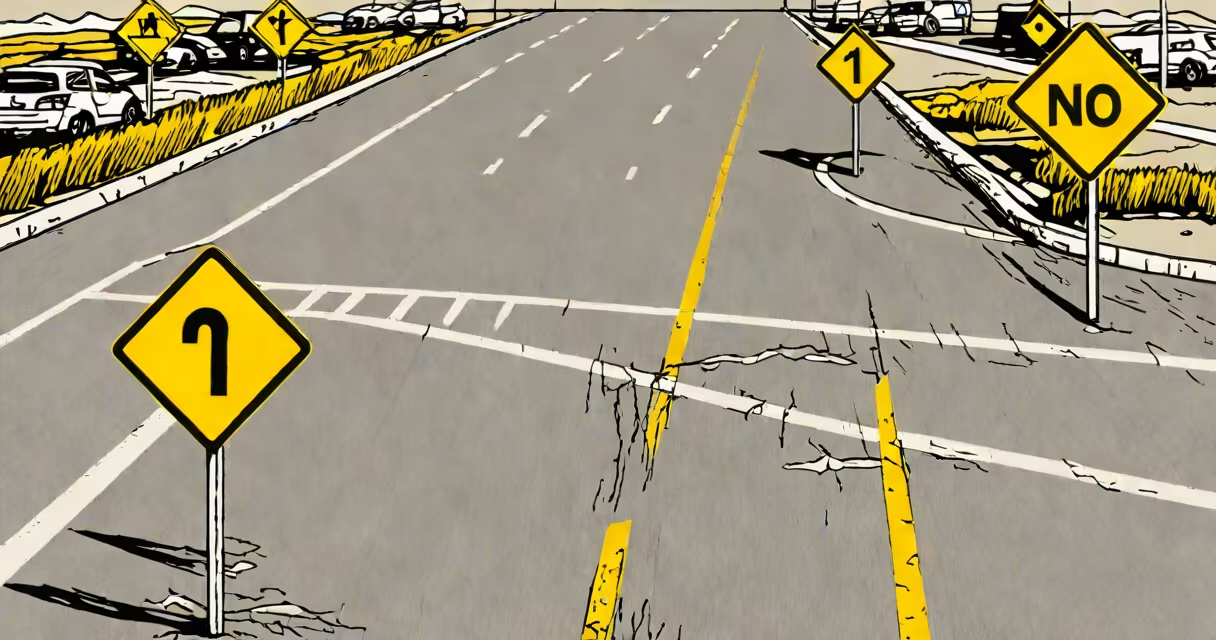
Yellow traffic signs are warning signs that alert drivers to potential hazards ahead, such as sharp turns, construction zones, or pedestrian crossings. They use a standard diamond shape and high-visibility yellow background with black symbols or text.
The Manual on Uniform Traffic Control Devices (MUTCD), published by the Federal Highway Administration (FHWA), sets national standards for traffic signs. According to the MUTCD, yellow signs are reserved exclusively for warnings. This rule applies to all public roads in the United States, ensuring consistency across state lines.
When approaching a yellow sign, drivers must slow down and prepare for changes in road conditions. These signs do not mandate action-they signal caution. Failure to respond appropriately increases crash risk. The National Highway Traffic Safety Administration (NHTSA) reports that 30% of fatal crashes occur at locations with visible warning signs, often due to driver inattention or misinterpretation.
Yellow warning signs operate on visual recognition principles. The human brain processes shapes and colors rapidly. A yellow diamond triggers immediate attention because it's distinct from green (informational) and red (stop/regulatory) signs. This color-coding system reduces reaction time by up to 0.3 seconds, according to a 2018 study by the University of Michigan Transportation Research Institute.
Each symbol on a yellow sign represents a specific hazard. For example, a yellow triangle with a black curve indicates a sharp turn. A figure of a worker with a hard hat signals ongoing construction. The sign's design avoids text when possible, relying on universally recognized icons to cross language barriers.
Drivers should begin slowing down at least 100 feet before reaching a yellow warning sign. This gives enough time to adjust speed and position, especially in poor weather. In fog or rain, visibility drops to 150 feet or less, making early detection critical.
There are nine primary categories of yellow traffic signs, each with a distinct purpose. The following table outlines the most common types, their symbols, and real-world applications.
| Sign Type | Symbol | Meaning | Example Location |
|---|---|---|---|
| Curve Ahead | Black curved line on yellow diamond | Indicates a bend in the road. Speed should be reduced. | Mountain passes, rural highways |
| Slippery When Wet | Two car tracks with water droplets | Warns of low traction on wet pavement. Reduce speed. | Interstate ramps, urban streets |
| Deer Crossing | Black silhouette of a deer | Signals frequent animal crossings. Be alert. | Rural areas near forests, wildlife reserves |
| Construction Zone | Black worker with hard hat | Alerts to roadwork ahead. Expect lane shifts. | Highway maintenance zones |
| Children Crossing | Black children walking | Identifies school zones. Watch for pedestrians. | Elementary school neighborhoods |
Some signs include supplementary panels. For instance, "Sharp Turn - 30 mph" combines a curve symbol with a posted speed limit. These signs are placed 150 to 300 feet before the hazard, depending on road speed and terrain.
A lesser-known fact: the size of a yellow sign correlates with speed limits. On highways with speeds above 50 mph, signs must be at least 24 inches wide. On lower-speed roads, 18-inch signs suffice. This ensures visibility at distance.
Many drivers mistake yellow signs for regulatory signs. Red and white signs with circles or octagons control behavior-stop, yield, speed limits. Yellow signs do not enforce rules. They only advise caution.
For example, a yellow sign showing a school bus with flashing lights does not require stopping. That's a separate red-and-yellow sign with a "Stop" message. Confusing them leads to unnecessary stops or missed dangers.
Another error: assuming all yellow signs indicate danger. Some, like "Merge Left," show upcoming lane changes. Others, like "Road Work Ahead," signal temporary disruptions. The key is context-where the sign appears and what other signs surround it.
I once drove through a rural stretch in Idaho where a yellow sign showed a deer and a speed limit of 35 mph. I slowed down instinctively. Later, I saw a deer carcass on the shoulder. The sign had prevented a collision. That moment confirmed how effective standardized warning signs are.
Every year, over 6,000 fatalities occur in U.S. traffic accidents, according to NHTSA. Many involve failure to react to warning signs. In 2022, the FHWA reported that 18% of crashes in rural areas happened within 500 feet of a yellow warning sign.
These signs reduce accident rates by up to 25% in high-risk zones. A 2020 study by the Texas A&M Transportation Institute found that installing yellow warning signs before sharp curves cut rear-end collisions by 32%.
Drivers who ignore yellow signs face higher insurance premiums. Insurance companies track accident patterns and assign risk scores based on driving behavior. Repeated failures to respond to warnings can increase premiums by 15% to 20% annually.
Understanding what yellow traffic signs mean improves safety and legal compliance. It's not about memorizing every symbol-it's about recognizing the pattern: yellow = caution, black = hazard, diamond = warning.