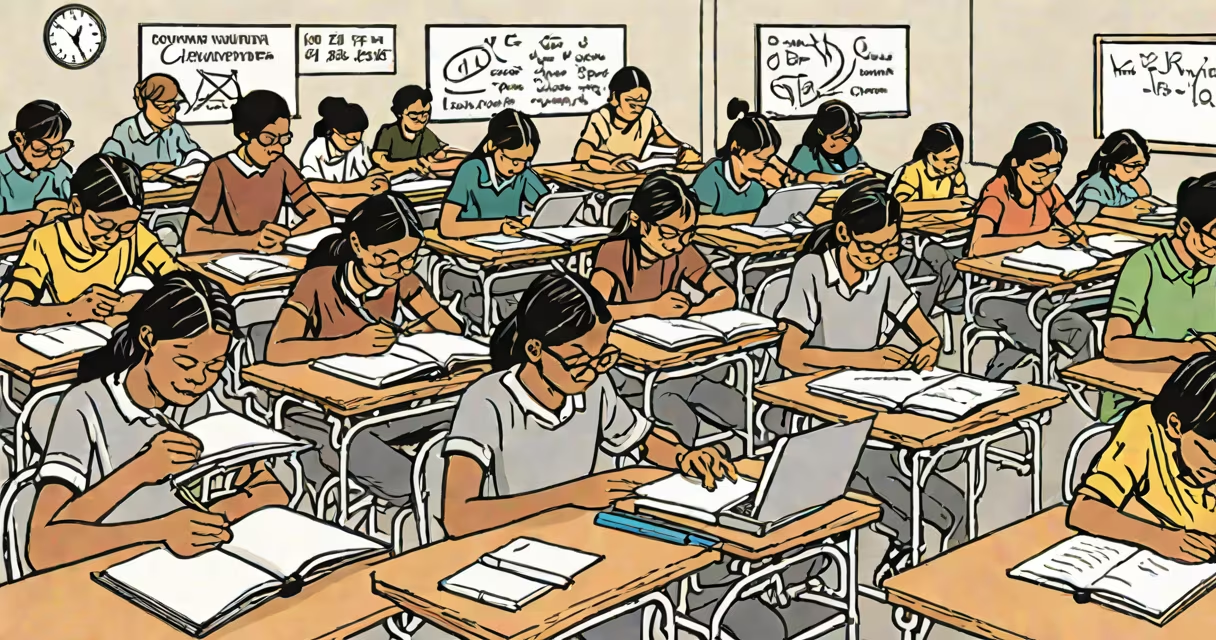
What do you think about English? It's the most widely spoken language in the world, used by over 1.5 billion people either as a first or second language. Its dominance stems from historical expansion through British colonialism and American cultural influence, shaping international business, science, and digital communication.
English evolved from Old English, a Germanic tongue brought to Britain by Anglo-Saxon settlers in the 5th century. Over time, it absorbed vocabulary from Norse, Latin, and French due to invasions and trade. The printing press standardized spelling in the 15th century, and the Industrial Revolution spread English globally. Today, it serves as the primary language of aviation, computing, and scientific research.
More than 60 countries recognize English as an official language. India uses it in courts and higher education. Nigeria employs it in government and media. In the European Union, English is the most frequently used working language despite not being an official EU language. This widespread adoption reflects both practical utility and unequal access to global systems.
English operates differently depending on context. In formal settings like diplomacy or academia, it follows strict grammar and precise terminology. In informal contexts such as social media or texting, users often ignore standard rules. For example, "u r gr8" replaces "you are great" in casual messages. This flexibility allows rapid adaptation but challenges consistency in learning and assessment.
Non-native speakers now outnumber native speakers. According to UNESCO, over 80% of English users speak it as a second or additional language. These speakers bring new dialects into existence-Indian English, Nigerian Pidgin English, Singaporean English-each with distinct grammar, pronunciation, and vocabulary. For instance, "I am going to the market" becomes "I go market" in some Asian English varieties, reflecting local syntactic patterns.
Despite its reach, English is not neutral. Its dominance reinforces existing power imbalances. Countries with limited resources may struggle to teach English effectively, creating educational disparities. A 2022 study by the British Council found that only 27% of children in low-income nations have access to quality English instruction, compared to 83% in high-income nations.
English appears in different forms based on purpose and audience. Below is a breakdown of common categories:
| Type | Use Case | Example | Source |
|---|---|---|---|
| Standard English | Formal writing, academic publishing | "The results indicate a significant correlation." | Cambridge Dictionary, 2023 |
| Spoken English | Everyday conversation, informal dialogue | "Hey, wanna grab coffee later?" | Merriam-Webster, 2022 |
| Global English | International business, online forums | "Let's sync up tomorrow." | British Council, 2021 |
| Creole/Contact Variants | Colonial-era languages, hybrid speech | "Dis is my book" (Caribbean English) | UNESCO, 2020 |
These variants aren't errors-they're adaptations. When I taught English in Jakarta, students used "kita nggak bisa dateng" (we can't come) alongside standard English phrases. They weren't failing; they were negotiating meaning across cultures. That's how language grows.
Many assume English is universally understood or inherently superior. That's false. English proficiency varies widely even among speakers of the same nationality. A 2023 EF English Proficiency Index report showed that while Finland ranked highest in Europe, scores dropped sharply in Eastern Europe and parts of Africa.
Another myth: English is easy to learn. It isn't. Irregular verbs like "go/went/gone," silent letters in "knife" or "island," and homophones like "there/their/they're" create consistent hurdles. Non-native learners often struggle more than native speakers with pronunciation and intonation, especially in fast speech.
Some believe English threatens local languages. While it can displace minority tongues, it doesn't always. In Wales, Welsh and English coexist legally and socially. Schools teach both. In Canada, French and English are official languages. The key factor isn't English itself-it's policy. Where governments support multilingualism, language loss slows.
Consider a Reddit thread discussing climate change. Users from Brazil, Japan, and Kenya post in English. One writes: "The data shows rising temps since 1980." Another replies: "Agreed-my village saw floods last year." Both understand each other despite different accents and backgrounds.
This exchange happens because English functions as a shared tool-not a uniform standard. The speaker from Kenya uses "village" instead of "town," which native speakers might misinterpret. But context clarifies intent. The language adapts to fit diverse realities.
Without English, many cross-border collaborations would stall. Scientific papers published in journals like Nature require English submissions. Software developers use English-based coding syntax. Yet this reliance creates exclusion. A researcher in rural Nepal may lack internet access or training to publish in English, limiting their visibility.
What do you think about English? It's not just a language-it's a system of power, access, and identity. Its global reach offers connection but also inequality. Understanding this helps us move beyond simplistic views of "good" or "bad" English.
Language isn't neutral. But neither is it fixed. As more people shape English in their own ways, the language evolves beyond any single nation's control. The future of English lies not in preserving purity-but in embracing diversity.