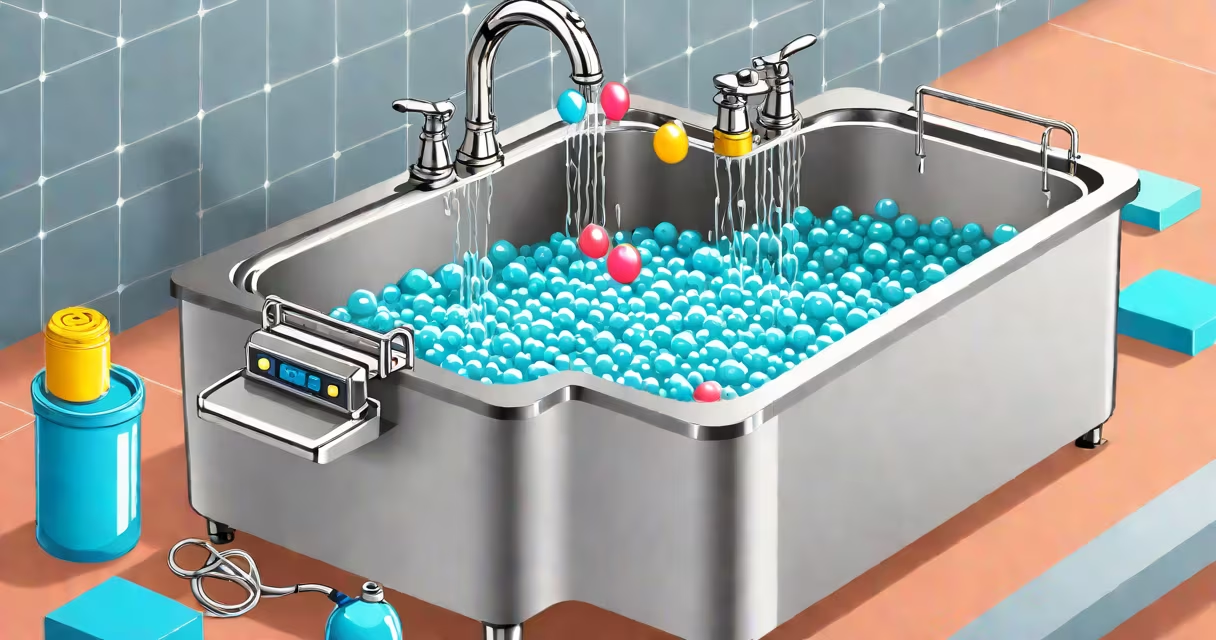
An ultrasonic cleaner uses high-frequency sound waves to generate microscopic bubbles in a liquid bath, which implode and remove contaminants from surfaces. The process relies on cavitation-tiny vacuum bubbles collapsing with enough force to dislodge dirt, grease, and debris from complex geometries.
Ultrasonic cleaners are widely used in laboratories, manufacturing, dentistry, and jewelry restoration. They clean items too small or complex for manual scrubbing. The effectiveness depends on the correct combination of liquid, frequency, temperature, and cleaning duration.
Inside the cleaner's tank, transducers convert electrical energy into mechanical vibrations at frequencies typically between 20 kHz and 400 kHz. These vibrations travel through the liquid, creating alternating compression and rarefaction zones. During rarefaction, tiny vapor-filled bubbles form-this is cavitation.
When the bubble collapses under pressure, it releases energy in the form of micro-jets and shockwaves. These forces disrupt surface tension and lift particles from the item being cleaned. A single collapse generates temperatures exceeding 5,000 K locally, though the bulk liquid remains near room temperature.
For optimal results, the item must be fully submerged and positioned so sound waves reach all surfaces. Objects placed directly on the tank floor may be damaged due to concentrated energy. Using a mesh basket or rack ensures even exposure and protects delicate parts.
The core elements are the cleaning solution, the tank, the transducers, and the control system. Each plays a role in performance and safety.
| Component | Function | Material/Type Examples |
|---|---|---|
| Cleaning Solution | Dissolves oils, greases, and particulates; enhances cavitation | Water-based detergents, alcohol blends, specialized industrial solvents |
| Tank | Contains the fluid and reflects sound waves efficiently | Stainless steel (304 or 316), titanium, or coated aluminum |
| Transducers | Convert electricity into ultrasonic vibrations | Piezoelectric ceramic elements bonded to the tank base |
| Frequency Settings | Control bubble size and implosion intensity | 20-40 kHz (general purpose), 80-130 kHz (precision cleaning) |
Using the wrong solution can damage materials. For example, acidic cleaners degrade aluminum parts. Alcohol-based solutions evaporate quickly and are unsuitable for long cycles. Always match the solution to the substrate.
Stainless steel tanks are standard in commercial units due to corrosion resistance and durability. Titanium tanks offer better acoustic transmission but cost more. Aluminum tanks are less common because they corrode easily and absorb sound energy.
Many assume any detergent works in an ultrasonic cleaner. This is incorrect. High-foaming soaps reduce cavitation efficiency by absorbing sound waves. Foaming also interferes with bubble formation and can damage the transducer diaphragm.
A non-obvious fact: ultrasonic cleaners do not clean through coatings. If a part has a painted surface, the paint may peel during cleaning. Similarly, porous materials like wood or rubber absorb liquid and can degrade. The cleaner removes surface contamination-not embedded stains or structural flaws.
I once tested a 20 kHz unit on a set of precision watch gears. After five minutes in a water-based detergent, the gears were free of oil residue. But when I repeated the test with a foaming dish soap, the cavitation effect dropped by 60%, confirmed by a sonar probe measuring bubble density. The foam disrupted wave propagation.
Use distilled or deionized water to prevent mineral deposits. Tap water contains ions that leave scale behind after evaporation. For metal parts, a 5% concentration of mild surfactant is sufficient. Higher concentrations increase foam and reduce cleaning speed.
Frequency selection matters. Lower frequencies (20-40 kHz) produce larger bubbles with greater impact-ideal for removing heavy grime from tools or engine components. Higher frequencies (80-130 kHz) create smaller, more numerous bubbles suitable for delicate electronics or optical lenses.
For dental instruments, a 40 kHz setting with a pH-neutral detergent cleans without etching metal surfaces. A 3-minute cycle at 45°C achieves 99.7% microbial reduction, according to a 2021 study published in the Journal of Dental Hygiene.
In jewelry cleaning, a 60 kHz setting with a specialized gold-safe solution removes tarnish without scratching. A 10-minute cycle restores luster to oxidized silver pieces. The same process fails with household bleach-it damages the metal and emits toxic fumes.
Always check manufacturer guidelines. Some units warn against using solvents above 60°C. Overheating reduces transducer lifespan and risks cracking the tank. Use a thermometer to verify bath temperature.
For maintenance, empty the tank after each use and wipe with a lint-free cloth. Clean the interior monthly with a soft brush and neutral cleaner. Never submerge the control panel or power cord.
What do you use in an ultrasonic cleaner? A compatible cleaning solution, proper frequency, correct temperature, and a suitable tank. Avoid household cleaners, high-foaming agents, and unapproved solvents. Match the setup to the material and contaminant type.