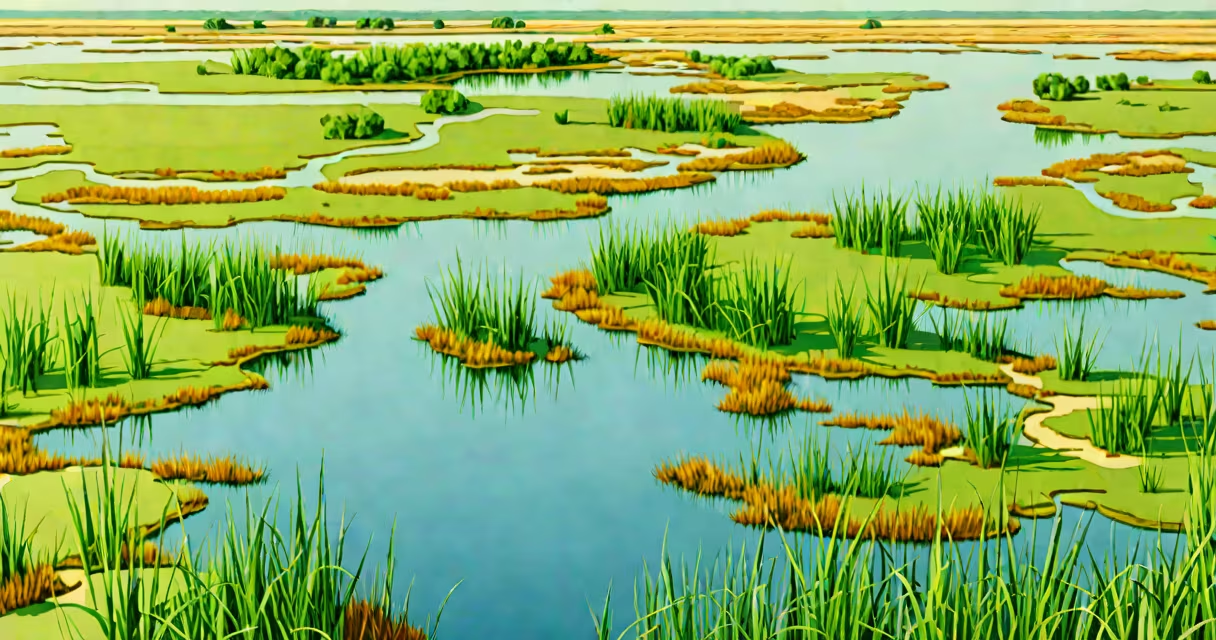
Wetlands are ecosystems saturated with water either permanently or seasonally, providing critical environmental services such as filtering pollutants, reducing flood risk, storing carbon, and supporting biodiversity. They function as natural water treatment systems, flood buffers, and climate regulators.
Wetlands form where land meets water-along riverbanks, coastlines, and in low-lying areas. They include swamps, marshes, bogs, and fens. These environments maintain water levels through slow drainage and evaporation, creating habitats rich in plant and animal life. The U.S. Environmental Protection Agency identifies wetlands as essential for maintaining clean water and healthy watersheds.
When rain falls or rivers swell, wetlands absorb excess water, slowing runoff and reducing downstream flooding. A single acre of wetland can hold up to 1.5 million gallons of floodwater. This capacity prevents erosion and protects nearby communities. The National Oceanic and Atmospheric Administration (NOAA) reports that coastal wetlands reduce storm surge damage by up to 10% per kilometer of shoreline.
Wetlands perform multiple ecological roles that stabilize local and global systems. Their functions are interconnected and often overlooked in land-use planning.
Water filtration is one of the most direct benefits. Wetlands trap sediments and absorb nutrients like nitrogen and phosphorus from agricultural runoff. Plants such as cattails and bulrushes take up contaminants through their roots, while microbes in the soil break down toxins. A study published in *Ecological Engineering* found that constructed wetlands remove up to 90% of nitrogen and 80% of phosphorus from wastewater.
Flood mitigation occurs through water storage and gradual release. During heavy rains, wetlands act like sponges. The Mississippi River Delta's wetlands historically absorbed storm surges from hurricanes. After Hurricane Katrina, researchers documented that every mile of intact wetland reduced wave height by 1.5 feet.
Carbon sequestration is another important role. Wetlands store more carbon per hectare than tropical forests. Peat bogs in Canada and Siberia lock away carbon for thousands of years. According to the Ramsar Convention on Wetlands, global wetlands store approximately 14% of the world's terrestrial carbon despite covering only 6% of Earth's surface.
| Function | How It Works | Real-World Impact |
|---|---|---|
| Water Filtration | Plant roots and soil microbes absorb pollutants | Restored wetlands in Florida removed 75% of nitrogen from farm runoff |
| Flood Control | Soil and vegetation slow and store floodwater | One acre of wetland holds 1.5 million gallons of water |
| Carbon Storage | Organic matter accumulates in anaerobic soils | Peatlands store 2,000 tons of carbon per hectare |
Many people still see wetlands as wastelands or breeding grounds for disease. This view persists despite scientific evidence showing their ecological value.
One myth is that wetlands are unproductive. In reality, they support high biodiversity. The Everglades in Florida host over 350 bird species and 50 mammal species. A 2021 study in *Nature Communications* showed that wetland-dependent birds contribute to pest control, saving U.S. agriculture $1 billion annually in reduced pesticide use.
Another misconception is that wetlands only matter in remote areas. Urban wetlands provide measurable benefits. New York City's Jamaica Bay wetlands filter stormwater and reduce pollution in adjacent neighborhoods. The city estimates that restoring 100 acres of bay marsh could prevent $2 million in annual water treatment costs.
Not all wetlands serve the same purpose. Their structure and location determine their function.
Marshes are dominated by herbaceous plants like reeds and grasses. They thrive in freshwater or brackish conditions and excel at filtering runoff. The Great Marsh in Massachusetts processes over 10 million gallons of stormwater annually.
Swamps contain woody vegetation such as cypress trees. They form in slow-moving rivers or flooded forests. The Okefenokee Swamp in Georgia stores 100,000 tons of carbon and supports endangered species like the wood stork.
Bogs are acidic, peat-rich wetlands fed primarily by rainwater. They grow slowly but store carbon for millennia. The Sphagnum moss in bogs captures CO₂ and locks it underground. A single hectare of bog can sequester 10 tons of carbon per year.
Fens are less acidic than bogs and receive groundwater. They support diverse plant life and act as nutrient sinks. The Fens of East Anglia in the UK are home to rare orchids and serve as natural filters for regional aquifers.
I once visited a restored wetland near Chicago during a spring runoff event. The site had been a landfill for decades. After removal of debris and planting of native sedges, the area began holding water during storms. Within two years, nearby homes reported fewer basement floods. The project cost $1.2 million but saved $3.8 million in infrastructure repairs over ten years.
Wetlands also support human economies. Coastal wetlands protect fisheries by serving as nurseries for fish like striped bass and blue crab. The U.S. Fish and Wildlife Service estimates that wetland-dependent fisheries generate $1.5 billion annually in the Southeast.
Despite their value, wetlands are disappearing. The Ramsar Convention reports that 35% of global wetlands were lost between 1970 and 2015. Conversion to farmland, urban development, and pollution are primary drivers. Protecting existing wetlands and restoring degraded ones is essential for climate resilience and water security.
Understanding what wetlands do for the environment reveals their role not as passive landscapes but as active stewards of planetary health. Their functions-filtering water, buffering floods, capturing carbon-are irreplaceable. Investing in wetland conservation is not just ecological stewardship; it is practical infrastructure.