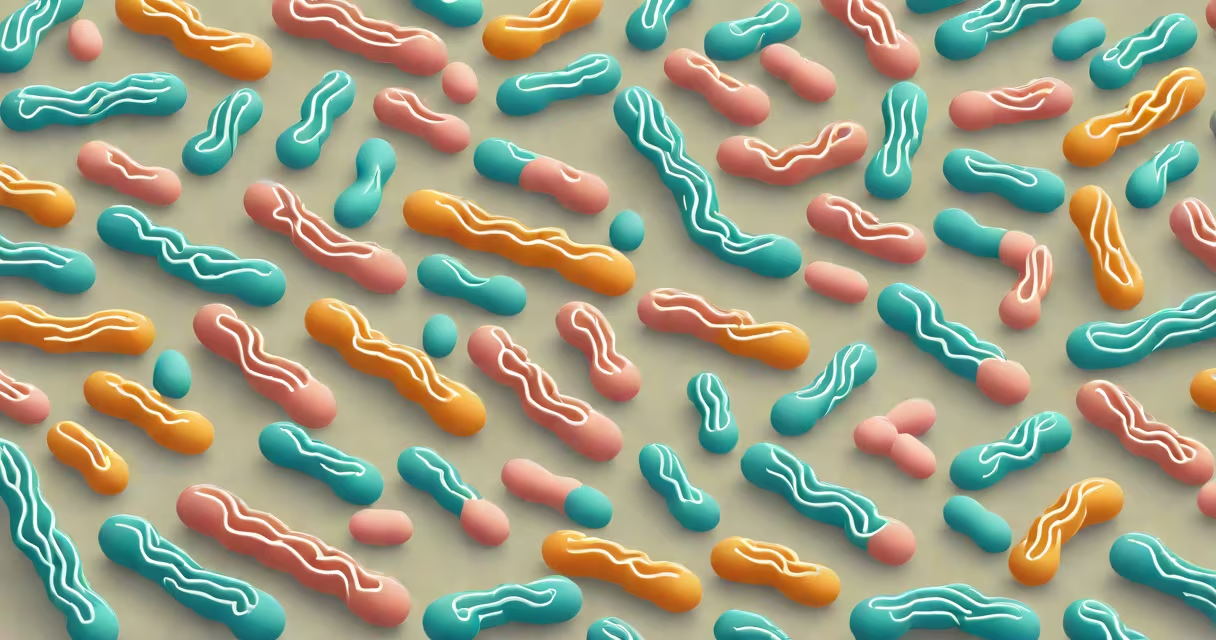
Chromosomes are tightly coiled structures made of DNA and proteins that store and organize an organism's genetic information. They ensure accurate copying and distribution of genes during cell division, enabling inheritance and cellular function.
Each chromosome contains hundreds to thousands of genes-segments of DNA that code for specific proteins. These proteins determine traits like eye color, enzyme activity, and immune response. In humans, 46 chromosomes (23 pairs) are inherited-one set from each parent-and are found in nearly every cell of the body.
During cell division, chromosomes condense into visible, compact forms. This allows the cell to precisely separate copies of DNA between daughter cells. Without proper chromosome behavior, errors in genetic distribution can lead to developmental disorders or cancer.
Chromosomes function through a coordinated process involving DNA packaging, replication, and segregation. The DNA molecule wraps around histone proteins to form chromatin, which further folds into the compact structure seen under a microscope during mitosis or meiosis.
Before a cell divides, its chromosomes duplicate during the S phase of the cell cycle. Each chromosome becomes two identical sister chromatids joined at a centromere. During metaphase, these chromatids align at the cell's equator. In anaphase, the sister chromatids split and move to opposite poles, ensuring each new cell receives a complete set of genetic material.
This precise mechanism prevents loss or duplication of genetic segments. Errors-such as nondisjunction, where chromosomes fail to separate-can result in conditions like Down syndrome (trisomy 21), where an individual inherits three copies of chromosome 21 instead of two.
Chromosomes vary by shape and centromere position. There are four main types based on centromere location:
| Type | Centromere Position | Example |
|---|---|---|
| Metacentric | Center | Human chromosome 1 |
| Submetacentric | Slightly off-center | Human chromosome 2 |
| Acrocentric | Close to one end | Human chromosomes 13, 14, 15, 21, 22 |
| Telocentric | At the very end | Not found in humans; common in some animals and plants |
Humans have 22 autosomal pairs and one pair of sex chromosomes (XX in females, XY in males). The X and Y chromosomes differ in size and gene content-X carries about 1,000 genes, while Y has fewer than 50, most related to male development.
Chromosomes also contain regulatory regions such as promoters and enhancers, which control when and where genes are turned on. These elements don't code for proteins but are important for proper gene expression during development.
Chromosomes are central to all eukaryotic life-. Their primary roles include:
In animal cells, chromosomes are housed in the nucleus. During interphase, chromatin exists in a diffuse state. As the cell prepares to divide, chromatin condenses into discrete chromosomes visible under a light microscope.
A key example is the human karyotype-a standardized image of all 46 chromosomes arranged by size and centromere position. Karyotyping identifies abnormalities such as translocations (e.g., Philadelphia chromosome in chronic myeloid leukemia) or deletions (e.g., Cri-du-chat syndrome due to partial deletion of chromosome 5).
Many assume chromosomes are only involved in reproduction. But they play a critical role in everyday cell function. Even non-dividing cells like neurons maintain stable chromosomes to support long-term gene expression.
Another misconception is that chromosomes are static. In reality, their structure dynamically changes. Chromosomal loops bring distant regulatory elements into contact with target genes, enabling complex developmental programs. For instance, the HOXD gene cluster controls limb development through looping interactions across hundreds of kilobases of DNA.
Some confuse chromosomes with DNA. While DNA is the molecule that encodes genetic information, chromosomes are the organized packages that protect and manage it. A single human cell contains about 2 meters of DNA-wound into 46 chromosomes to fit inside a nucleus less than 10 micrometers wide.
One non-obvious fact: Chromosomes are not always linear. In some bacteria and viruses, DNA forms circular chromosomes. Human mitochondria also contain a small circular chromosome with 16,569 base pairs encoding 13 proteins essential for energy production.
Down syndrome results from trisomy 21-three copies of chromosome 21 instead of two. This extra genetic material disrupts normal development. Individuals with Down syndrome often exhibit intellectual disability, distinctive facial features, and increased risk of heart defects and early-onset Alzheimer's disease.
Diagnosis typically occurs via prenatal testing. Amniocentesis extracts fetal cells from amniotic fluid, where chromosomes are analyzed. A karyotype reveals the presence of three copies of chromosome 21. The condition affects approximately 1 in 700 live births globally, according to the Centers for Disease Control and Prevention (CDC).
Understanding what chromosomes do enables early detection and informed care planning. Research continues into gene therapies targeting overexpression of specific genes on chromosome 21.
I once observed chromosome spreads during a genetics lab session. After treating cells with colchicine to arrest them in metaphase, we stained the chromosomes with Giemsa dye. The resulting banding pattern revealed clear differences in size and centromere placement. Identifying the sex chromosomes was straightforward-X and Y were visibly different in shape and size. Seeing the actual chromosomes helped solidify how structure relates to function.
Chromosomes are not just carriers of hereditary information-they are changing regulators of life. From guiding embryonic development to maintaining tissue health, their functions span from microscopic precision to macroscopic outcomes.
Knowing what chromosomes do explains how traits pass, how diseases arise from genetic errors, and why cellular integrity is fundamental to survival.