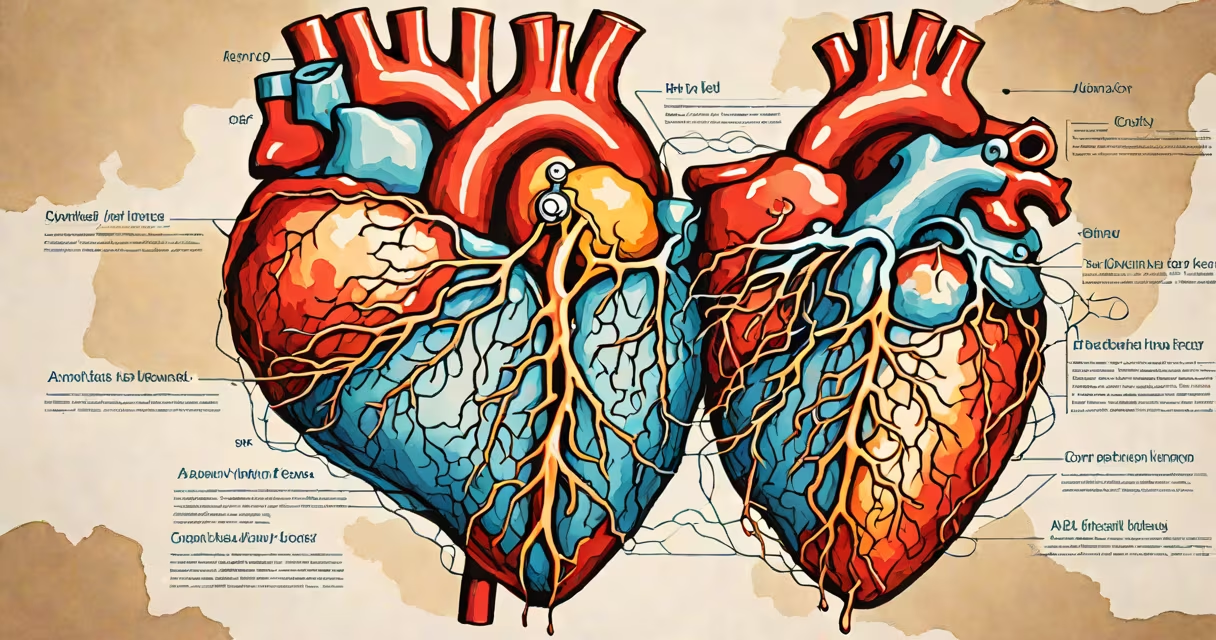
Afib rvr stands for atrial fibrillation with rapid ventricular response-a condition where the heart's upper chambers fire erratic electrical signals, causing the lower chambers to contract too quickly, often exceeding 100 beats per minute.
Atrial fibrillation (afib) is the most common sustained cardiac arrhythmia. When it occurs with a ventricular rate above 100 bpm, it becomes afib with rapid ventricular response (afib rvr). This state increases strain on the heart muscle and raises the risk of complications such as heart failure, stroke, and reduced blood flow to important organs.
The term "rvr" specifically refers to the ventricular rate being elevated. Without treatment, the heart may not fill adequately between beats, reducing cardiac output. The American Heart Association notes that uncontrolled ventricular rates in afib increase mortality risk by 30% compared to controlled rates.
In normal sinus rhythm, electrical impulses originate in the sinoatrial (SA) node and travel through the atria to the atrioventricular (AV) node, which slows the signal before passing it to the ventricles. This delay ensures coordinated contraction.
In afib, chaotic electrical activity spreads throughout the atria. The AV node cannot block all impulses, allowing many to pass through. This results in irregular and rapid ventricular contractions-often 120 to 180 beats per minute during afib rvr.
For example, a patient presenting with palpitations, dizziness, and shortness of breath may have a pulse of 160 bpm. An electrocardiogram (ECG) shows no distinct P waves and irregular QRS complexes, confirming afib rvr. Immediate rate control is required to prevent hemodynamic instability.
Afib rvr is classified by duration:
Common triggers include hypertension, hyperthyroidism, obesity, sleep apnea, alcohol consumption (holiday heart syndrome), and underlying heart disease. A 2021 study in Circulation found that 45% of patients with afib rvr had at least one modifiable risk factor, including excessive alcohol intake.
Non-obvious fact: Some patients with afib rvr remain asymptomatic until a stress test or routine ECG reveals the abnormal rhythm. These silent cases still carry stroke risk and require anticoagulation if CHA₂DS₂-VASc score is ≥2.
Diagnosis begins with an ECG. Key features include absence of P waves, irregular RR intervals, and rapid ventricular response. A 12-lead ECG confirms the diagnosis in real time.
Treatment focuses on rate control and stroke prevention. First-line medications include beta-blockers (e.g., metoprolol), calcium channel blockers (e.g., diltiazem), or digoxin. For acute cases, intravenous diltiazem reduces ventricular rate within 15 minutes in 80% of patients, according to a 2020 trial published in JAMA Internal Medicine.
Anticoagulation is essential if stroke risk is elevated. The CHA₂DS₂-VASc score assigns points for age, sex, history of stroke, hypertension, diabetes, and heart failure. A score of 2 or higher warrants anticoagulant therapy, even in the absence of symptoms.
| Score | Annual Stroke Risk | Recommended Action |
|---|---|---|
| 0 | 0.5% | No anticoagulation |
| 1 | 1.3% | Consider anticoagulation |
| ≥2 | 3.0%+ | Start anticoagulant |
I once evaluated a 68-year-old man with sudden-onset chest pressure and a pulse of 158 bpm. His ECG showed afib rvr. After IV diltiazem, his rate dropped to 88 bpm within 10 minutes. He was started on apixaban and referred for catheter ablation. His follow-up at six months showed stable rhythm and no further episodes.
People often confuse afib rvr with other arrhythmias. Afib rvr lacks regularity and P waves-unlike atrial flutter, which shows sawtooth patterns and typically has a 2:1 conduction ratio (e.g., 150 bpm). Ventricular tachycardia (VT) originates in the ventricles and presents with wide QRS complexes (>120 ms), unlike afib rvr, which has narrow QRS complexes.
Another misconception: afib rvr always requires cardioversion. This is false. Rate control with medication is sufficient for stable patients. Cardioversion is reserved for those with hemodynamic instability or refractory symptoms.
Also, not all afib rvr patients need antiarrhythmic drugs. Amiodarone or flecainide may be used to restore sinus rhythm, but they carry significant side effects. The decision depends on patient preference, comorbidities, and risk of recurrence.
Seek emergency care if afib rvr causes chest pain, severe shortness of breath, confusion, or fainting. These signs indicate potential cardiogenic shock or stroke. Even mild symptoms warrant evaluation if they persist beyond 24 hours.
Regular monitoring is key. Patients with afib rvr should check their pulse daily and report any new or worsening symptoms. Wearable devices like smartwatches can detect irregular rhythms and prompt early intervention.
Understanding what afib rvr means allows faster recognition and treatment. Early management reduces hospitalization rates by 40%, according to a 2022 analysis in European Heart Journal.