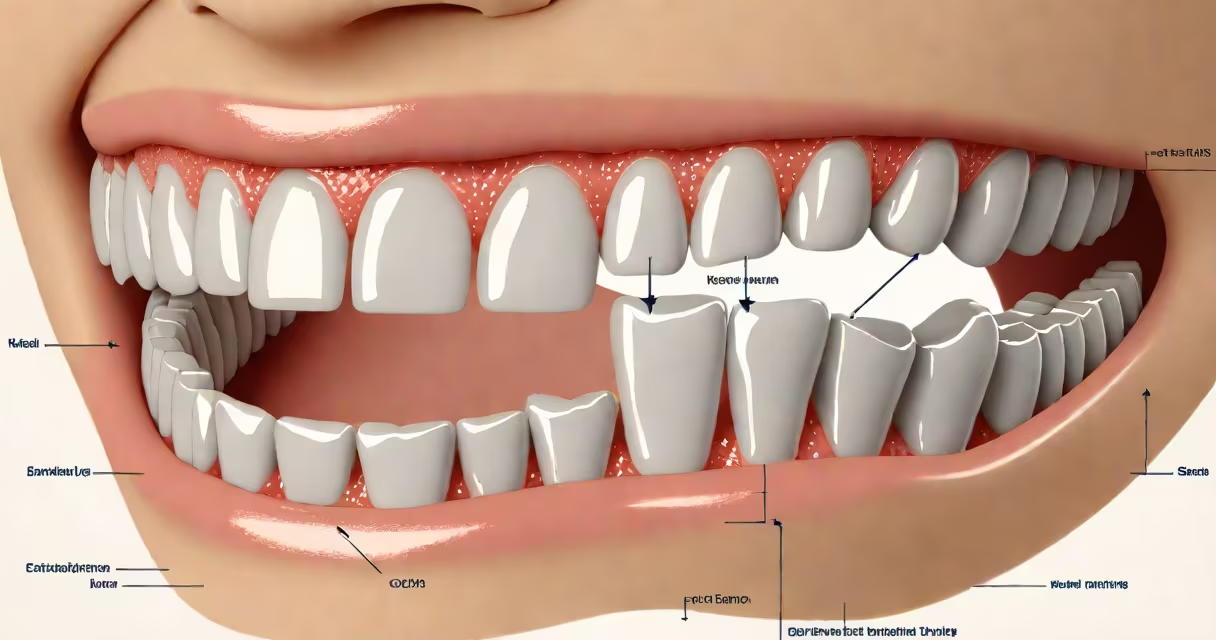
Clear teeth refer to teeth that appear free of plaque, tartar, stains, and visible decay-indicating effective daily brushing, flossing, and regular professional cleanings. This state reflects both visual cleanliness and underlying dental health.
Clear teeth are not necessarily white or perfectly aligned. They are defined by absence of visible debris, discoloration, or signs of gum disease. A dentist may describe your teeth as "clear" during a routine exam if they show no buildup of bacterial film or calculus, even if the enamel appears slightly yellow due to genetics or diet.
The term is often misunderstood as synonymous with "perfect" or "whitened" teeth. But in clinical practice, "clear" describes structural and hygienic integrity-not cosmetic enhancement. For example, a person with yellowish enamel but no plaque or cavities still has clear teeth.
Dental professionals define clear teeth through visual inspection and probing. During a six-month checkup, a dentist uses a dental mirror and explorer to assess the surface of each tooth. If no sticky plaque remains after brushing, and no dark spots or rough areas indicate early decay, the teeth are deemed clear.
Plaque forms within 24 hours after eating. Without removal, it hardens into tartar-visible as brown or yellow deposits near the gumline. Tartar cannot be removed by brushing alone. Its presence signals that teeth are not clear. Regular professional cleanings remove tartar and restore clarity.
A 2022 study published in the Journal of Clinical Dentistry found that individuals who brushed twice daily and flossed once daily had 78% fewer visible plaque sites compared to those who skipped flossing. This data supports that consistent home care directly correlates with clear teeth.
Clear teeth do not mean uniform appearance. The condition varies based on cause and context:
| Type | Appearance | Underlying Cause | Health Implication |
|---|---|---|---|
| Visually clear | No visible plaque, stains, or decay | Good oral hygiene, no sugar-heavy diet | Low risk of cavities and gingivitis |
| Biologically clear | Teeth feel smooth under tongue, no rough edges | Professional cleaning performed recently | Prevents progression to periodontal disease |
| Genetically clear | Yellowish or off-white enamel, no stains | Natural enamel thickness and mineral density | Resistant to acid erosion and wear |
For example, a patient with naturally yellow enamel who brushes twice daily and avoids soda may have biologically clear teeth despite not being "white." Conversely, someone with whitened teeth using abrasive toothpaste may develop enamel erosion-making their teeth less clear over time.
Many people confuse clear teeth with whiter teeth. Whitening treatments remove surface stains but don't eliminate plaque or prevent decay. A tooth can be very white yet harbor hidden decay beneath the enamel-this is not clear teeth.
Another myth is that clear teeth mean no sensitivity. Not true. A tooth can be visually clear and still respond to cold or sweet stimuli due to exposed dentin or receding gums. Sensitivity indicates nerve exposure, not lack of clarity.
Clear teeth do not guarantee immunity to cavities. The American Dental Association notes that 40% of adults aged 30-64 have untreated tooth decay-even with daily brushing. Decay begins between teeth and under the gumline, invisible to the naked eye. A tooth may look clear but still contain early-stage caries detectable only via X-ray.
I observed a 34-year-old woman during a dental visit. She reported brushing twice daily and flossing weekly. Her teeth looked clean-no visible plaque or staining. However, a dental probe detected soft spots on her lower molar. An X-ray revealed a small cavity beneath the enamel. Despite her teeth appearing clear, she had early decay.
This case illustrates that visual clarity doesn't replace diagnostic tools. The dentist labeled her teeth "visually clear" but "clinically compromised." After treatment, she began flossing daily and returned for follow-ups. Within six months, her teeth remained visually clear, and no new cavities developed.
Clear teeth can mask conditions like dry mouth or bruxism. Saliva neutralizes acids and washes away food particles. When saliva production drops-due to medications or dehydration-plaque accumulates faster. A patient may brush regularly but still develop cavities because their mouth lacks protective fluid.
Similarly, nighttime teeth grinding wears down enamel. Over time, this exposes dentin, which is softer and more prone to decay. Even with perfect brushing habits, a person with bruxism may lose tooth structure while maintaining a clear appearance. This is why dentists recommend night guards for patients with grinding habits.
For this reason, "clear teeth" is not a standalone health indicator. It must be evaluated alongside other factors: gum attachment, bite alignment, and history of decay. A single visit may show clear teeth, but long-term patterns matter more.
Understanding "clear teeth" requires distinguishing it from similar concepts:
Bone loss typically shows no symptoms until it reaches 40% of support. By then, teeth may loosen. A patient with clear teeth but loose molars likely has hidden bone loss. This underscores the need for regular X-rays, even when teeth look clean.
Clear teeth are a sign of current hygiene success. They do not predict future health. Maintaining them requires ongoing care, including annual dental exams and fluoride treatments.
Clear teeth mean teeth that are free of visible debris and decay. They reflect consistent habits and professional maintenance. But they don't replace diagnostics. True dental health combines visual clarity with clinical evidence.