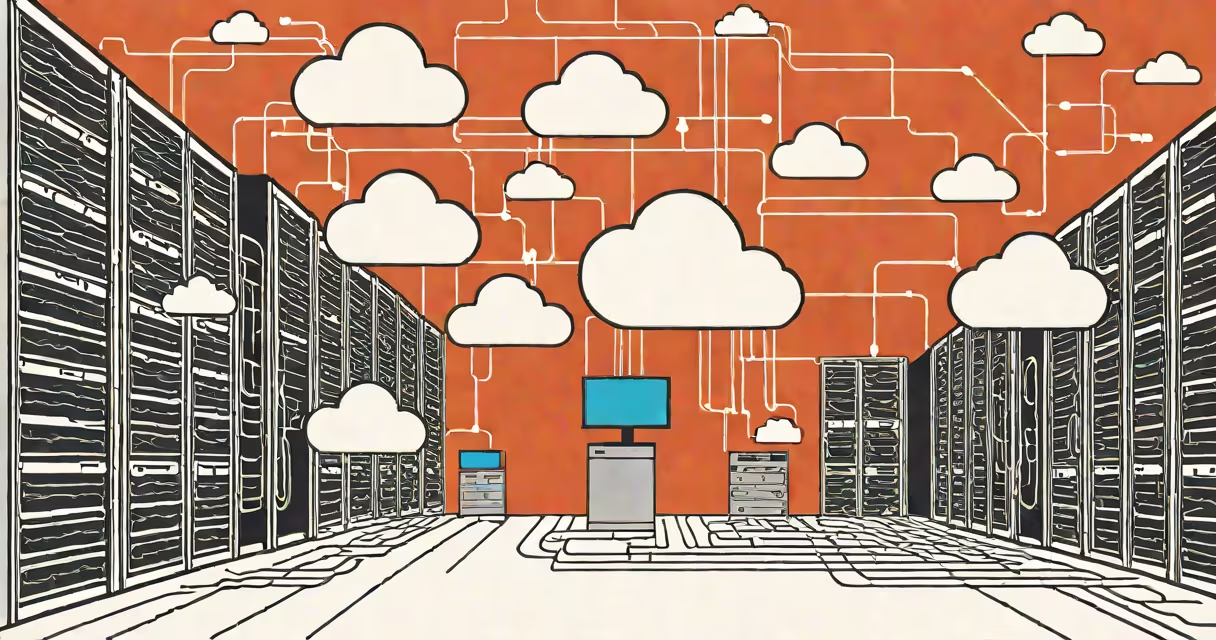
Data as a Service (Daas) is a cloud-based model where organizations deliver structured data to users through APIs, web portals, or software integrations. It enables on-demand access to curated datasets without requiring users to manage underlying storage or processing infrastructure.
Daas operates on the principle that data is a product, not just a byproduct of operations. Instead of building custom pipelines to extract, clean, and serve data, businesses consume it as a managed service. This reduces setup time and lowers operational overhead.
For example, a weather analytics company might offer real-time precipitation forecasts via a Daas API. A retail app integrates this feed to adjust inventory recommendations based on local rainfall patterns. The data is updated every 15 minutes, delivered securely over HTTPS, and billed per request-no database configuration needed.
Daas functions through a layered architecture: data ingestion, transformation, storage, and delivery. Raw data enters from sources like sensors, CRM systems, or public databases. It's cleaned, enriched, and normalized in a central pipeline before being exposed via standardized interfaces.
APIs are the most common delivery method. A developer calls an endpoint like GET /v1/weather/forecast?location=NYC, receives a JSON response with temperature, humidity, and precipitation probability, and embeds it into an application. Authentication is typically handled using API keys or OAuth tokens.
Behind the scenes, the provider manages server scaling, backup retention, and compliance. A financial services firm using a credit risk Daas solution doesn't need to maintain a dedicated team to monitor data freshness or detect anomalies-it trusts the service's SLA (Service Level Agreement) for uptime and accuracy.
Daas solutions vary by domain, scale, and integration complexity. The following table outlines major categories:
| Type | Use Case Example | Delivery Method | Provider Example |
|---|---|---|---|
| Real-time market data | Stock tickers for trading apps | WebSocket streaming | Alpha Vantage, Polygon.io |
| Geospatial intelligence | Address validation for logistics | REST API with rate limits | Google Maps Platform, Mapbox |
| Customer behavior analytics | Personalized product recommendations | Event-driven push via webhook | Segment, Snowflake Data Marketplace |
| IoT sensor feeds | Smart factory equipment monitoring | MQTT protocol over TLS | Azure IoT Hub, AWS IoT Core |
Each type targets specific technical requirements. Real-time market data demands sub-millisecond latency, while geospatial services prioritize geographic accuracy and coverage. The choice depends on data freshness needs, volume, and regulatory constraints.
Enterprises adopt Daas to accelerate innovation and reduce technical debt. According to Gartner, 60% of new enterprise applications in 2023 relied on external data services rather than internal data lakes. This shift reflects a move toward modular, composable architectures.
Healthcare providers use Daas to integrate patient data from multiple clinics. A diabetes management app pulls anonymized glucose level trends from a HIPAA-compliant Daas platform. The data is encrypted in transit and at rest, and access logs are audited monthly.
Non-obvious fact: Not all data delivered via cloud platforms qualifies as Daas. A company hosting customer records on AWS S3 and exposing them through a private API still runs a data warehouse-not a Daas offering. True Daas requires formalized data governance, versioning, and SLAs. Without these, the service lacks consistency and trustworthiness.
Daas is often confused with data warehousing or business intelligence tools. While both handle large volumes of data, they differ in purpose. A data warehouse stores historical data for reporting. Daas serves current, actionable data to applications in real time.
Another confusion arises with BaaS (Backend as a Service). BaaS provides backend infrastructure-databases, authentication, file storage-for app developers. Daas focuses exclusively on data content. You'd use BaaS to build a login system and Daas to pull live traffic congestion data for a navigation app.
I once tested a free "Daas" service claiming to deliver global news sentiment scores. After 48 hours, I discovered the data was 12 hours stale and unfiltered. The provider didn't document update frequency or source credibility. That's not Daas-it's a data dump disguised as a service. Reliable Daas providers publish detailed documentation, including data lineage and refresh cycles.
Compare Daas to related models:
These distinctions matter. Mislabeling a private API as Daas leads to poor integration planning and security gaps.
What does daas stand for? Data as a Service. It's not a buzzword-it's a functional model for delivering high-quality, timely data through cloud infrastructure. When implemented correctly, it reduces time-to-insight, improves decision quality, and scales across teams and systems.
Organizations choosing Daas should verify data provenance, update frequency, and compliance certifications. Avoid services that lack clear SLAs or audit trails. Always test with sample requests before production deployment.