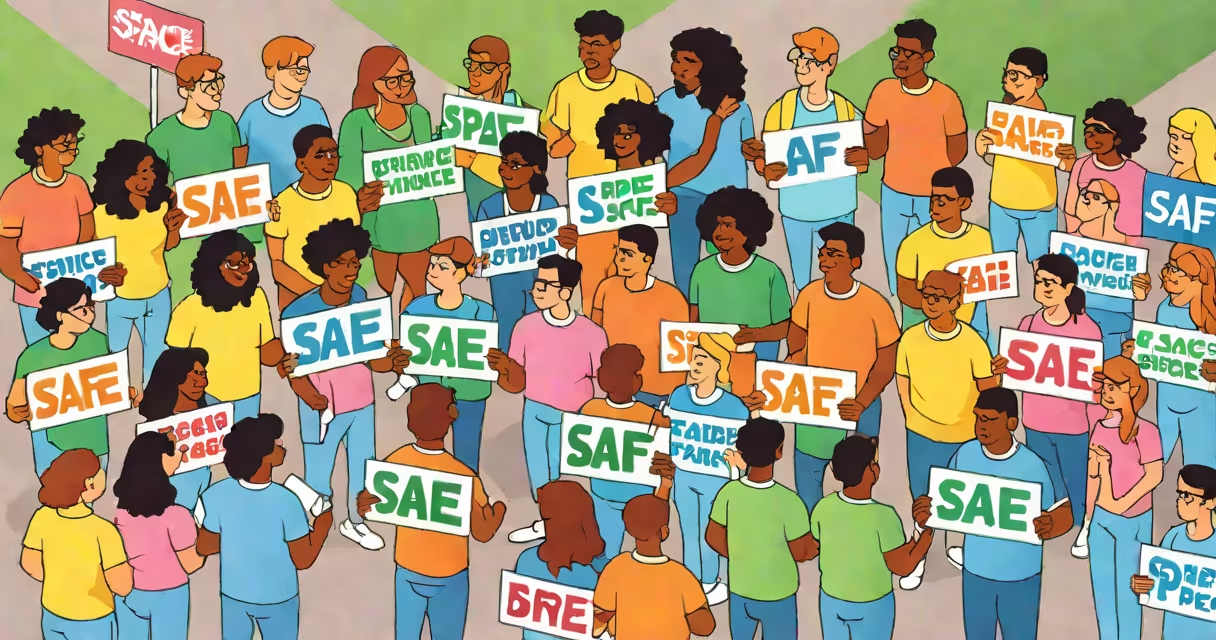
A gay straight alliance (GSA) is a student-led organization in schools that brings together LGBTQ+ students and their allies to build inclusion, combat bullying, and provide peer support. These groups operate under school supervision and aim to create safe, affirming environments for all students regardless of sexual orientation or gender identity.
GSAs emerged in U.S. high schools during the 1980s and 1990s as part of a broader movement to address anti-LGBTQ+ violence and discrimination in educational settings. According to GLSEN, a national education organization focused on LGBTQ+ issues, over 60% of LGBTQ+ students report feeling unsafe at school due to their identity. GSAs directly respond to this reality by offering structured support systems and visibility within school culture.
These groups are not limited to LGBTQ+ youth. Allies-students who identify as straight or cisgender-often play key roles in organizing events, advocating for policy changes, and educating peers. The term "gay straight alliance" reflects the collaborative nature of the group: it's not about defining identities but about building solidarity across differences.
GSAs function as formal clubs recognized by school administrations. They meet regularly-often weekly-during lunch, after school, or during advisory periods. Meetings typically include discussion of current events, planning of awareness campaigns, and peer support sessions. Some GSAs host guest speakers, organize Pride Month activities, or partner with local LGBTQ+ nonprofits.
For example, at Lincoln High School in California, the GSA hosts a monthly "Queer Coffee Hour" where students share personal stories in a confidential setting. The group also collaborates with the school counseling office to distribute mental health resources and advocate for updated anti-bullying policies. Since launching in 2018, participation has grown from 12 members to over 60, with 75% identifying as allies.
GSAs often engage in institutional advocacy. This includes pushing for gender-neutral restrooms, inclusive curriculum materials, and the adoption of LGBTQ+-inclusive codes of conduct. Research from the Journal of Youth and Adolescence shows that schools with active GSAs report lower rates of absenteeism among LGBTQ+ students and higher levels of perceived safety.
While all GSAs share core goals, their structure varies based on school size, location, and community climate. The following table outlines common models:
| Type | Structure | Example |
|---|---|---|
| Formal Recognition | Officially registered with school administration; meets in designated space; receives funding. | High school in Portland, Oregon, with a $500 annual budget from the district. |
| Informal/Student-Run | Meets in library or classroom with no official status; relies on volunteer leadership. | Small rural school in Idaho where students use a shared Google Doc to schedule meetings. |
| Hybrid Model | Recognized by school but operates independently with advisor oversight. | Chicago public high school with a faculty advisor and student executive board. |
Not all GSAs are created equal. A 2022 study by the National Center for Transgender Equality found that only 41% of transgender students reported having access to a GSA at their school. In many cases, lack of administrative support or fear of backlash prevents formation. Where they exist, GSAs are most effective when led by both LGBTQ+ students and allies, ensuring diverse perspectives inform programming.
Many people misunderstand what a gay straight alliance actually does. One frequent error is assuming GSAs promote a specific ideology or push political agendas. In reality, GSAs focus on safety, belonging, and education-not activism per se. While some groups do participate in marches or advocacy efforts, their primary mission is peer support and awareness.
Another misconception is that GSAs are only for LGBTQ+ students. This is incorrect. The "straight" in "gay straight alliance" refers to the inclusion of heterosexual and cisgender students who support equity. As one GSA advisor at a suburban New Jersey high school noted: "The strength of our group lies in the mix. When a lesbian student speaks, her straight friend sits beside her and says, 'I hear you.' That's the power of allyship."
A lesser-known fact: GSAs are legally protected under the Equal Access Act in the U.S., which requires public schools receiving federal funds to allow student groups to meet on campus if other clubs are permitted. This law helps even in conservative districts, GSAs cannot be banned solely because of their content. However, enforcement varies-some schools still deny recognition despite legal protections.
I observed a GSA meeting at a public high school in Austin, Texas, during the 2023 spring semester. The group had 28 members, including 11 students who identified as LGBTQ+. They discussed recent state legislation restricting transgender youth healthcare and planned a school-wide "Silent March" to protest. The event drew over 200 attendees, including teachers and parents.
One participant, a 16-year-old named Jordan, shared that joining the GSA helped them come out to their family. "Before, I felt like I was hiding," they said. "Now I have a place where my identity isn't questioned." Their story aligns with findings from GLSEN's 2023 National School Climate Survey, which reported that LGBTQ+ students in schools with GSAs were 40% less likely to consider suicide than those without such groups.
Another non-obvious point: GSAs improve outcomes for all students, not just LGBTQ+ ones. A 2021 study published in the journal Child Development found that schools with GSAs saw increased empathy scores among all students, particularly in middle school populations. Inclusive practices ripple outward.
While similar, GSAs differ from other student groups. For example, a GSA is not the same as a diversity club or a social justice committee. Those may cover broader topics like race, class, or disability. A GSA focuses specifically on sexual orientation and gender identity, often using LGBTQ+-centered literature, film, and history in discussions.
Also, GSAs are distinct from religious youth groups that may offer spiritual support to LGBTQ+ individuals. While some faith-based groups welcome LGBTQ+ members, they are not formally aligned with GSAs and may hold different values around identity and expression.
Gay straight alliances are not just symbolic. They are operational networks of care, education, and resistance. They represent a tangible commitment to equity in education. When a student walks into a school and sees a GSA poster in the hallway, they're not just seeing a club-they're seeing proof that someone believes they belong.