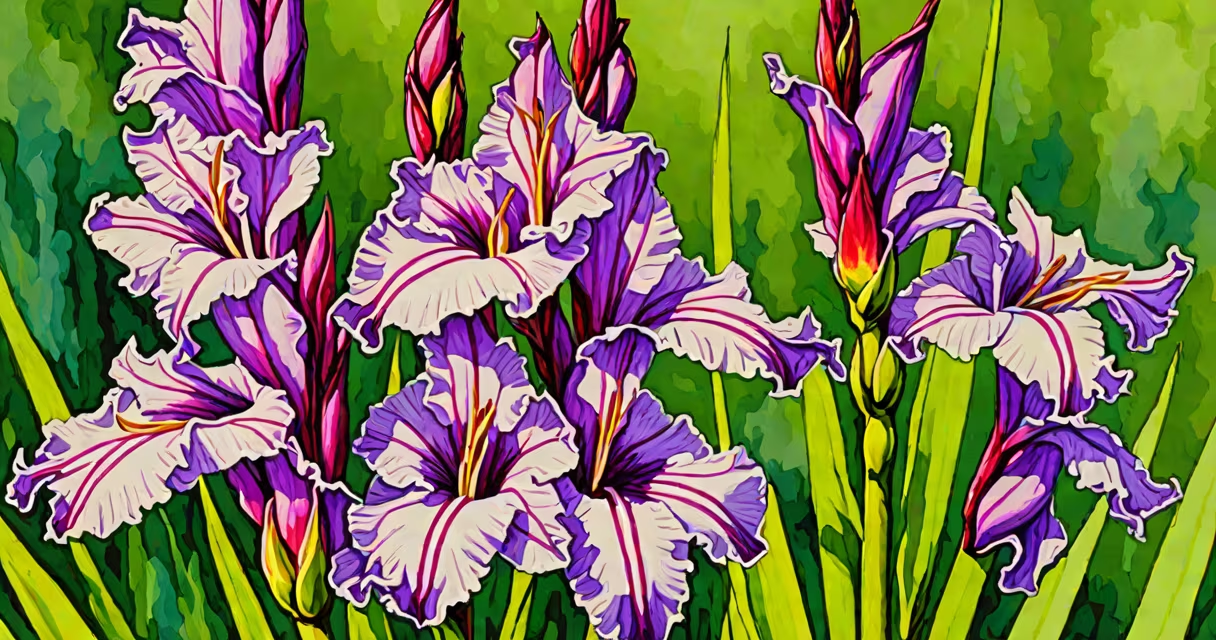
The word gladiolus derives from the Latin gladius, meaning "sword," and refers to the plant's narrow, sword-shaped leaves. It is a flowering plant known for its tall, upright spikes of colorful blooms and its symbolic associations with strength, dignity, and remembrance.
Gladiolus is a genus of cormous flowering plants native to sub-Saharan Africa, Europe, and parts of Asia. The name reflects both the plant's physical form and its historical resonance. The Latin root gladius was used to describe the short swords wielded by Roman soldiers and gladiators, linking the flower to themes of courage and honor.
Modern usage of the term extends beyond botany. In horticulture, gladiolus is often associated with lasting memories and sincere admiration. Its long, vertical stems and bold blooms make it a common choice for funerals, memorials, and commemorative arrangements.
The term gladiolus entered English in the 16th century through Latin botanical nomenclature. It was applied to the plant due to the resemblance of its foliage to a weapon. The plural form gladioli is used when referring to multiple specimens.
Botanical classification places gladiolus within the family Iridaceae, which includes irises and crocuses. Despite their visual similarities, gladiolus species differ in growth habit and bloom structure. They grow from underground corms rather than bulbs and typically flower in late summer.
According to the Royal Horticultural Society, gladiolus cultivars have been bred for centuries to produce larger, more vibrant flowers. Over 200 species exist, with cultivated varieties ranging meters in height and displaying colors including red, pink, yellow, white, and purple.
Gladiolus species vary widely in size, color, and blooming time. The most commonly grown species for ornamental purposes is Gladiolus x hortulanus, a hybrid developed from several wild species.
| Type | Height Range | Bloom Time | Common Colors |
|---|---|---|---|
| Standard (G. x hortulanus) | 1.2-1.8 m | July-September | Red, pink, purple, white |
| Miniature | 30-60 cm | June-August | Yellow, orange, lavender |
| Border | 60-90 cm | August-September | Pink, cream, deep violet |
These varieties differ in hardiness and climate suitability. Standard gladioli thrive in USDA zones 7-10, while miniature types tolerate cooler conditions and are often grown in containers.
Gladiolus is widely planted in gardens, floral arrangements, and commercial cut flower production. Its long stems and showy blooms make it ideal for bouquets and centerpieces.
In the United States, gladiolus ranks among the top 10 cut flowers sold during summer months. According to the U.S. Department of Agriculture, over 12 million gladiolus corms were planted in 2022 across 14 states, primarily in California, Oregon, and Washington.
Florists often use gladiolus in wedding bouquets and memorial displays. The flower's symbolic weight-representing strength, integrity, and enduring memory-makes it suitable for high-emotion events. A single stem can carry emotional significance, especially when given as a gesture of support after loss.
Many assume gladiolus is a tropical plant due to its bold appearance. However, it is adapted to temperate climates and requires cold dormancy to rebloom annually. In colder regions, corms must be dug up and stored indoors during winter.
Another misunderstanding is that gladiolus is synonymous with "sword lily." While the nickname appears in some gardening guides, it is not accurate. Sword lily refers to species in the genus *Ixiolirion* or *Dioscorea*, which are unrelated to gladiolus.
A key distinction often missed: gladiolus is not a perennial in all climates. In USDA zones below 7, it behaves as an annual unless properly overwintered. This leads to confusion about its longevity and care requirements.
In 2019, a community garden in Portland, Oregon, planted a 50-foot-long gladiolus border along a public sidewalk. The display featured 120 corms of mixed colors, arranged in staggered rows. The project aimed to promote urban green space and attract pollinators.
By mid-August, the flowers had reached peak bloom. Local residents reported increased foot traffic and positive feedback. The city's parks department cited the installation as a model for integrating ornamental plants into public infrastructure.
This example shows how gladiolus serves both aesthetic and ecological functions. Its tall structure provides vertical interest in landscapes, while its nectar supports bees and butterflies.
I once grew gladiolus in my backyard in northern Michigan. After planting corms in early May, I watched them emerge in June. By July, they stood nearly 1.5 meters tall, their blooms unfurling in waves. The sight drew attention from neighbors and even inspired a local art class to paint the garden.
When frost arrived in September, I dug up the corms, dried them, and stored them in a cool, dry place. The following spring, they sprouted again. This cycle confirmed that gladiolus is not just decorative-it's resilient and responsive to care.
"What does gladiolus mean" is not just a question about etymology. It touches on cultural symbolism, biological function, and human connection to nature. The name reflects a deep link between language, form, and feeling.
Understanding what gladiolus means involves more than decoding a Latin root. It includes recognizing how people assign emotional weight to natural forms and how language evolves to capture those feelings.