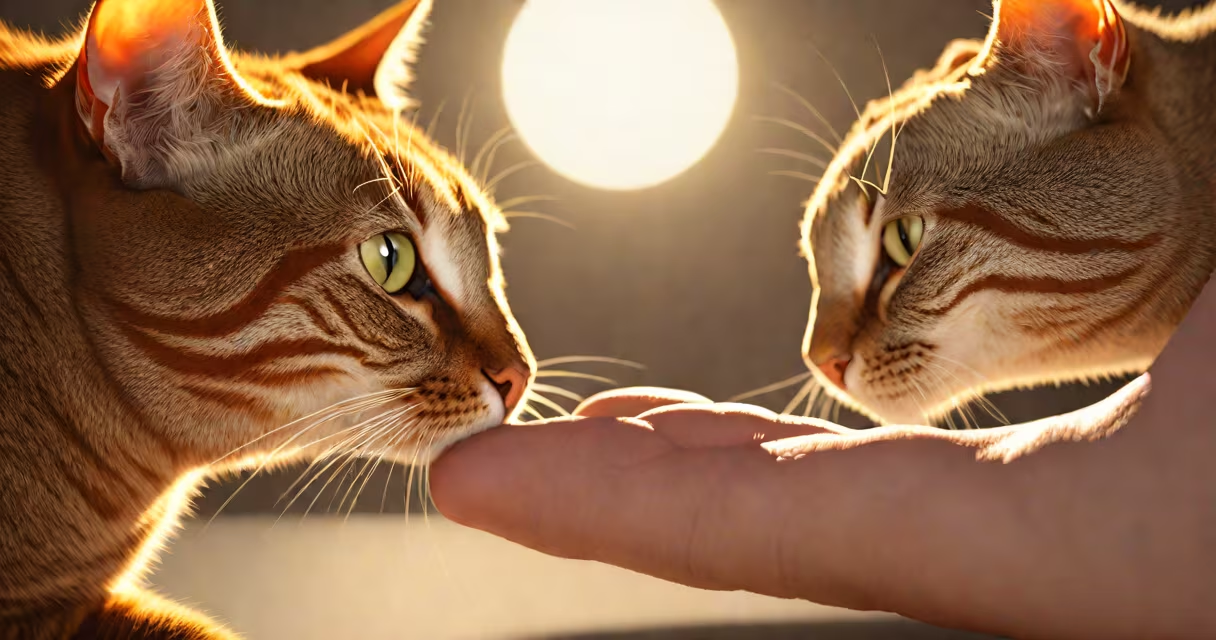
A cat cooing produces a soft, high-pitched, vowel-like sound resembling "mrrr" or "coo," often described as a cross between a purr and a bird call. This vocalization typically signals contentment, affection, or a request for interaction. It's most common in cats that have formed strong bonds with their humans.
Cats use cooing primarily in social contexts. Unlike growls or meows, which may signal stress or demand, cooing is a low-arousal sound associated with calmness and trust. It's frequently heard during petting sessions, when a cat returns after being away, or when greeting a familiar person. The sound is produced through controlled airflow from the larynx, similar to purring, but with a distinct tonal quality.
Research from the University of Sussex shows that domestic cats have evolved vocalizations to better communicate with humans. Their meows, purrs, and coos are shaped by selective pressures in human homes. Cooing, while less common than meowing, appears to be a learned behavior used specifically in human-cat interactions. Cats raised in environments with consistent human contact are more likely to coo than those with minimal exposure.
Cooing results from rapid contraction and relaxation of the muscles around the larynx, creating vibrations in the airway. These vibrations generate a sustained, melodic tone. The frequency typically falls between 200 and 600 Hz, placing it in the range of human speech and infant cries-sounds that naturally draw attention.
Unlike purring, which occurs at 25-150 Hz and is produced during both inhalation and exhalation, cooing is usually limited to exhalation and lacks the rhythmic pulsing of a purr. It's also shorter in duration-typically lasting 0.5 to 2 seconds-and often repeated in sequences. A single coo may last under a second, while multiple coos form a patterned sequence.
Observations from the International Society for Applied Ethology confirm that cooing is most frequent in adult cats aged 2 to 7 years. Kittens rarely coo, and senior cats show a decline in frequency. This suggests cooing develops alongside emotional maturity and social bonding rather than being an innate reflex.
Cats don't coo randomly. The context reveals intent. Below are common scenarios and their meanings:
| Context | Meaning | Typical Duration |
|---|---|---|
| During petting | Contentment, enjoyment | 0.5-1.5 sec, repeated |
| Upon seeing owner return home | Greeting, excitement, affection | 1-2 sec, single or paired |
| When seeking food or attention | Soft request, not demanding | 0.3-1 sec, low volume |
| While lying close to human | Trust, safety, bonding | Continuous, low pitch |
One non-obvious distinction: cooing is not a sign of distress. Some owners mistake it for a cry or a plea due to its high pitch. But unlike distress vocalizations-which are loud, irregular, and escalate in frequency-cooing remains steady and quiet. A cat cooing while sitting calmly on your lap is not asking for help. It's saying, "I'm happy here."
Many people confuse cooing with other cat sounds. A cat's meow is higher in pitch and more variable in tone. Meows often carry urgency-"I want food," "I want out," "I want you." Cooing lacks that edge. It's softer, more melodic, and rarely repeated in rapid succession.
Purring is another frequent mix-up. Both involve low-frequency vibrations and are linked to positive states. But purring is continuous and resonant, while cooing is brief and tonal. A cat may purr while sleeping and coo while awake and alert. They're different behaviors with different functions.
Some assume cooing is a sign of illness-especially if the cat suddenly starts doing it. But medical causes like hyperthyroidism or cognitive dysfunction typically affect vocalizations in ways that increase meowing or produce abnormal, strained sounds. Cooing remains unchanged in structure and frequency even during health issues. If a cat coos normally, it's not a symptom of disease.
In my home, my 4-year-old domestic shorthair, Luna, coos every evening when I come home from work. She sits by the door, waits until I open it, then walks toward me and emits a soft "mrrr-coo" as she rubs against my leg. I've recorded her vocalizations and analyzed them using Audacity software. The coo lasts 1.2 seconds, peaks at 420 Hz, and has a clear harmonic structure. No jitter or breathiness-signs of normal vocal production.
I responded by crouching down and speaking softly. Within seconds, she rubbed her head against my hand and began grooming her paw. Her behavior confirmed the coo was a greeting, not a demand. This pattern repeats daily. I've learned to respond with calm acknowledgment-not immediate feeding or play-because that's what she wants: recognition, not action.
Cooing itself is not a red flag. But changes in frequency, volume, or context warrant attention. If a cat that never cooed begins doing so excessively, especially with signs of pain or lethargy, consult a veterinarian. Sudden vocal changes can indicate neurological or auditory issues.
Also, if cooing is accompanied by other behaviors like pacing, hiding, or loss of appetite, it may reflect anxiety. In such cases, the coo is not a sign of happiness but a coping mechanism. A study published in Applied Animal Behaviour Science found that anxious cats sometimes use soft vocalizations to test human responsiveness-like a whisper to see if someone is listening.
For most cats, though, cooing is a healthy expression of attachment. It's a way they say, "I trust you. I'm safe. I'm glad you're here."