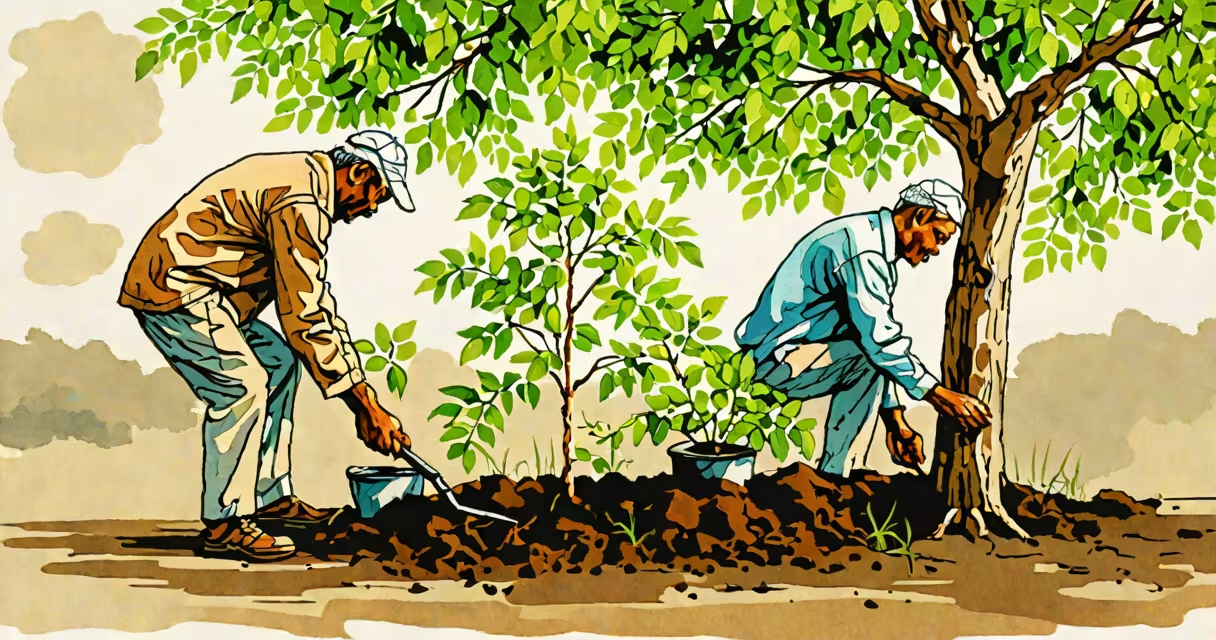
Leaving a legacy means creating lasting influence through actions, values, or contributions that outlive your lifetime. It's not about fame or wealth-it's about the tangible and intangible effects your life has on others, communities, or systems long after you're gone.
A legacy is not defined by how many people remember you, but by how deeply your choices shaped lives, ideas, or environments. It can be a family tradition passed down, a community project sustained for decades, or a principle upheld by future generations.
According to the Harvard Business Review, legacy is most often tied to consistency in values-not grand gestures. People who leave meaningful legacies tend to act in alignment with core beliefs over time, even when no one is watching.
Legacy operates through repetition, transmission, and resonance. When someone consistently acts on a belief-like fairness, innovation, or care-they create patterns others adopt. Over time, those patterns become embedded in institutions, relationships, or cultural norms.
For example, Dr. Martin Luther King Jr.'s legacy wasn't built on a single speech. It grew from years of disciplined activism, moral clarity, and public commitment to justice. His words continue to inspire movements because they were rooted in lived principles, not performance.
Even small-scale actions contribute. A teacher who spends extra hours mentoring students may not publish books, but their students go on to mentor others-creating a ripple effect that spans generations.
Legacies fall into three broad categories based on form and reach:
| Type | Form | Example |
|---|---|---|
| Personal | Family traditions, written letters, heirlooms | A grandmother's recipe book passed down through five generations |
| Community | Projects, institutions, shared values | The founding of a neighborhood library that still serves residents 60 years later |
| Societal | Systems, laws, movements, innovations | Marie Curie's research enabling modern radiation therapy |
Each type requires different forms of investment. Personal legacies depend on emotional continuity. Community legacies demand ongoing stewardship. Societal legacies rely on institutional adoption.
A legacy doesn't require recognition. The work of civil rights volunteers in the 1960s was largely uncelebrated at the time, yet their efforts became foundational to modern voting rights legislation.
Many assume legacy equals fame or monuments. But the Stanford Encyclopedia of Philosophy notes that legacy is better understood as "enduring significance," not visibility. A quiet act of kindness, repeated over years, can have greater lasting weight than a single viral moment.
Another myth is that only famous people leave legacies. In reality, most legacies are created by ordinary individuals in daily roles-parents, teachers, neighbors, caregivers. The difference lies in consistency, not scale.
There's also confusion between legacy and memory. You can be remembered for years without leaving a legacy. A celebrity's name may appear in headlines for months, but if their actions didn't change behavior or systems, they left no legacy.
I once met a retired school principal in rural Iowa who never published anything. But over 30 years, he ensured every student in his district graduated with basic literacy skills. Today, local leaders credit him with breaking cycles of poverty. He didn't seek attention-he simply showed up, year after year.
In a culture obsessed with instant feedback, legacy offers a counterbalance. It rewards patience, integrity, and long-term thinking. Research from the University of Michigan shows people who focus on legacy report higher life satisfaction, even when facing hardship.
Legacy isn't about perfection. It's about intentionality. You don't need to fix everything. You just need to act in ways that reflect what matters to you, knowing that your choices accumulate.
Consider this: 78% of adults surveyed by the Pew Research Center said they want to be remembered for their character, not achievements. That aligns with findings from the Journal of Positive Psychology-people derive meaning not from outcomes, but from the alignment between action and values.
Leaving a legacy doesn't require waiting until retirement or death. It begins now. Every conversation where you listen deeply, every decision to speak up against injustice, every act of care toward someone else-these are the raw materials of legacy.
When you ask, "What does it mean to leave a legacy?" the answer isn't found in a monument or a will. It's in the quiet persistence of living with purpose. It's in the way your actions echo beyond your lifespan.