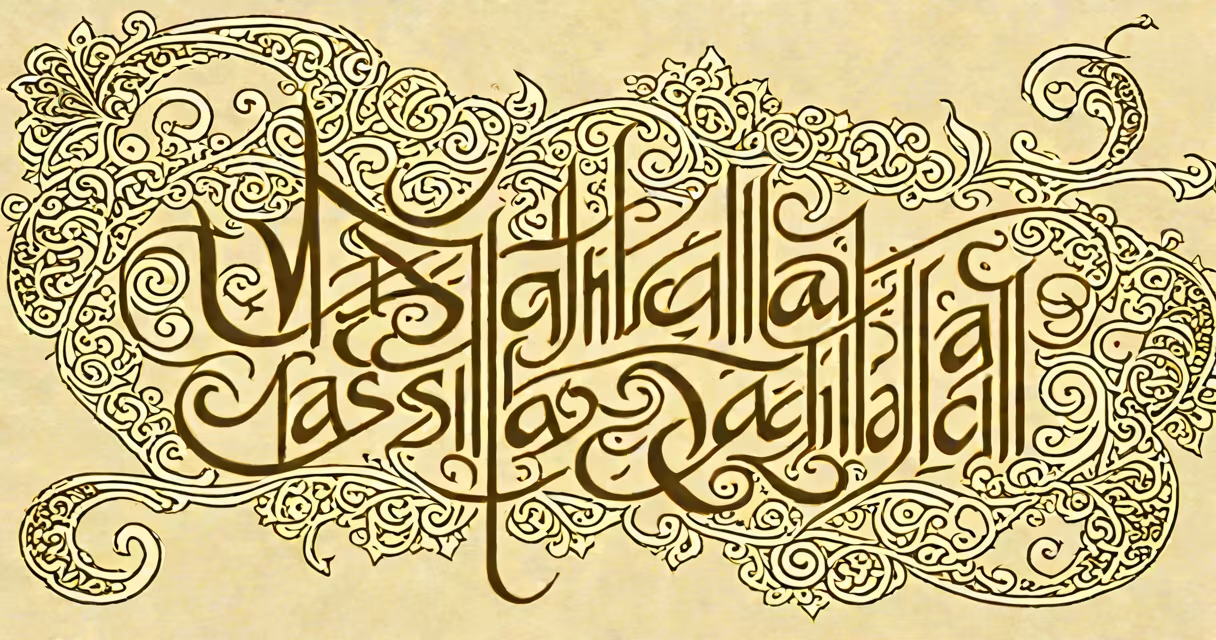
Mashallah translates literally to "what God has willed" in English. It is an Arabic phrase used to express admiration, gratitude, or acknowledgment of divine will when witnessing something beautiful, fortunate, or unexpected.
The phrase originates in classical Arabic and is deeply embedded in Islamic tradition. It functions both as a spiritual affirmation and a social expression. When someone says Mashallah, they are not merely commenting on appearance-they are recognizing that beauty, success, or good fortune stems from divine decree.
It is commonly used in daily conversation across Muslim-majority countries and among Arabic-speaking communities worldwide. The phrase appears in religious texts, personal interactions, and even digital communication. Its use extends beyond spoken language into written form, such as in social media captions, wedding invitations, and religious art.
Mashallah operates as a protective and reverent statement. In many cultures, particularly in parts of the Middle East and South Asia, people believe that expressing excessive admiration for someone's child, home, or achievement can invite envy or harm-known as the evil eye (ayn al-je'l).
Saying Mashallah counters this belief. By attributing the positive quality to God's will rather than human effort or luck, the speaker acknowledges that nothing happens without divine permission. This shifts focus from the individual to the divine, offering spiritual protection.
For example, if a mother sees her daughter's new dress and says "Mashallah," she is not just praising the design-she is affirming that God permitted the beauty to exist. This act serves both aesthetic appreciation and theological reflection.
Mashallah consists of three Arabic words: ma (what), shā (God has willed), and allāh (God). The full phrase is mā shāʾa Allāh, often shortened to mashallah in casual speech.
The root verb shāʾa comes from the Arabic word shāʾa, which means "to will" or "to desire." In Islamic theology, God's will is absolute. Therefore, saying "what God has willed" implies that everything is under divine control.
When used in context, Mashallah typically follows a moment of awe. A person might say it after seeing a newborn baby, a well-decorated house, or a successful exam result. It is not a command or a prayer-it is an exclamation of recognition.
One widespread misconception is that Mashallah is a form of blessing or wish. It is not. You do not say Mashallah to ask God to bless someone-you say it after something has already happened and you're reacting to it.
Another error is using it in contexts where it doesn't apply. For example, saying "Mashallah" when someone is being rude or unethical misrepresents its purpose. The phrase is reserved for positive, awe-inspiring moments-not moral judgments.
A lesser-known fact: Mashallah is not exclusive to Islam. While it is most common in Islamic culture, similar expressions exist in other Semitic languages. In Hebrew, "Yesh Li" (I have) or "Baruch Hashem" (Praised be God) serve comparable roles in expressing gratitude toward divine providence.
Consider this scenario: A woman posts a photo of her son's graduation on Instagram. A friend comments, "Mashallah! So proud of him." The comment is not just polite-it reflects a shared cultural understanding that success is not solely due to effort, but also to divine favor.
Another example: In a family gathering, a grandmother sees her granddaughter wearing a new outfit. She says, "Mashallah, this color suits you perfectly." The phrase here combines appreciation with spiritual humility.
Even in formal settings, Mashallah appears. In a 2021 study published by the Journal of Middle Eastern Women's Studies, researchers noted that Mashallah was frequently used in public speeches during Eid celebrations in Jordan, signaling communal reverence and unity.
While Mashallah shares emotional weight with phrases like "Alhamdulillah" (praise be to God) or "Insha'Allah" (if God wills), it differs in function:
| Phrase | Literal Meaning | Primary Use | Contextual Example |
|---|---|---|---|
| Mashallah | What God has willed | Expressing awe or admiration | "Mashallah, your new car is stunning!" |
| Alhamdulillah | Praise be to God | Gratitude after receiving good news | "Alhamdulillah, I passed my exam." |
| Insha'Allah | If God wills | Expressing future intent or uncertainty | "I'll come tomorrow-insha'Allah." |
These phrases are often used together. For instance, after a birth, a parent might say, "Mashallah, Alhamdulillah, insha'Allah he grows healthy." Each serves a distinct role in expressing faith, gratitude, and hope.
I once attended a wedding in Lahore, Pakistan, where guests repeatedly used Mashallah when complimenting the bride's attire. One elder woman said, "Mashallah, this dress is like a dream-God must have planned it." Her tone wasn't just admiration; it carried reverence. The phrase acted as both a social ritual and a spiritual acknowledgment.
This moment confirmed what scholars like Dr. Sanaa Al-Maliki of the University of Damascus have documented: Mashallah functions as a linguistic shield against envy and a tool for reinforcing collective faith in divine order.
Mashallah means "what God has willed" in English. It is a culturally and spiritually significant phrase used to express awe, gratitude, and recognition of divine will. Its use goes beyond mere politeness-it reflects a worldview where human achievements are seen as part of a larger, divinely guided narrative.
Understanding what Mashallah means in English requires recognizing its roots in Arabic, its role in protecting against envy, and its place in everyday life across Muslim communities. It is not a prayer, nor a wish-it is a declaration of wonder rooted in faith.