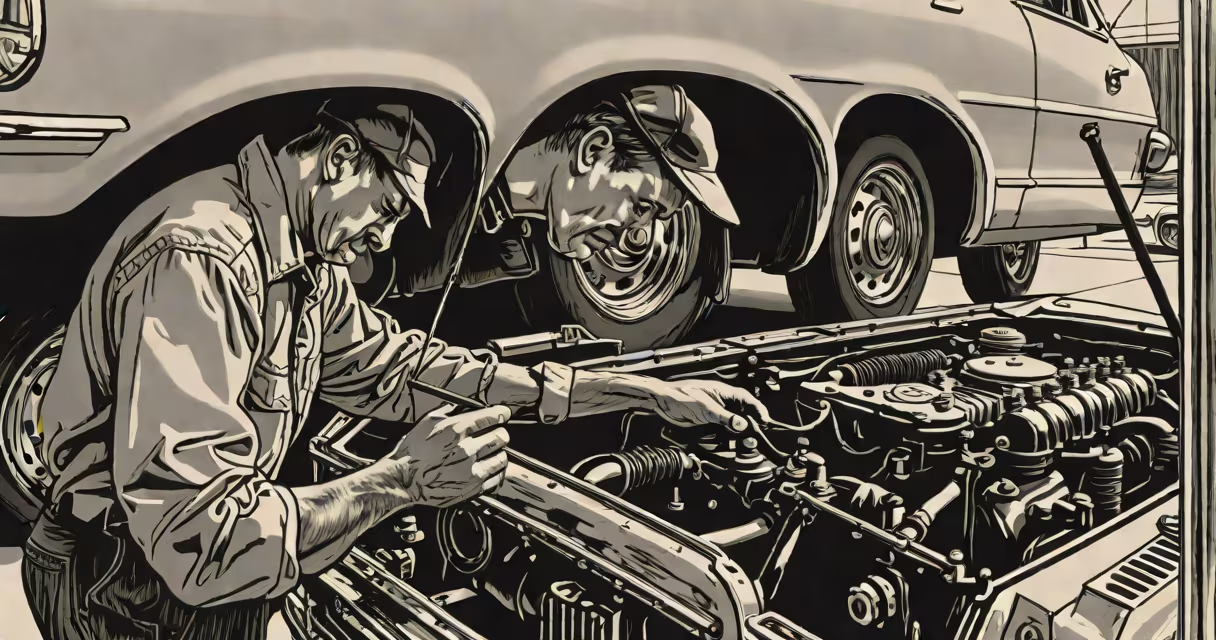
Maintenance on a car refers to scheduled inspections, fluid changes, part replacements, and minor repairs performed regularly to prevent major failures, ensure safety, and extend the vehicle's lifespan. It includes tasks like oil changes, tire rotations, brake pad checks, and battery testing.
Car manufacturers publish recommended service intervals based on mileage and time. For example, most vehicles require an oil change every 5,000 to 7,500 miles, depending on engine type and driving conditions. Skipping these intervals increases wear on internal components and reduces fuel efficiency.
Modern cars have onboard diagnostic systems that monitor engine health and trigger warning lights when maintenance is due. Ignoring these alerts leads to accelerated degradation. A 2023 study by the National Highway Traffic Safety Administration found that 38% of roadside breakdowns were linked to neglected maintenance, including low fluid levels and worn belts.
Maintenance follows a proactive model: identify issues early before they cause damage. Mechanics use checklists aligned with manufacturer guidelines. Each service typically includes inspecting 15-20 key systems, such as cooling, braking, steering, and electrical functions.
For example, during a standard 15,000-mile service, technicians verify coolant levels, test the alternator output, measure tire tread depth, and examine suspension bushings. If a component shows signs of wear-like a brake pad below 3mm thickness-it gets replaced before failure occurs.
Some tasks are time-based rather than mileage-based. Windshield wiper blades should be replaced every 12 months even if they still function, because rubber degrades and can leave streaks or fail in rain. Similarly, power steering fluid should be flushed every 60,000 miles to prevent pump damage.
Car maintenance falls into two categories: preventive and corrective. Preventive work happens before problems arise. Corrective work fixes existing issues. Most maintenance plans focus on prevention.
| Type | Frequency | Common Tasks | Impact if Skipped |
|---|---|---|---|
| Preventive | Every 5k-10k miles or 6-12 months | Oil change, tire rotation, air filter replacement | Engine overheating, reduced fuel economy, premature tire wear |
| Corrective | As needed | Brake repair, battery replacement, timing belt fix | Loss of control, sudden breakdown, engine seizure |
| Diagnostic | When warning light appears | Scan for error codes, inspect sensors | Unidentified faults leading to further damage |
Preventive maintenance is the most cost-effective strategy. AAA reports that drivers who follow recommended service schedules spend 30% less on long-term repairs compared to those who delay visits.
Regular maintenance keeps vehicles safe, legal, and efficient. In states like California and New York, vehicles must pass emissions and safety inspections every two years. A car failing inspection often has unresolved maintenance issues-such as a cracked oxygen sensor or worn catalytic converter.
Used car buyers rely heavily on maintenance records. A 2022 Cox Automotive report showed that vehicles with complete service histories sold for 12% more on average than those without. This reflects buyer confidence in reliability.
Commercial fleets, such as delivery vans and taxis, depend on strict maintenance schedules to avoid downtime. UPS, for example, performs engine diagnostics every 1,500 miles and replaces filters every 30,000 miles. Their fleet-wide system reduced unplanned breakdowns by 41% between 2019 and 2023.
Many people confuse maintenance with repair. Repair addresses a current problem-like a flat tire or broken AC compressor. Maintenance prevents problems before they start. A car with a blown radiator hose needs repair. A car with old coolant needs maintenance.
Another myth is that synthetic oil lasts longer than conventional oil. While synthetic oil generally has better thermal stability, both types degrade over time. The American Automobile Association (AAA) warns that even synthetic oil loses effectiveness after 12 months, regardless of mileage.
A non-obvious fact: maintenance doesn't always mean spending money. Checking tire pressure monthly takes five minutes and saves $100 in fuel annually. Using a tire gauge instead of relying on visual inspection catches underinflation early-reducing rolling resistance and improving gas mileage by up to 3%.
I once replaced a worn serpentine belt on my 2016 Honda Civic during a routine 30,000-mile check. The belt had visible cracks and was making a squealing noise. Replacing it prevented a failed alternator and a dead battery while driving on a highway. That single $60 fix avoided a tow truck bill and potential accident.
Understanding what maintenance means on a car ensures better ownership decisions. It's not optional-it's essential for safety, cost control, and performance. Following the manufacturer's schedule prevents unexpected failures and extends vehicle life beyond 200,000 miles with proper care.