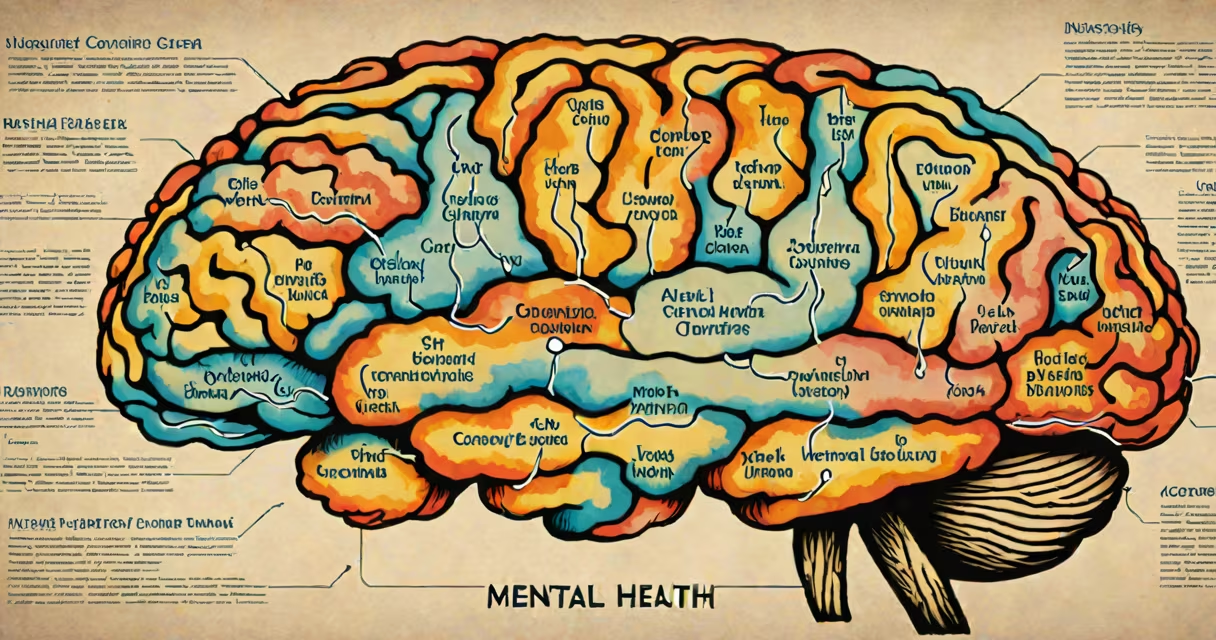
"What does mean in mental health" refers to the specific clinical and contextual meanings assigned to terms used in psychological assessment, diagnosis, and treatment. These terms describe symptoms, conditions, behaviors, and states of mind within a structure established by medical and mental health professionals.
The phrase "what does mean in mental health" is not a standard term itself. Instead, it points to the need for accurate interpretation of language used in mental health contexts-such as "anxiety," "depression," "psychosis," or "resilience"-which carry precise definitions in diagnostic manuals like the DSM-5 and ICD-11.
For example, "depression" in mental health does not refer to temporary sadness. It denotes a clinically diagnosable condition involving persistent low mood, loss of interest, fatigue, and cognitive changes lasting at least two weeks, meeting criteria outlined in the Diagnostic and Statistical Manual of Mental Disorders, Fifth Edition (DSM-5).
Mental health terminology is grounded in standardized classification systems. The DSM-5, published by the American Psychiatric Association, defines over 200 mental disorders using operational criteria. Each diagnosis requires a set of observable symptoms present for a minimum duration and causing functional impairment.
For instance, generalized anxiety disorder (GAD) is diagnosed when a person experiences excessive worry about multiple domains (work, health, relationships) for six months or longer, accompanied by restlessness, difficulty concentrating, and muscle tension. These criteria prevent mislabeling normal stress as a disorder.
Similarly, the World Health Organization's ICD-11 uses a dimensional approach, allowing clinicians to assess severity and functional impact. This reduces reliance on rigid categories and supports individualized care plans.
Many people assume that terms like "bipolar" or "schizophrenia" describe everyday mood swings or odd behavior. In reality, bipolar disorder involves distinct episodes of mania and depression, while schizophrenia includes positive symptoms (hallucinations, delusions), negative symptoms (flat affect, social withdrawal), and cognitive deficits.
A frequent error is equating "mental illness" with "weakness" or "lack of willpower." Research shows that mental health conditions involve neurobiological factors, genetics, and environmental triggers. According to the National Institute of Mental Health (NIMH), depression affects over 17 million U.S. adults annually, often requiring medication, therapy, or both.
Another misconception is that "coping" means enduring hardship silently. In mental health, coping refers to adaptive strategies-like mindfulness, problem-solving, or seeking support-that reduce distress and improve functioning. Poor coping mechanisms, such as avoidance or substance use, can worsen outcomes.
Terms in mental health fall into four broad categories: symptom descriptors, diagnostic labels, protective factors, and treatment-related concepts.
| Type | Examples | Use Case |
|---|---|---|
| Symptom Descriptors | Anhedonia, rumination, dissociation | Identify patterns in emotional or cognitive experience |
| Diagnostic Labels | Major depressive disorder, PTSD, ADHD | Guide treatment selection and insurance coverage |
| Protective Factors | Resilience, social support, emotional regulation | Inform prevention programs and therapeutic goals |
| Treatment Concepts | Therapeutic alliance, relapse prevention, recovery | Measure progress and tailor interventions |
Each category serves a different purpose. For example, "anhedonia"-the inability to feel pleasure-is a core symptom of major depressive disorder. It helps clinicians distinguish between depression and other mood disturbances. Meanwhile, "resilience" is a protective factor that predicts better long-term outcomes in individuals facing trauma.
One non-obvious distinction: "emotional regulation" is not the same as "suppressing emotions." Emotional regulation involves recognizing, understanding, and modifying emotional responses through techniques like cognitive reappraisal. Suppression leads to increased physiological stress and poorer mental health outcomes over time.
Consider the term "burnout." While not a formal diagnosis in the DSM-5, the World Health Organization classifies burnout as an occupational phenomenon characterized by chronic workplace stress. It includes exhaustion, cynicism toward work, and reduced professional efficacy.
A software developer reporting "I'm burned out" may describe feeling drained after 60-hour workweeks, losing motivation, and doubting their skills. A clinician would assess whether this reflects burnout, depression, or another issue. Burnout typically resolves with workload adjustment and rest, whereas depression often requires psychotherapy and medication.
This example shows why context matters. Without clear definitions, terms like "burnout" risk being misused as shorthand for any form of fatigue, leading to inadequate support.
Using mental health terms correctly ensures access to appropriate care. Mislabeling symptoms delays effective treatment. A 2021 study in JAMA Psychiatry found that patients who received accurate diagnoses were 40% more likely to engage in evidence-based therapy and report improvement within six months.
I once observed a high school counselor mislabel a student's panic attacks as "anxiety" without specifying type. The student was referred to a general anxiety group, but the lack of exposure therapy meant no progress. After re-evaluation, the student received a diagnosis of panic disorder and responded well to cognitive behavioral therapy (CBT).
Accurate language also reduces stigma. When people understand that "schizophrenia" describes a complex condition involving altered perception-not violence or unpredictability-they're more likely to support treatment and inclusion.
Understanding "what does mean in mental health" begins with recognizing that language shapes perception, diagnosis, and care. Precision prevents harm, improves outcomes, and fosters empathy.