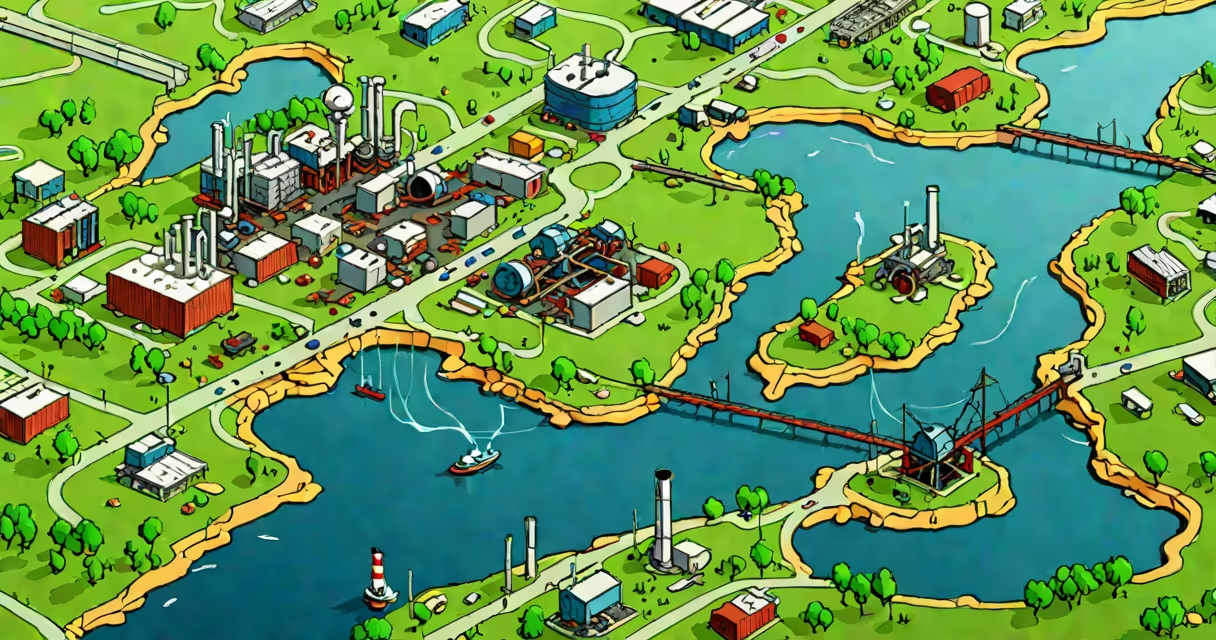
Pollution manifests as visible contaminants in air, water, and soil-smog hanging over cities, oily sheens on water surfaces, and piles of discarded waste in natural landscapes. These forms are measurable, observable, and often linked to human activity.
Visible pollution includes particulate matter suspended in the atmosphere, such as smoke from factories or vehicle exhaust. In urban areas, this creates a grayish haze known as smog, especially noticeable during temperature inversions. The U.S. Environmental Protection Agency (EPA) defines smog as a mixture of pollutants including nitrogen oxides and volatile organic compounds reacting under sunlight-visible as a brownish-yellow cloud over metropolitan centers.
Water pollution takes form as oil slicks on lakes and oceans, algal blooms turning water green or red, and floating debris like plastic bottles and fishing nets. A 2021 study by the National Oceanic and Atmospheric Administration (NOAA) found that over 8 million metric tons of plastic enter oceans annually-much of it visible as tangled masses in coastal zones. In rivers, pollution may appear as foam along banks due to detergents and other surfactants.
Land-based pollution shows up as illegal dumping sites, landfills overflowing with waste, and soil discolored by chemical runoff. Brown or black stains in soil near industrial zones indicate heavy metal contamination. In agricultural regions, excessive fertilizer use leads to nutrient runoff that turns streams green-a sign of eutrophication.
| Type | Common Visual Signs | Source Example |
|---|---|---|
| Air | Gray haze, smog, visible exhaust plumes | Los Angeles smog events in summer |
| Water | Oily sheen, foam, floating plastic, algae bloom | Dead zones in the Gulf of Mexico |
| Soil | Discolored patches, oil seepage, debris accumulation | Abandoned industrial sites in Flint, Michigan |
Not all pollution is visible. Some contaminants-like lead in drinking water or microplastics in fish-are undetectable to the naked eye. Yet even invisible pollution leaves traces: lead pipes corrode and leave sediment in tap water, while microplastics accumulate in marine food chains. The World Health Organization (WHO) reports that 99% of global tap water samples contain microplastics, though most people cannot see them.
One common misconception is that pollution only appears in developing nations. In reality, visible pollution exists everywhere. In 2022, satellite images showed dense smog over Delhi, India, but similar levels were recorded in Beijing and Los Angeles. The European Environment Agency tracks air quality across EU cities and finds that 60% exceed WHO guidelines for PM2.5-fine particles that contribute to respiratory illness and reduce visibility.
During a field visit to the Great Pacific Garbage Patch in 2019, researchers documented vast stretches of ocean covered in plastic fragments, many smaller than a coin. Despite being called a "patch," it's not a solid island-it's a concentration of debris spread over millions of square kilometers. This illustrates how pollution can be both widespread and visually subtle.
Another misunderstanding is equating pollution with trash. While litter is a form of pollution, not all pollution involves physical objects. Airborne chemicals like sulfur dioxide or nitrogen dioxide don't create visible piles but still degrade health and ecosystems. The EPA notes that these gases contribute to acid rain, which damages forests and aquatic life-effects visible only through long-term monitoring, not immediate sight.
On a personal note, during a volunteer cleanup in the Hudson River estuary, I collected over 120 pieces of plastic in a single hour. Most were small-bottle caps, straws, and fragments-but their sheer volume was shocking. What stood out wasn't the size of individual items, but the pattern: tiny pieces accumulated in tidal pools, embedded in mud, and caught in vegetation. This confirmed that pollution isn't always dramatic-it often hides in plain sight.
Some pollutants resemble natural phenomena. For example, red tide algae blooms in Florida waters are caused by excess nutrients from fertilizers and sewage. They appear as vivid red or brown discoloration in water-similar to natural color changes in seasonal algae growth. But unlike natural blooms, these are toxic, killing fish and causing respiratory issues in humans. Distinguishing between natural and pollution-induced changes requires scientific testing.
Visual evidence of pollution drives public awareness and policy. Photos of polar bears stranded on melting ice, children breathing in smog-filled streets, or sea turtles entangled in plastic have shaped environmental movements. The 1970s photo of Earth from space, titled "Blue Marble," helped galvanize global action on climate and pollution. Today, satellite imagery from NASA's MODIS system tracks deforestation, wildfires, and dust storms-visual indicators of ecological stress.
Understanding what pollution looks like enables better detection and response. When communities see oil on a riverbank or a thick haze over a city, they're more likely to report it. Monitoring tools like handheld spectrometers and drone-mounted cameras now allow real-time tracking of airborne and waterborne pollutants. In 2023, a group in Indonesia used drones to map illegal mining runoff in rivers-images shared online led to government intervention.
Recognizing pollution in its many forms-smog, oil, debris, discoloration-is the first step toward addressing it. Visible signs aren't just warnings-they're evidence. And evidence, when seen, demands action.