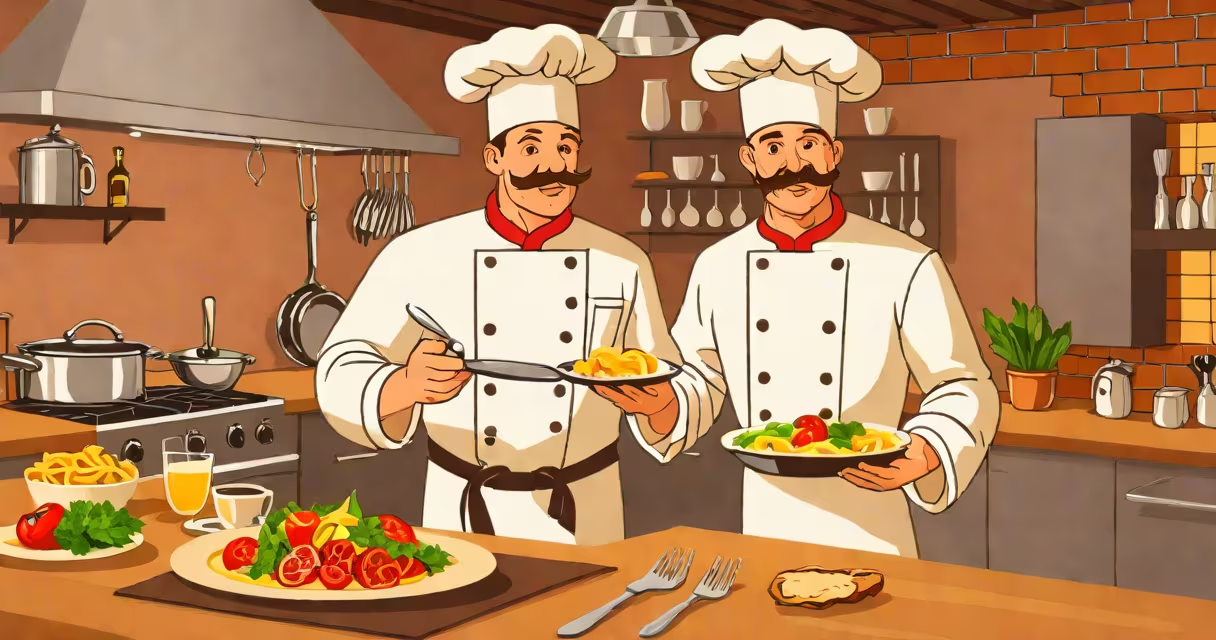
"Primo" in English means first or best, originating from Italian. It describes something of highest quality, excellence, or priority. The word entered English usage through Italian-American culture and is often used informally to emphasize superiority.
Originally from Italian, "primo" translates literally to "first" in Latin-based grammar. In Italian, it appears in phrases like "il primo piatto" (the first course) or "primo amore" (first love). When adopted into American English, especially in food and pop culture contexts, it evolved to carry connotations of peak quality rather than just sequence.
For example, a diner might say, "This pasta is primo," meaning it's strong, not just the first dish ordered. Similarly, a sports fan might call a player's performance "primo" to show dominance. The term functions as a descriptor of excellence, not a literal ordinal.
In spoken and written English, "primo" acts as an adjective or interjection to convey high approval. It's rarely used in formal writing but common in casual conversation, menus, branding, and social media. Its usage often relies on shared cultural understanding of Italian influence in U.S. cuisine and entertainment.
When used in food contexts, "primo" signals premium quality. A restaurant might label a signature dish "primo" to suggest it's the standout option. In music or film, calling a track or scene "primo" implies it's the most useful or memorable part. The word doesn't require translation-it's treated as a standalone expression of admiration.
One notable example is the use of "primo" in the 2019 Netflix series *The Good Fight*. A character uses the term to describe a legal strategy: "That's primo-clever and bold." The line reflects how the word functions in contemporary dialogue: not as a direct translation, but as a culturally loaded term for excellence.
While "primo" remains consistent in meaning, its application varies by context. The following table outlines common usage patterns:
| Context | Usage Example | Meaning |
|---|---|---|
| Food & Dining | "This risotto is primo." | Strong quality; the best version available. |
| Performance | "Her solo was primo." | Outstanding, unforgettable, or top-tier. |
| General Praise | "That's primo work." | Effective or impressive effort. |
| Branding | "Primo Coffee Co." | Implies premium, authentic, or original product. |
These applications show that "primo" is not limited to time or order. It's about perceived value and impact. Even when used in brand names, it signals trust and superiority-key traits in consumer decision-making.
Many assume "primo" means "first" in a strict numerical sense. This is incorrect in English usage. While the root word in Italian can mean "first," in English it has shifted toward meaning "best" or "outstanding."
A key distinction lies in intent. Saying "I'll take the primo" at a restaurant could be misinterpreted as ordering the first course. But in actual usage, it usually means "I want the best dish." This nuance matters in communication. The word functions as hyperbole, not chronology.
Another misconception is that "primo" is always Italian. While it originates in Italian, its adoption into English has made it a hybrid term. It's not used in formal Italian speech the same way-Italian speakers might say "eccellente" or "migliore" for "excellent." In English, "primo" stands alone as a cultural borrowing.
According to the Oxford English Dictionary, "primo" entered English in the early 20th century, initially in culinary contexts. By the 1980s, it appeared in American slang and media. The dictionary notes it's "used colloquially to denote something of the highest quality." This confirms its role as a descriptor of excellence, not rank.
I once visited a small Italian restaurant in Brooklyn where the owner used "primo" on the menu to describe their house-made ravioli. He explained, "We don't call it 'first course'-we call it primo because it's the best." The dish wasn't served first; it was served last, but labeled "primo" to emphasize quality over sequence.
This example illustrates how language adapts. The word's original meaning was functional-indicating position. Now, it's symbolic-representing value. The restaurant didn't just translate "primo"-they repurposed it to match customer expectations of excellence.
Similarly, in hip-hop lyrics, artists like Kendrick Lamar have used "primo" to describe lyrical skill. In his song "King Kunta," he says, "I'm the primo in the game." Here, "primo" isn't about timing-it's about dominance and mastery.
These distinctions matter in accurate communication. Using "primo" incorrectly-such as saying "this task is primo" to mean "essential"-distorts its intended meaning. It's not about urgency; it's about superiority.
"Primo" in English means first or best, rooted in Italian but adapted to express excellence. It's used informally across food, performance, and branding to indicate top quality. The word is not about sequence-it's about value. Understanding this shift meaning prevents misuse and enhances clarity.
When you hear or see "primo," think "best" or "top-tier"-not "number one in order." This distinction ensures accurate interpretation in conversation, marketing, and media.