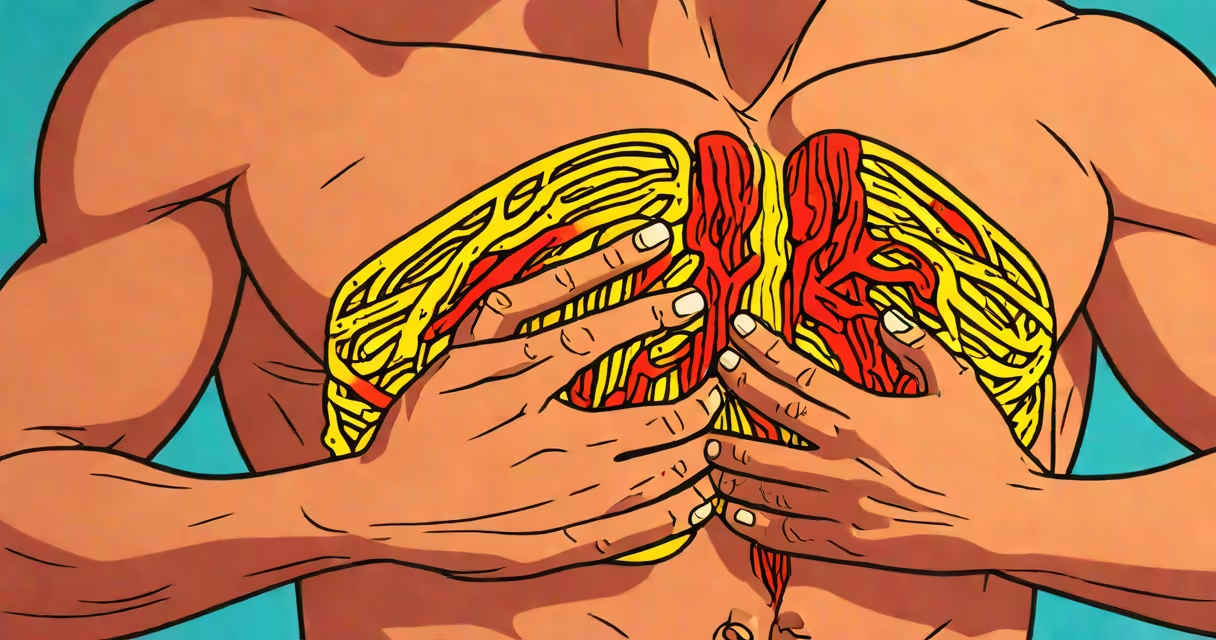
A pulled chest muscle causes sudden, sharp pain in the pectoral area, typically worsened by arm movements or stretching. The sensation often feels like a deep ache or tightness, especially when pressing on the affected side. Pain may radiate slightly toward the shoulder or upper rib cage but doesn't usually mimic cardiac symptoms.
Pulling a chest muscle happens when the pectoralis major or minor fibers stretch beyond their normal range. This injury commonly occurs during weightlifting, push-ups, or sudden twisting motions. The pain usually appears within minutes of the strain and can last days to weeks depending on severity.
According to the American Academy of Orthopaedic Surgeons (AAOS), mild strains involve microscopic tears with minimal swelling, while moderate to severe pulls result in significant pain, bruising, and reduced strength. The condition is not life-threatening but requires rest and proper care to avoid worsening.
Pain from a pulled chest muscle is typically localized to one side of the chest, near the center or lower sternum. It intensifies when lifting the arm overhead, reaching across the body, or doing push-ups. Some people describe it as a "stabbing" or "tearing" sensation during motion.
Other common sensations include:
Unlike heart-related chest pain, which may spread to the jaw or left arm and come with shortness of breath, pulled chest muscle pain stays confined to the front of the torso. It rarely causes dizziness or sweating. If those symptoms appear, seek medical evaluation immediately.
Chest muscle injuries are classified by severity, based on the extent of fiber damage. The AAOS uses a three-grade system:
| Grade | Damage Level | Symptoms | Recovery Time |
|---|---|---|---|
| 1 (Mild) | Minor tear, less than 5% of fibers | Discomfort during activity, slight stiffness | 1-2 weeks |
| 2 (Moderate) | Partial tear, 5-50% of fibers | Sharp pain with movement, swelling, bruising | 3-6 weeks |
| 3 (Severe) | Complete rupture, over 50% of fibers torn | Deformity, inability to move arm, intense pain | 6+ weeks, possible surgery |
Grade 3 injuries are rare but serious. They may require surgical repair, especially if the tendon detaches from the bone. A 2021 study in the Journal of Sports Medicine noted that 90% of reported chest strains were Grade 1 or 2, with most resolving with conservative treatment.
Many people mistake a pulled chest muscle for a heart attack, especially if they're experiencing chest tightness. However, cardiac pain tends to be pressure-like, lasts longer than five minutes, and may come with nausea or cold sweats. A pulled muscle pain is immediate, localized, and triggered by movement.
Another confusion arises with costochondritis-a condition involving inflammation of the cartilage connecting ribs to the sternum. Both cause chest pain, but costochondritis pain is often reproducible with direct pressure and may feel more sharp and localized to the joint line. A pulled chest muscle affects the muscle tissue itself, not the joints.
One non-obvious distinction: a pulled chest muscle usually hurts more when pushing forward (like pushing a door) than pulling. This is because the pectoral muscles contract during pushing. Pulling actions engage other muscles, such as the latissimus dorsi, which reduces strain on the pecs.
In 2022, a 34-year-old male weightlifter experienced sudden pain during a bench press set. He was using 135 pounds for 8 reps and felt a sharp tug in his right chest at the peak of the lift. The pain worsened when he tried to raise his arm or touch his opposite shoulder.
He stopped training, applied ice, and rested for two days. By day four, the pain had decreased by 70%, though he still felt tightness during rotation. An MRI confirmed a Grade 2 strain in the right pectoralis major. He returned to light training at six weeks with physical therapy.
This case illustrates that even experienced athletes can strain the chest muscle during heavy lifts without proper warm-up or form breakdown.
See a doctor if pain persists beyond 10 days despite rest, if swelling increases, or if you notice a visible bulge or indentation in the chest. These signs may indicate a complete tear or muscle herniation.
Also consult a professional if you have difficulty breathing, chest heaviness lasting more than 15 minutes, or pain that spreads to your neck or jaw. While unlikely to be related to a pulled muscle, these symptoms require urgent evaluation to rule out cardiac events.
Understanding what a pulled chest muscle feels like helps prevent misdiagnosis and supports faster healing. If you've experienced sudden chest pain during exercise or movement, assess the location, timing, and triggers carefully. Most cases resolve with rest and gradual return to activity-but don't ignore warning signs.
Recognizing the difference between a pulled chest muscle and other conditions ensures you take the right steps. Symptoms like localized pain, movement-related discomfort, and absence of systemic signs (fever, dizziness) point strongly to musculoskeletal origin rather than internal issues.