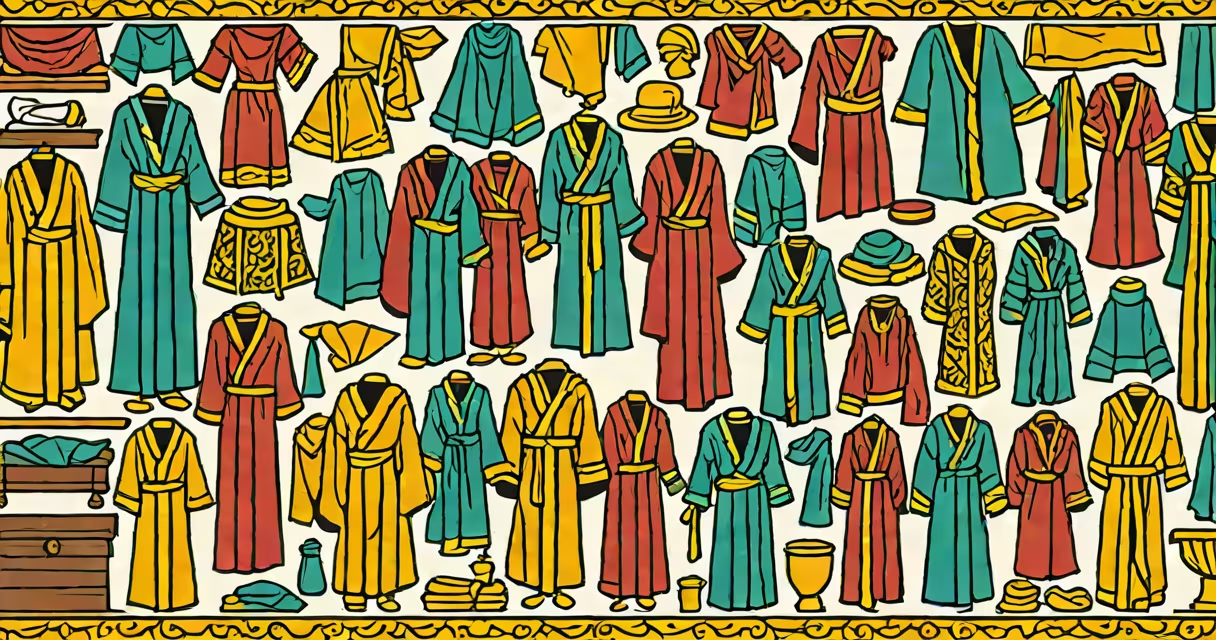
Raiment in the Bible refers to clothing, especially outer garments worn by individuals in ancient Israelite and Near Eastern cultures. It appears in older English translations like the King James Version and denotes both everyday attire and ceremonial dress.
The term originates from Old French *raiment*, meaning "clothing," and entered English through Middle English religious texts. In biblical context, raiment is not just about physical covering-it reflects identity, social standing, spiritual condition, and divine appointment.
For example, in Matthew 6:28-29, Jesus says, "Consider the lilies of the field, how they grow; they toil not, neither do they spin: And yet I say unto you, That even Solomon in all his glory was not arrayed like one of these." The word "arrayed" here translates the Greek *exedenthes*, which relates to being clothed in raiment. This shows raiment was used to describe ornate, high-status garments.
Raiment in the Bible typically referred to outer garments made from wool, linen, or sometimes dyed fabrics. These were not casual wear but functional and symbolic. Linen was associated with priests and purity; wool denoted commoners and shepherds; rich dyes like purple and scarlet signaled royalty or sacred office.
For instance, the High Priest's garments included blue, purple, and scarlet threads, along with gold thread-materials that marked him as set apart. Exodus 28:5-6 details the construction of these priestly raiments: "And these are the materials which ye shall take... gold, and blue, and purple, and scarlet, and fine twined linen."
Textile production was labor-intensive. Weaving, dyeing, and tailoring were skills passed through families. A single robe could take weeks to make. This explains why raiment often carried economic weight-giving away or stealing someone's raiment was a serious offense.
Biblical raiment varied by function and class. The most common types included:
| Type | Material & Features | Usage Context |
|---|---|---|
| Chiton | Linen or wool tunic, knee-length, worn under other layers | Basic garment for men and women; worn daily |
| Me'il | Priestly robe, often long, with bells and pomegranates | High Priest's ceremonial raiment; Exodus 28:31-35 |
| Abaya | Long cloak or mantle, worn over the chiton | Symbolized authority; prophets and elders wore them |
| Ornamental Garments | Dyed wool, embroidered, sometimes with gold thread | Worn by kings, nobles, and during festivals |
These garments weren't just fashion-they carried theological significance. When David wore Saul's raiment (1 Samuel 15:27), he took on royal authority. When Jesus was mocked by Roman soldiers, they dressed him in a purple robe and placed a crown of thorns on his head (Matthew 27:28-29)-a deliberate act of irony and humiliation using raiment as political theater.
Many assume raiment meant only fine or luxurious clothing. But in biblical usage, it included all garments-from the coarse sackcloth worn in mourning to the priest's sacred linen. The word covers both humble and exalted attire.
A key correction: raiment did not always imply wealth. In Luke 15:22, the father orders his son's "best robe" upon his return. The word "robe" here is *chiton* in Greek, but the translation uses "raiment" in older versions. The focus isn't on luxury-it's on restoration. The son had lost his status; the new raiment signifies renewed belonging.
Another misconception is that raiment was purely decorative. Archaeological evidence from sites like Megiddo and Lachish shows that garments were tailored for climate, mobility, and ritual. For example, the priestly ephod was designed to allow movement during service, not just look impressive.
Genesis 37:3 describes Jacob giving Joseph a "coat of many colors"-a Hebrew phrase *kethoneth pasim*. This garment wasn't just colorful; it was a sign of favor. Joseph's brothers saw it as proof of special treatment, leading to jealousy and betrayal.
Modern scholars like Dr. Carol Meyers, author of Women in the Hebrew Bible, note that such garments were markers of inheritance and divine selection. The coat wasn't merely clothing-it was a visible symbol of God's choice.
When Joseph later stood before Pharaoh, he wore Egyptian raiment-linen and fine wool-indicating his rise in status. His original coat was torn and stained; his new raiment was clean and dignified. The change in clothing mirrored his transformation from rejected youth to ruler of Egypt.
Modern readers often skip over references to raiment because they seem outdated. But these passages carry deeper meaning. Clothing in the Bible is never neutral-it reflects inner state, divine calling, or moral condition.
In Revelation 19:8, the bride of Christ is described as "arrayed in fine linen, clean and white"-a reference to the righteousness of the saints. Here, raiment becomes a metaphor for holiness. The imagery connects material clothing to spiritual identity.
Even in everyday life, raiment shapes perception. A person wearing a suit enters a room differently than someone in casual clothes. In biblical narrative, clothing determines who is seen as holy, who is rejected, who is restored.
I once visited the Israel Museum in Jerusalem and saw a reconstructed priestly garment from the Second Temple period. The embroidery was precise-blue and purple threads woven in geometric patterns. The craftsmanship was staggering. Holding a replica, I realized: this wasn't just fabric. It was theology stitched into cloth.
Understanding what raiment means in the Bible helps decode symbolism in stories. It shifts reading from surface-level detail to deeper interpretation. When the Bible speaks of raiment, it's not just describing clothes-it's revealing character, calling, and covenant.