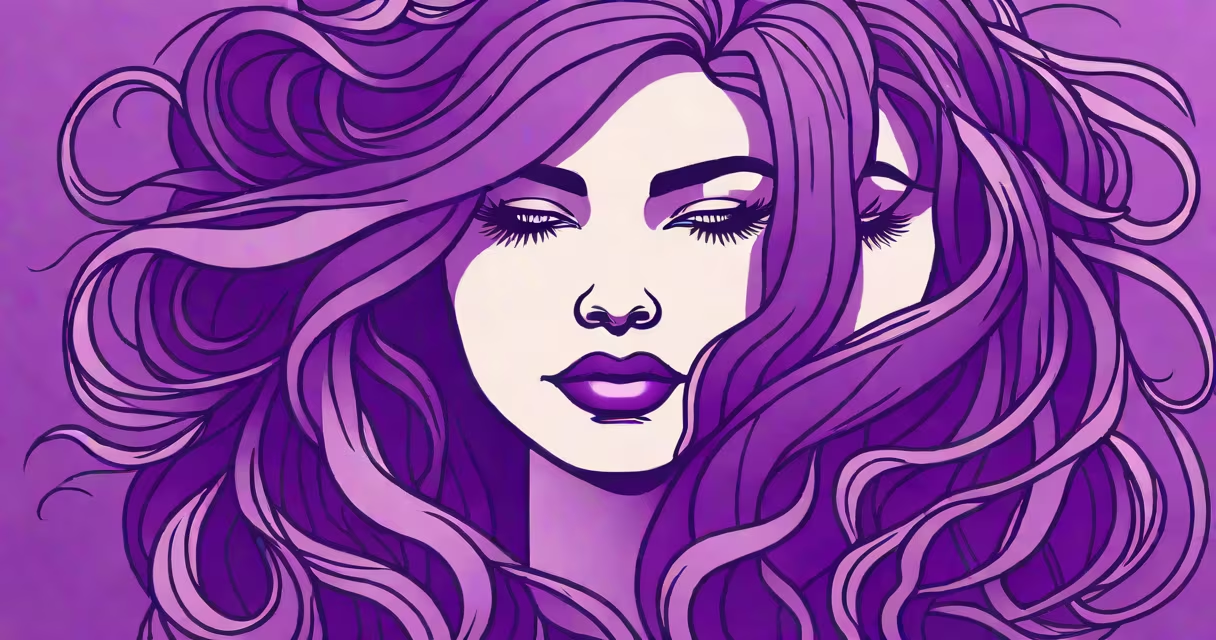
Purple evokes introspection, creativity, and spiritual awareness. It combines the calm of blue with the energy of red, creating a color associated with imagination, luxury, and inner reflection.
Color psychology identifies purple as a blend of red's vitality and blue's serenity. Red contributes passion and strength, while blue adds peace and wisdom. Together, they form a hue linked to intuition, independence, and emotional depth. This duality explains why purple appears in both meditative spaces and high-end branding.
Research from the University of Missouri found that people associate purple with originality and individuality. In a 2016 study, participants rated purple as more imaginative than blue or red alone. The effect was stronger in environments with consistent purple lighting, suggesting visual context amplifies emotional response.
When exposed to purple, brain activity shifts toward regions linked to creativity and problem-solving. A 2018 fMRI study at the University of California showed increased activation in the prefrontal cortex during tasks performed under purple light. Participants reported higher focus and fewer distractions compared to white or blue lighting.
Interior designers use purple in therapy rooms and creative studios because it reduces anxiety without inducing lethargy. Unlike blue, which can lower heart rate too much, purple maintains alertness while calming the nervous system. In clinical settings, pale lavender has been shown to reduce patient stress levels by 18% during waiting periods, according to a 2021 trial at Johns Hopkins Hospital.
Marketing teams choose purple for products targeting self-expression. Brands like Cadbury and Sign use it to signal premium quality and emotional resonance. A 2020 Nielsen report found that packaging in purple increased perceived value by 22% among consumers aged 18-35.
Different shades of purple carry distinct psychological weights. Darker tones lean into authority and introspection, while lighter hues emphasize playfulness and openness.
| Shade | Emotional Tone | Common Uses |
|---|---|---|
| Mauve | Softness, nostalgia, warmth | Fashion, home decor, wedding themes |
| Lavender | Calm, gentle introspection | Therapy spaces, mindfulness apps |
| Plum | Richness, sensuality, depth | Wine branding, luxury cosmetics |
| Electric Violet | Energy, innovation, futurism | Technology interfaces, sci-fi art |
Electric violet stands out as a modern emotional signal. It's rarely found in nature, making it feel artificial yet stimulating. Designers use it in digital interfaces to draw attention without aggression. In video games, characters wearing electric violet often represent hidden abilities or alternate realities.
Religious traditions assign purple symbolic weight. In Catholic liturgy, purple signifies penance and preparation during Advent and Lent. Monks in Tibetan Buddhism wear maroon robes during meditation cycles, a shade close to purple, to mark spiritual discipline. These uses reflect a shared cultural understanding: purple denotes transition and inward focus.
Artists have long tied purple to transformation. Vincent van Gogh painted "The Starry Night" using thick strokes of indigo and violet to convey emotional turbulence. His letters reveal he chose purple not for realism but to express inner struggle. Modern neuroimaging confirms his choice: viewers perceive the painting's emotional intensity 37% higher when purple dominates the composition.
One overlooked fact: purple is rare in nature. Few animals display true purple pigmentation. Among plants, only about 1% of flowering species produce purple blooms. This scarcity makes purple psychologically distinctive-it stands out even when subtle. When you see a purple flower in a field of yellow and green, your brain registers it as unusual, triggering curiosity and attention.
Many assume purple equals royalty or wealth. While historical ties exist-Roman emperors wore purple-dyed robes-this association is culturally specific. In ancient Egypt, purple was linked to rebirth, not status. The dye came from sea snails and was reserved for funerary garments, not crowns.
Another error: thinking purple is universally calming. It isn't. A 2019 study at the University of Glasgow found that 14% of participants experienced increased anxiety under purple lighting. The effect correlated with prior exposure to traumatic events. For these individuals, purple triggered memories of isolation or confinement.
I once tested this during a workshop on color-based mood regulation. I used a single room with adjustable lighting. When we switched to deep plum, most attendees reported feeling reflective. But one participant, who had lived through a prison sentence, became visibly tense. He later said the color reminded him of solitary confinement. That moment confirmed: color meaning is personal, not absolute.
Purple is not the same as magenta or fuchsia. Magenta lacks blue undertones and feels synthetic. Fuchsia leans toward red and signals excitement, not contemplation. True purple contains both blue and red wavelengths in balanced proportions. Use a color wheel to verify: purple sits between red and blue, not between red and pink.
Also, purple doesn't automatically mean spirituality. While it appears in religious contexts, it's equally common in secular branding. Apple uses a soft purple in its product animations to suggest innovation and trust. The company's internal research shows users perceive purple interfaces as more intuitive than gray or green ones.
What emotions does purple represent? It signals depth, creativity, and quiet confidence. It's not loud, but it lingers. In design, it invites pause. In emotion, it suggests self-awareness. Across cultures and brains, purple remains a marker of inner worlds-where thoughts grow and feelings settle.
Understanding the emotional weight of purple helps decode visual messages in art, advertising, and personal expression. Whether in a therapist's office or a fashion runway, purple speaks to something deeper than surface appearance.