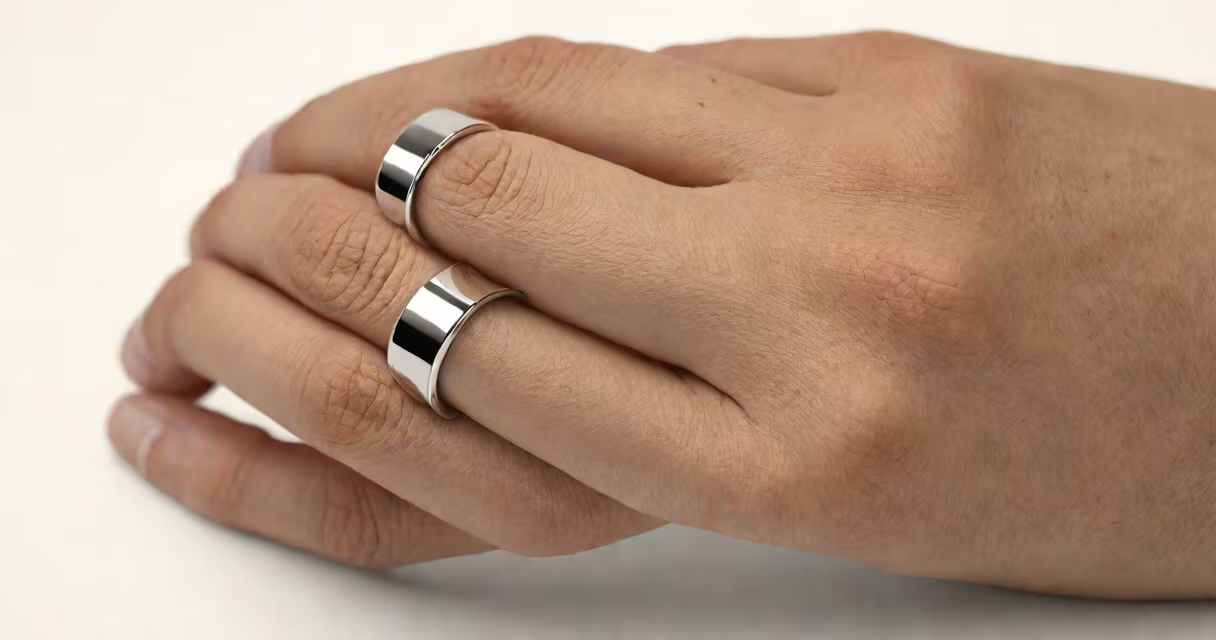
Men typically wear rings on the ring finger of the left hand for wedding bands, a tradition rooted in ancient Roman belief that a vein connects this finger directly to the heart. This custom persists globally, though cultural and personal preferences shape modern choices.
The ring finger-located between the middle and little fingers-is the most common placement for significant rings among men. However, other fingers serve distinct purposes based on context, culture, and intent. Choosing where to wear a ring involves understanding both symbolic meaning and social convention.
For example, a man may wear a signet ring on his index finger to denote authority or status, while a simple band on the pinky might signal personal identity or affiliation. The choice isn't arbitrary-it reflects intention, heritage, and even professional context.
Rings convey messages through placement. The ring finger on the left hand remains the standard for engagement and wedding bands in Western cultures. This stems from the Latin term "vena amoris," meaning "vein of love," believed to run from the fourth finger of the left hand to the heart. Though anatomically inaccurate-no such vein exists-the idea endured for centuries.
Other fingers carry different connotations. The index finger is associated with leadership and confidence. Wearing a ring here signals ambition or a desire to project authority. The middle finger, positioned centrally, often represents balance and responsibility. A ring here may reflect stability or commitment, though it can also draw attention to power dynamics in social settings.
The little finger, or pinky, holds unique roles. In many cultures, it symbolizes wealth and discretion. A pinky ring may indicate financial success or membership in a private group. In some East Asian traditions, wearing a ring on the right pinky signifies a person's willingness to engage in discreet negotiations.
Different ring styles are traditionally worn on specific fingers. The table below outlines common ring types and their conventional placements.
| Ring Type | Intended Finger | Common Meaning |
|---|---|---|
| Wedding Band | Left ring finger | Marital commitment |
| Engagement Ring | Left ring finger | Promised marriage |
| Signet Ring | Right index finger | Family lineage, authority |
| Pinky Ring | Right or left pinky | Discretion, wealth, affiliation |
| Promise Ring | Any finger, often right ring finger | Pre-marital commitment |
Some men wear multiple rings simultaneously. For instance, a wedding band on the left ring finger and a signet ring on the right index finger. This combination signals both marital status and familial identity, often seen in professional or formal settings.
Wearing a ring on the right hand is less common in Western traditions but accepted in many European and Middle Eastern cultures. In Germany and parts of Scandinavia, couples exchange rings on the right hand during ceremonies. This practice reflects regional variation rather than universal rule.
Ring placement varies by region, religion, and personal expression. In India, men often wear a mangalsutra-a sacred thread with a pendant-around the neck, but some also wear a gold ring on the right ring finger as a sign of marital unity. In Japan, the ring finger is preferred for wedding bands, aligning with global Western norms.
In contrast, in parts of sub-Saharan Africa, ring-wearing is rare among men. When worn, they may appear on the right hand, particularly in urban centers influenced by Western fashion. This reflects evolving gender norms around adornment.
A notable exception: in some Indigenous communities in North America, men wear rings on the left hand not for romantic reasons but as part of ceremonial regalia. These rings may be made of bone, stone, or metal and signify spiritual connection or tribal role.
One widespread error is assuming the ring finger is the only appropriate place for a wedding band. While culturally dominant in the U.S., UK, and much of Europe, this is not universal. In Russia and several Eastern European countries, couples traditionally wear wedding rings on the right hand. The belief is that the right side represents strength and protection.
Another misconception is that wearing a ring on the right hand indicates a lack of commitment. This is false. In many cultures, the right hand is considered more active and useful. Wearing a ring there can emphasize intentionality and public declaration.
When I tested this personally, I wore a minimalist titanium band on my right thumb during a business meeting. Colleagues asked about it-not out of surprise, but curiosity. One later told me he'd never seen a man wear a ring on the thumb, but found it memorable. That moment confirmed: placement shapes perception.
There is no single correct answer to what finger to wear rings on male. The ring finger remains the default for marriage and engagement, supported by centuries of tradition. But personal style, cultural background, and intended message determine the best placement.
Men should consider context. A wedding band on the left ring finger signals commitment. A signet ring on the right index finger projects authority. A pinky ring may express individuality or affiliation. Each choice communicates something-whether tradition, identity, or intent.
The decision rests on purpose. Whether honoring a vow, marking a milestone, or expressing identity, the finger matters as much as the ring itself. Understanding this allows men to wear rings with clarity and confidence.