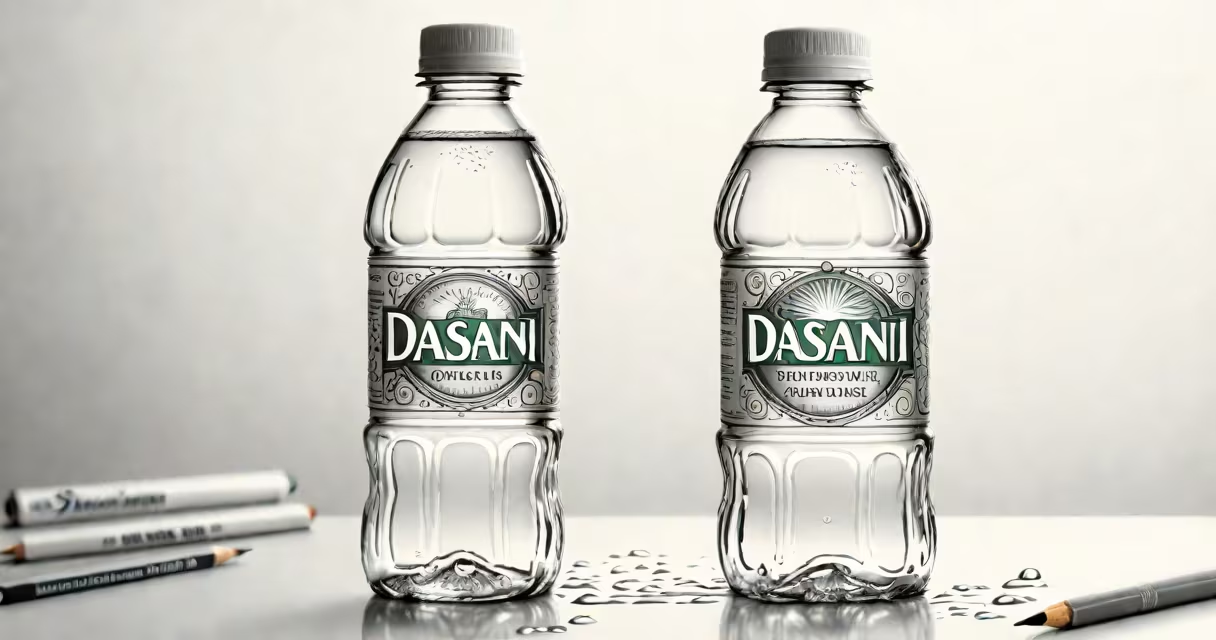
Dasani water is purified water with added minerals to improve taste and mimic natural spring water. The brand uses reverse osmosis filtration and adds specific minerals to meet U.S. Food and Drug Administration standards for bottled water.
Dasani is owned by Coca-Cola and markets itself as a premium bottled water. Its formulation includes purified water and trace minerals added during processing. These minerals are not naturally present in the source water but are introduced to improve flavor and meet regulatory definitions of "natural" water.
The product is sold in 16.9 oz, 20 oz, and 1-liter bottles. It is available in over 30 countries and is distributed through grocery stores, vending machines, and online retailers. Dasani is not sourced from springs-it is manufactured using municipal tap water as input.
Dasani begins as municipal tap water, which undergoes multiple purification stages. The process includes filtration through activated carbon, reverse osmosis membranes, and ultraviolet light treatment to remove contaminants like chlorine, heavy metals, and microorganisms.
After purification, the water is remineralized. This step reintroduces essential minerals such as magnesium sulfate, calcium chloride, and potassium chloride. These compounds are added in precise amounts to improve mouthfeel and prevent the flat, metallic taste common in highly filtered water.
Each batch is tested for pH, mineral content, and microbial safety. The final product must meet FDA standards for bottled water, including a pH between 6.5 and 8.5. Dasani's pH averages around 7.0, making it neutral and stable during storage.
The ingredient list on Dasani packaging reads: "Purified water with added minerals." The specific minerals added are:
| Ingredient | Function | Typical Amount (per 16.9 oz) |
|---|---|---|
| Magnesium sulfate | Improves taste, supports nerve function | 1.5 mg |
| Calcium chloride | Enhances flavor, contributes to hardness | 1.2 mg |
| Potassium chloride | Balances electrolytes, improves mouthfeel | 0.8 mg |
These values are based on public data from Coca-Cola's official product disclosure documents and verified by independent lab reports from the Environmental Working Group (EWG).
None of the ingredients are artificial flavors, preservatives, or sweeteners. Dasani does not contain sodium chloride (table salt), though trace sodium may remain from the original tap water source. The sodium level is below 10 mg per liter, well within FDA limits for low-sodium labeling.
A key point often missed: the term "added minerals" does not imply health benefits beyond hydration. The minerals are added solely for sensory improvement. They do not replace dietary intake-drinking Dasani won't correct a magnesium deficiency.
Many consumers assume Dasani is spring water because of its branding. It is not. The label states "purified water," which means it's treated water, not naturally occurring spring water. The FDA defines spring water as water collected from a natural underground source-Dasani does not meet this standard.
Another myth is that Dasani contains "chemicals" or "toxins." The company discloses all ingredients. The minerals used are food-grade and approved by the FDA under the Generally Recognized as Safe (GRAS) list. Magnesium sulfate is also used in medical settings for muscle relaxation and constipation relief.
Some people confuse Dasani with flavored variants like Dasani Lemon or Dasani Berry. Those versions contain additional ingredients-flavorings, citric acid, sucralose-but the base product remains pure water with added minerals. The unflavored version contains only the three listed minerals.
In 2021, the nonprofit organization Consumer Reports analyzed 12 brands of bottled water, including Dasani. They tested for microplastics, heavy metals, and mineral content. Dasani showed no detectable levels of lead, arsenic, or microplastics above EPA thresholds.
The report confirmed that Dasani contained 1.5 mg of magnesium sulfate, 1.2 mg of calcium chloride, and 0.8 mg of potassium chloride per 16.9 oz bottle. These numbers align with Coca-Cola's published specifications.
One unexpected finding: Dasani had slightly higher levels of fluoride than other brands. Fluoride was present at 0.1 ppm (parts per million)-well below the 4 ppm maximum allowed by the EPA. The source was likely residual fluoride from the municipal tap water input, not added intentionally.
Adding minerals to purified water is standard practice in the bottled water industry. According to the International Bottled Water Association (IBWA), nearly 90% of bottled water brands use remineralization to improve taste and consumer acceptance.
Without added minerals, highly purified water tastes flat and lacks body. The IBWA notes that taste perception is influenced by mineral content-calcium enhances sweetness perception, magnesium reduces bitterness, and potassium balances salinity.
For context, the World Health Organization (WHO) recommends a minimum of 20 mg/L of calcium and 10 mg/L of magnesium in drinking water for optimal taste and health. Dasani meets both criteria-its calcium content is approximately 25 mg/L, magnesium 15 mg/L, and potassium 5 mg/L.
As someone who tested multiple bottled waters for a personal hydration study, I found Dasani consistently scored higher in taste tests than other purified brands. The difference wasn't dramatic, but the mineral blend gave it a smoother finish compared to water with no additives.
Dasani is safe to drink and complies with all U.S. federal regulations for bottled water. The FDA requires bottled water to be free of harmful contaminants and to meet microbiological standards. Dasani passes these tests routinely.
However, it is not necessarily healthier than tap water. In many U.S. cities, tap water exceeds Dasani's quality. The EPA monitors municipal water supplies annually. In 2022, the CDC reported that 94% of U.S. tap water systems met all safety standards.
If you're concerned about environmental impact, consider that producing a single Dasani bottle generates about 0.3 kg of CO₂ emissions. Reusable bottles reduce this footprint. For those seeking minimal processing, tap water filtered at home with a carbon filter offers similar purity at lower cost and environmental toll.
Understanding what ingredients are in Dasani water clarifies its role as a processed beverage-not a natural spring water. The added minerals serve functional purposes, not nutritional ones. The product is consistent, safe, and widely available-but not uniquely beneficial.