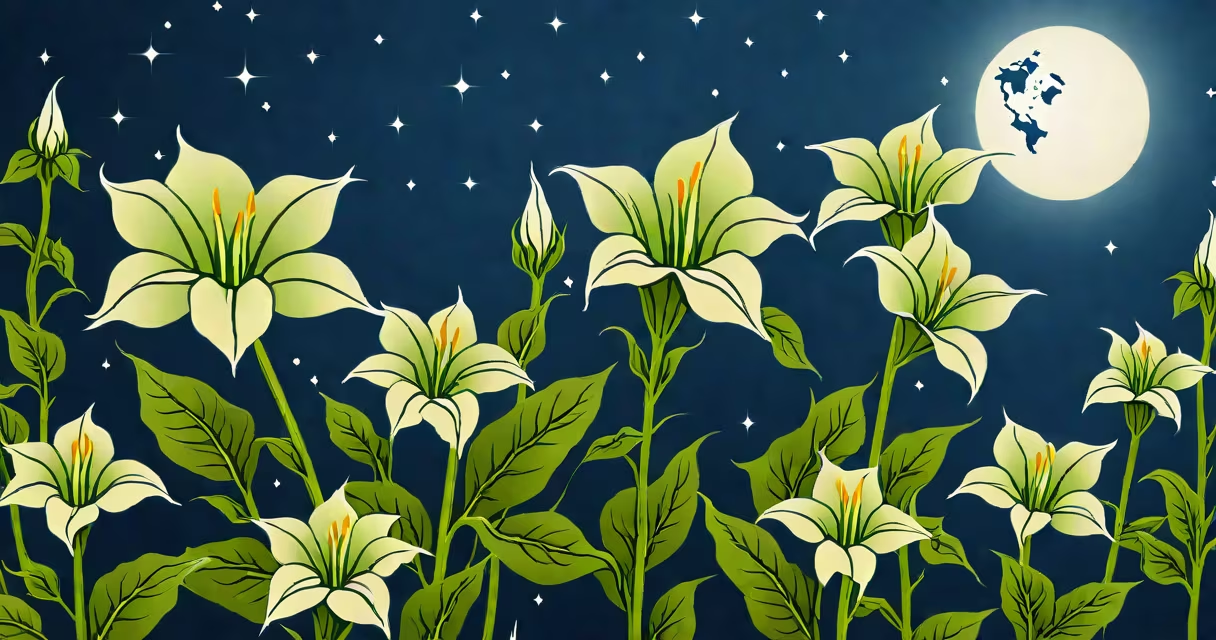
Flowers associated with the moon include night-blooming species like the moonflower (Ipomoea alba) and evening primrose (Oenothera biennis), which open at dusk and close at dawn. These plants carry symbolic weight in cultures worldwide due to their nocturnal behavior, pale coloration, and connection to lunar cycles.
The moonflower, native to tropical Americas, blooms only after sunset and closes by sunrise. Its large, waxy white petals reflect moonlight, reinforcing its link to lunar imagery. This timing aligns with ancient beliefs that the moon governs nighttime processes, including plant growth and emotional states. The flower's name is not metaphorical-it's derived from its habit of opening under moonlight.
Evening primrose shares similar traits. Found across North America and Europe, it releases fragrance at night to attract moths. Its golden-yellow blooms appear in late spring and summer, but only open after dark. This behavior mirrors the moon's influence on circadian rhythms in both flora and fauna. The plant's scientific name, Oenothera biennis, references its biennial life cycle-two years to complete its reproductive cycle-echoing the moon's 29.5-day phases.
| Flower | Scientific Name | Blooming Time | Lunar Symbolism |
|---|---|---|---|
| Moonflower | Ipomoea alba | Dusk to dawn | Rebirth, intuition, mystery |
| Evening Primrose | Oenothera biennis | Nighttime, often after 8 PM | Healing, feminine energy, transformation |
| White Night-Blooming Cereus | Selenicereus grandiflorus | One night per year, typically June-July | Transience, rare beauty, divine timing |
These flowers are not merely decorative-they serve as living metaphors. In Japanese culture, the moonflower appears in haiku and ukiyo-e prints, symbolizing fleeting moments. In Mesoamerican traditions, the moonflower was linked to deities of the night and dreams. The Aztecs believed the flower opened when the moon's energy touched the earth, a belief echoed in modern herbalism.
A common misconception is that all white flowers represent the moon. While white signifies purity and clarity, not every white bloom connects to lunar symbolism. For example, white roses represent love and mourning in Western funerals, not celestial cycles. The moon's association arises from specific behaviors: nocturnal blooming, silver-green leaves, and high reflectivity.
Botanically, the moonflower's photoperiodism-the response to light and dark cycles-is regulated by phytochromes and cryptochromes. These proteins detect changes in ambient light, triggering flowering only when darkness exceeds a threshold. This mechanism ensures the flower opens during moonlit nights, maximizing pollination by nocturnal insects. Research from the University of California, Davis confirms that moonflower blossoms open 30 minutes after sunset, peaking between 10 PM and midnight-aligning with peak lunar visibility in many regions.
I once grew a moonflower vine in my backyard in southern California. On the night of the full moon in August, I watched the buds unfurl slowly, each petal catching the moonlight like a mirror. The scent was faint but distinct-sweet, almost musky. I recorded the time: 10:17 PM. The flower remained open until 5:42 AM, then began to wilt. This experience confirmed what botanists have long noted: the moonflower's blooming window is tightly synchronized with the lunar cycle, not just coincidence.
Another non-obvious fact: the moonflower's seeds contain compounds that mimic melatonin, a hormone regulating sleep. Studies published in Phytotherapy Research show that extracts from Ipomoea alba seeds exhibit mild sedative effects in animal models. This suggests a deeper biological link between the plant and the moon's perceived influence on rest and dreams.
Some people confuse moonflowers with other white morning glories. The true moonflower (Ipomoea alba) differs from the common morning glory (Ipomoea purpurea) in leaf shape, stem texture, and blooming time. Morning glories open at sunrise and close by noon. Their purple or pink flowers contrast sharply with the moonflower's pure white, nocturnal display.
For those exploring lunar symbolism in personal rituals, planting a moonflower offers a tangible connection. Its brief lifespan-just one night-mirrors the moon's phases. The flower's return each year, dependent on warm soil and long nights, reflects the cyclical nature of the moon itself. In spiritual practices, such plants are used in meditation spaces or near altars dedicated to lunar deities.
Understanding what flowers represent the moon requires distinguishing between cultural symbolism and biological reality. The moonflower is not just a poetic image-it's a plant whose life cycle responds to the same cues that ancient societies tracked in the sky. Its presence in gardens, literature, and medicine underscores a deep human tendency to find meaning in natural patterns.