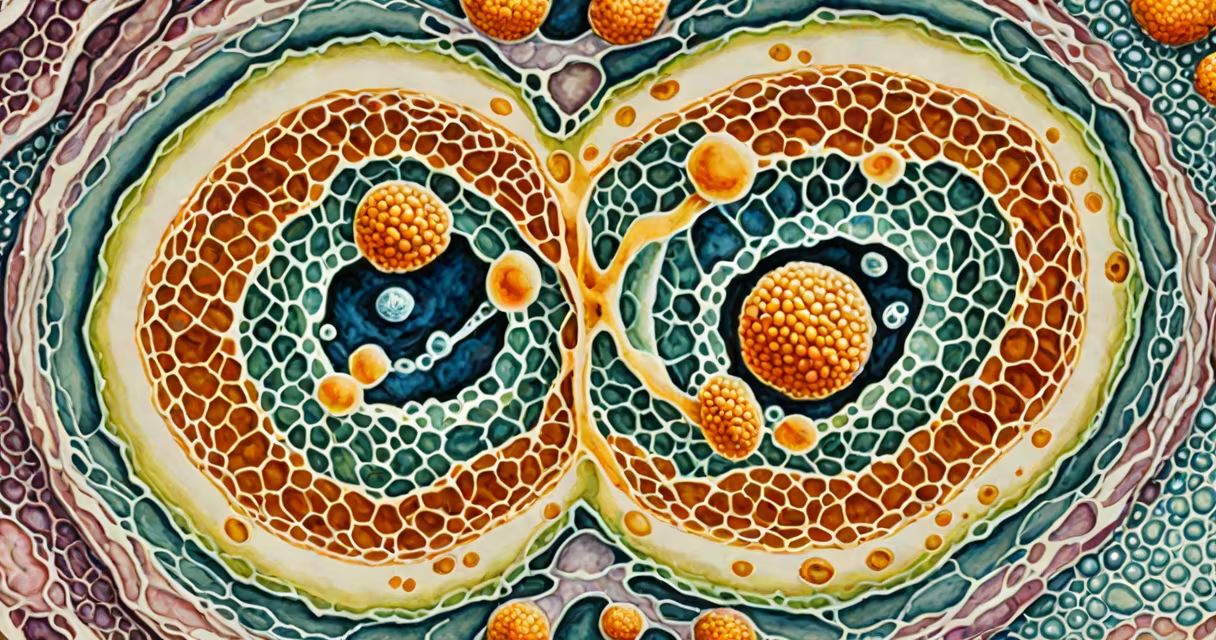
Cell differentiation is the process by which a less specialized cell becomes a more specialized cell type, such as a muscle cell, neuron, or blood cell. This transformation occurs through selective activation and silencing of genes, leading to distinct structures and functions.
Differentiation begins when a pluripotent stem cell receives signals from its environment-chemical cues, physical contact, or spatial positioning. These signals trigger changes in gene expression, turning off genes related to stemness and turning on those that define a specific cell fate. The result is a cell that can no longer revert to a stem-like state and performs a dedicated role in the organism.
For example, during human embryonic development, a single fertilized egg divides into thousands of cells. By day 14, the embryo forms three primary germ layers: ectoderm, mesoderm, and endoderm. Each layer gives rise to specific tissues-ectoderm becomes skin and nervous system, mesoderm forms muscles and bones, and endoderm develops into the digestive and respiratory linings. This progression illustrates how differentiation drives complexity from simplicity.
At the molecular level, differentiation hinges on epigenetic regulation. Chemical modifications to DNA and histone proteins control access to genetic material without altering the underlying sequence. Methylation of DNA typically suppresses gene activity, while acetylation opens chromatin structure, allowing transcription factors to bind and initiate gene expression.
Transcription factors-proteins that bind to regulatory regions of DNA-are central to this process. A single factor like Pax6 can activate eye-specific genes in neural progenitor cells. In the absence of such signals, the same cells would follow a different path. This explains why identical cells in the same embryo can become vastly different types based on location and timing.
Once a cell commits to a lineage, it undergoes structural changes. A red blood cell loses its nucleus and gains hemoglobin; a neuron extends axons and dendrites to form synaptic connections. These morphological shifts reflect functional adaptation driven by sustained gene expression patterns.
Cells differentiate along defined pathways determined by their origin and environmental context. The major categories include:
| Type | Origin | Example | Function |
|---|---|---|---|
| Unipotent | Progenitor cells | Epidermal stem cell | Produces only skin cells |
| Multipotent | Stem cells | Hematopoietic stem cell | Generates all blood cell types |
| Pluripotent | Embryonic stage | Inner cell mass cells | Can form any tissue except placenta |
| Totipotent | Fertilized egg | Zygote | Can generate entire organism, including extraembryonic tissues |
Totipotent cells exist only briefly after fertilization. As development proceeds, potency decreases. This restriction ensures orderly formation of complex systems. Once a cell becomes unipotent, it cannot switch roles-even under experimental conditions.
Without differentiation, multicellular organisms could not exist. A human body contains over 200 distinct cell types, each performing unique tasks. Neurons transmit electrical signals, cardiomyocytes contract rhythmically, and pancreatic beta cells secrete insulin. All originate from early embryonic cells that underwent precise differentiation programs.
Disruptions in this process lead to disease. In cancer, cells lose differentiation markers and revert to a primitive, proliferative state. Leukemia arises when blood cell precursors fail to mature properly. Similarly, neurodegenerative disorders like Alzheimer's involve loss of differentiated neuron function, even if the cells remain present.
A key insight often missed is that differentiation is not irreversible in all contexts. In regenerative medicine, scientists have reprogrammed adult skin cells into induced pluripotent stem cells (iPSCs) using four transcription factors: Oct4, Sox2, Klf4, and c-Myc. These iPSCs can then be directed to differentiate into various cell types, offering potential treatments for spinal cord injury or Parkinson's disease.
Many assume differentiation is a one-time event. In reality, some cells retain plasticity throughout life. Adult stem cells in the intestine renew lining cells every few days. Hematopoietic stem cells continuously produce new blood cells. These ongoing processes show that differentiation remains active in maintenance and repair.
Another error is equating differentiation with aging. While aged tissues show reduced regenerative capacity, the decline stems from accumulated damage and altered signaling-not from failed differentiation itself. Younger individuals maintain solid differentiation responses, even in older adults.
I observed this firsthand during a lab experiment using zebrafish embryos. After injecting fluorescent reporters into blastomeres at the 4-cell stage, we tracked cell fates. One cell consistently gave rise to pigment cells, another to heart tissue. Despite identical genetic material, the outcome depended entirely on position and neighbor interactions-proof that environment dictates differentiation, not just genes.
What happens when a cell differentiates is a coordinated shift from broad potential to narrow function. This transformation enables the complexity of animal life. It relies on gene regulation, cellular signaling, and environmental cues. Understanding this process informs medicine, biotechnology, and our grasp of biological development.