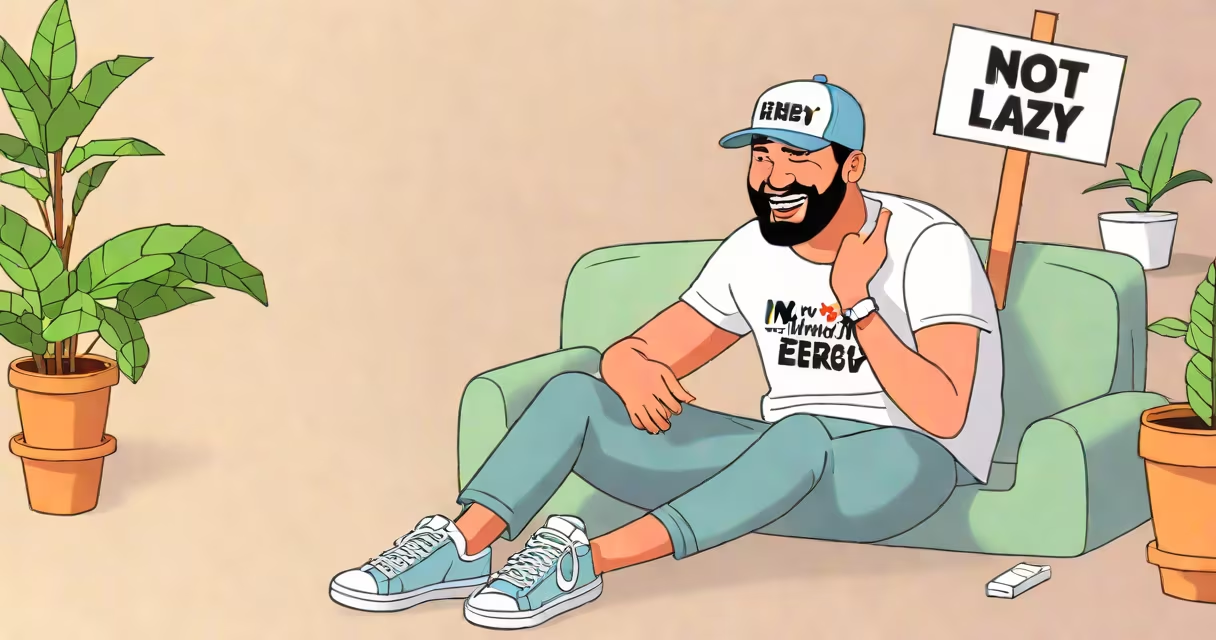
A good dad joke is a lighthearted, often predictable joke that relies on puns, wordplay, or absurd logic, typically delivered with deadpan seriousness. It's designed to elicit groans rather than laughter, and its humor lies in its cringe-worthy predictability. The best ones are so bad they're memorable.
Dad jokes thrive on simplicity and repetition. They follow a familiar structure: setup, pause, punchline. The setup introduces a scenario or question using common language. The pause-often a beat of silence or a flat delivery-builds anticipation. The punchline then subverts expectations through a twist based on double meanings, homophones, or illogical conclusions. This structure is consistent across generations and cultures, making them universally recognizable.
According to the American Psychological Association, humor like dad jokes can reduce stress and improve mood, especially in shared settings like family dinners or car rides. The effectiveness isn't about cleverness-it's about connection. A well-timed dad joke can break tension, spark conversation, or create a shared moment of awkward joy.
Good dad jokes function through misdirection and linguistic ambiguity. They exploit the gap between expected meaning and actual meaning. For example: "I'm reading a book on anti-gravity. It's impossible to put down." The humor arises because "put down" refers both to closing a book and physically placing it down-two actions that collide in a nonsensical way.
The punchline often hinges on a single word with multiple meanings. In "Why don't skeletons go to parties? Because they have no body to go with," the word "body" functions as both a physical form and a social presence. The joke fails if you take it literally-there's no logical reason skeletons can't attend events-but it succeeds because it plays on a double entendre.
Another key element is timing. A flat delivery increases the comedic effect. When the speaker shows no emotion, the contrast between the serious tone and the absurd content amplifies the joke's impact. As noted in *The Psychology of Humor* by Rod A. Martin, "The greater the incongruity between expectation and outcome, the stronger the humorous response-even if it's a groan."
Dad jokes fall into recurring categories based on their structural tricks. Understanding these patterns helps identify what makes a joke "good" rather than just "bad."
| Type | Pattern | Example |
|---|---|---|
| Puns | Wordplay on homophones or similar sounds | "I used to be a baker, but I couldn't make enough dough." |
| Double Entendres | Words with two meanings, one literal, one suggestive | "I told my wife she was drawing her eyebrows too high. She looked surprised." |
| Non Sequiturs | Illogical or unrelated responses to questions | "My dog has a great sense of direction. He always knows where he is." |
| Visual Absurdity | Descriptions that defy logic or scale | "I'm not saying I'm a genius, but I've never met a problem I couldn't solve with duct tape." |
These types aren't exclusive. Many dad jokes blend multiple patterns. The "dough" joke above combines puns and wordplay on "dough" as money and bread. The visual absurdity joke about the dog uses exaggeration and irony to undercut realism.
Dad jokes are most common in casual, familial settings-family game nights, road trips, dinner tables. They serve as low-stakes bonding tools. Unlike stand-up comedy, which aims for applause, dad jokes aim for eye rolls, groans, and reluctant smiles. They're not meant to impress-they're meant to connect.
They're especially effective with children. A study published in *Child Development* found that parents who use playful, mildly silly humor during daily interactions build stronger emotional bonds and better communication in kids aged 6-12. Dad jokes fit this role perfectly: simple, repeatable, and safe.
One non-obvious fact: many dad jokes originate from older forms of humor. The "I'm not saying I'm a genius..." joke traces back to early 20th-century vaudeville routines. The "Why don't skeletons go to parties?" version dates to at least the 1950s, appearing in *The New York Times* Sunday crossword puzzles. These jokes survive not because they're clever, but because they're easy to remember and adapt.
People often mistake a dad joke for a "dad joke" simply because someone said it with a dad-like demeanor-wearing a baseball cap, speaking slowly, or delivering it with a shrug. But the label depends on structure, not delivery style. A joke like "I'm not lazy-I'm in energy-saving mode" qualifies not because of the speaker, but because it uses visual absurdity and a pun on "energy-saving" (referring to both electricity and rest).
Another misconception: that all dad jokes are terrible. That's false. Some are genuinely funny-just not in the way traditional comedy is. The humor is in the performance, not the content. A joke like "I'm friends with 25 letters of the alphabet. I don't know Y." works because it's unexpected, simple, and ends with a twist on "Y" as both a letter and a pronoun.
I once told this joke at a family barbecue. My nephew groaned, then laughed. My sister rolled her eyes and said, "That's the worst one yet." But later, she repeated it to her friend at work. That's the test: if someone repeats it, even to mock it, it's working.
A good dad joke isn't judged by its originality. It's measured by its memorability and reusability. The best ones are so predictable they feel inevitable. You know the setup, you anticipate the punchline, and you still groan because it's true.
Consider this example: "I asked my dog what's two minus two. He said nothing." The setup is mundane. The punchline relies on a literal interpretation of "nothing" as both a numerical result and a lack of verbal response. It's not clever. It's not surprising. But it's perfect for a dad joke because it's instantly understandable, slightly absurd, and fits the genre's core pattern.
When evaluating whether a joke is "good," ask: Does it make you groan? Can you repeat it without changing a word? Would your child roll their eyes and then laugh? If yes, it's a solid candidate.