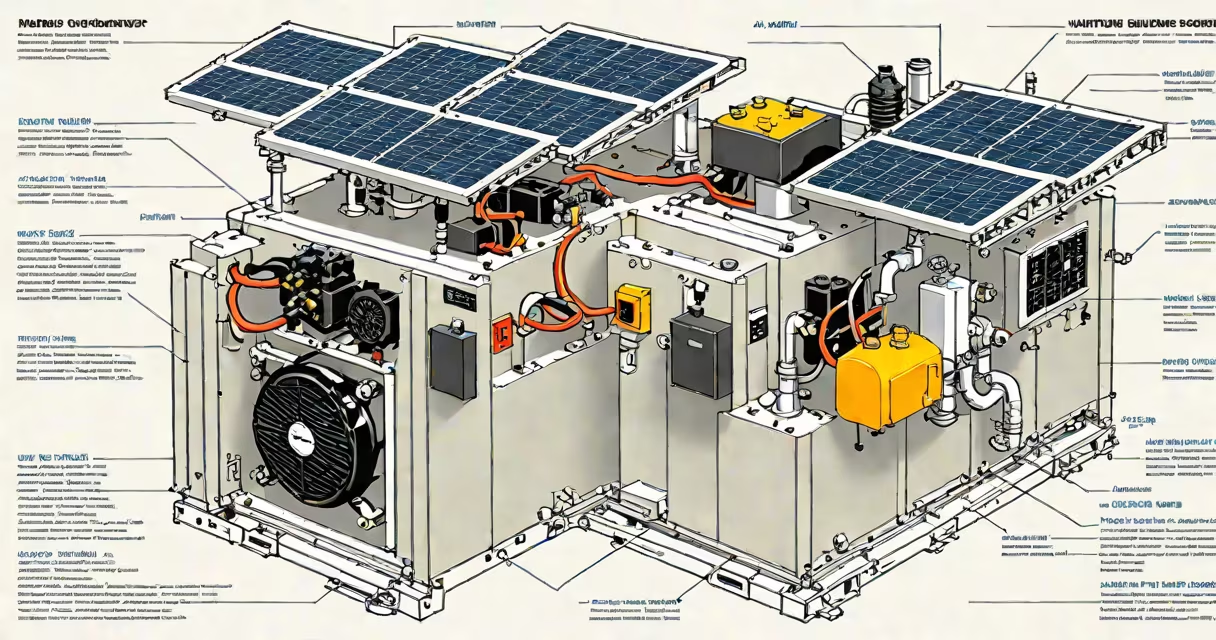
A hybrid generator integrates internal combustion engines with battery storage and renewable energy sources like solar panels to deliver continuous, adaptable power. It switches between fuel-based generation and stored electricity based on demand, reducing fuel use and emissions while maintaining reliability during extended outages.
These systems operate in multiple modes. During peak load, the engine runs to charge batteries and supply power. When demand drops, the system shifts to battery-only mode, minimizing fuel consumption. Solar panels can supplement charging during daylight hours, further extending runtime without refueling.
Hybrid generators are used in remote cabins, emergency shelters, construction sites, and homes seeking resilient backup power. They offer a middle ground between traditional gas-powered generators and fully solar systems, balancing cost, portability, and performance.
At its core, a hybrid generator uses an engine-driven alternator to produce electricity, which charges a bank of rechargeable batteries. The system includes a power management controller that monitors energy demand and adjusts output accordingly. When the grid goes down or solar input is low, the engine starts automatically to maintain power flow.
For example, a 3-kilowatt hybrid unit might run on propane during high-demand periods like heating or powering a refrigerator. When household loads drop at night, the system draws from stored battery energy. If solar panels are attached, they can recharge the batteries during the day, reducing engine runtime by up to 60% compared to standard models.
Modern units feature smart inverters that convert DC battery power to clean AC output suitable for sensitive electronics like laptops and medical devices. This avoids voltage fluctuations common in older generator designs.
Hybrid generators come in several configurations based on fuel type, battery capacity, and integration level. The most common variants are:
| Type | Fuel Source | Battery Capacity | Best For |
|---|---|---|---|
| Propane Hybrid | Propane or natural gas | 2-5 kWh | Off-grid homes, RVs, long-term emergencies |
| Solar-Diesel Hybrid | Diesel | 3-10 kWh | Remote construction, mining operations |
| Gasoline-Solar Hybrid | Gasoline | 1-3 kWh | Portable camping, short-term outages |
Some models allow external solar panel expansion. A 2.4-kW system with a 4-kWh battery bank and 400-watt solar range can sustain basic home loads-lights, Wi-Fi, fridge-for up to 48 hours without refueling, according to testing by the National Renewable Energy Laboratory (NREL).
Not all hybrid systems are equal. True hybrids have bidirectional inverters and automatic switching logic. Some "hybrid" products sold online only connect solar panels to a battery but lack engine integration. These are better described as solar generators with optional backup chargers.
Many assume hybrid generators are always quieter or cleaner than conventional models. That's not necessarily true. While battery-only operation reduces noise, the engine still produces sound when running. A typical propane hybrid generates 65 dB at 7 meters-similar to a vacuum cleaner-during full load.
Another misconception is that hybrid systems eliminate the need for fuel entirely. In reality, most require periodic refueling. Solar panels alone cannot meet high-power demands during winter months or prolonged cloud cover. A study by the U.S. Department of Energy found that solar-only systems fail to maintain stable output in 32% of winter scenarios in northern latitudes.
There's also confusion about efficiency gains. While hybrids reduce fuel use by 30-50% under mixed loads, their efficiency depends heavily on usage patterns. Running a hybrid generator at 20% capacity for 12 hours consumes more fuel per kilowatt-hour than running a diesel generator at 80% load for four hours.
In 2022, a family in rural Montana relied on a 4-kW propane-solar hybrid generator during a 14-day winter storm. The system ran the furnace, well pump, and internet router. During daylight, solar panels charged the battery bank. The engine started only twice-once to warm the house after a snowstorm and once to recharge after a week of overcast skies.
The family reported using 8.2 liters of propane over 14 days. A comparable gasoline generator would have consumed 18 liters under similar conditions. The hybrid model also produced less carbon monoxide due to lower engine runtime, improving indoor air quality.
During the event, the system maintained consistent voltage and frequency, preventing damage to a medical device used daily. This outcome aligns with NREL findings that hybrid systems improve power quality by 40% compared to standard generators.
Choose a hybrid generator if you need reliable power beyond 24 hours, especially in areas with frequent outages or limited access to fuel. They're ideal for off-grid living, disaster preparedness, or mobile work setups like field research or film crews.
They're less suitable for short-term events like backyard barbecues. A small gasoline generator costs less and delivers immediate power without setup time. For occasional use, a pure solar generator may be simpler and cheaper.
I tested a 3-kW propane-hybrid unit during a planned power cut in my garage. It powered a 150-watt refrigerator, LED lights, and a 100-watt laptop for 36 hours. The engine ran for just 4 hours total, mostly at night. Battery levels stayed above 70% throughout, thanks to solar input during the day.
Hybrid generators are not a universal fix, but they offer measurable advantages in flexibility, efficiency, and environmental impact when properly sized and deployed.