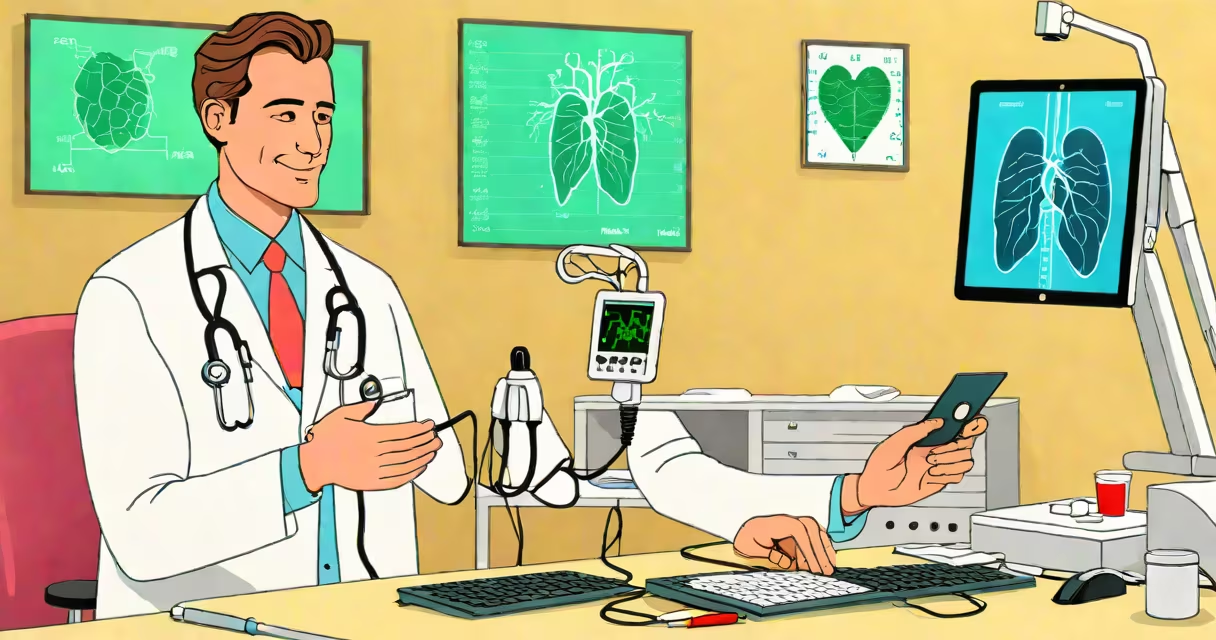
A heart doctor is called a cardiologist. These medical specialists focus on diagnosing, treating, and preventing diseases of the heart and blood vessels. They manage conditions such as coronary artery disease, heart failure, arrhythmias, and congenital heart defects.
Cardiologists complete four years of medical school, followed by three years of internal medicine residency, and then three additional years of fellowship training in cardiology. This extensive training prepares them to interpret complex imaging tests like echocardiograms, stress tests, and cardiac catheterizations.
The American Board of Internal Medicine certifies cardiologists in the United States. To maintain certification, they must complete ongoing education and pass periodic exams. According to the American College of Cardiology, over 16,000 physicians were board-certified in clinical cardiology as of 2023.
Cardiologists evaluate patients using physical exams, medical history reviews, and diagnostic tools. They often collaborate with cardiac surgeons, electrophysiologists, and vascular specialists to develop treatment plans.
When a patient presents symptoms like chest pain, shortness of breath, or palpitations, a cardiologist may order an electrocardiogram (ECG), echocardiogram, or coronary angiography. These tests reveal structural or functional issues within the heart.
For example, a 58-year-old man with persistent chest pressure underwent a stress test after his primary care provider referred him to a cardiologist. The test showed reduced blood flow to the left side of the heart, leading to a diagnosis of significant coronary artery stenosis. He was later treated with a stent during a cardiac catheterization procedure.
Not all cardiologists treat the same conditions. Subspecialties exist based on focus areas:
| Type | Focus Area | Common Procedures |
|---|---|---|
| Interventional Cardiologist | Catheter-based treatments for blocked arteries | Angioplasty, stent placement, valve repair |
| Electrophysiologist | Heart rhythm disorders | Pacemaker implantation, ablation therapy |
| Heart Failure Specialist | Advanced heart failure management | Device implantation, transplant evaluation |
| Preventive Cardiologist | Risk reduction through lifestyle and medication | Cholesterol management, hypertension control |
Some cardiologists focus exclusively on preventive care, helping patients avoid heart disease through diet, exercise, and early detection. Others work in intensive care units managing acute events like heart attacks.
Most cardiologists work in hospitals, outpatient clinics, or private practices. Many are employed by academic medical centers where they train residents and conduct research.
Cardiology departments in large hospitals often have dedicated cardiac catheterization labs. These rooms house specialized equipment for procedures like coronary angiography, which allows real-time visualization of blood flow through the heart's arteries.
For instance, at Johns Hopkins Hospital, interventional cardiologists perform over 2,000 percutaneous coronary interventions annually. These procedures involve threading a catheter through the femoral or radial artery to open blocked coronary vessels.
People often confuse cardiologists with cardiac surgeons. While both treat heart conditions, surgeons perform operations like bypass grafting or valve replacement. Cardiologists use medications, devices, and minimally invasive techniques instead.
Another misconception is that all heart doctors perform surgeries. Only interventional cardiologists and cardiac surgeons operate. General cardiologists do not perform surgery but may recommend it.
Some assume that seeing a cardiologist means a serious condition is present. That's not always true. Preventive cardiology involves routine screening for high cholesterol or elevated blood pressure, even in asymptomatic individuals.
In 2021, I accompanied my father to a follow-up appointment with his cardiologist after he had a mild myocardial infarction. The doctor reviewed his recent echocardiogram, explained the ejection fraction result (55%, within normal range), and adjusted his statin dosage. The visit lasted 45 minutes and included detailed discussion about dietary changes and medication adherence.
While a heart doctor is called a cardiologist, other organ systems have distinct specialists. For example, a gallbladder doctor is known as a gastroenterologist or hepatobiliary surgeon. A gut doctor typically refers to a gastroenterologist who treats digestive tract disorders.
Understanding the correct term-cardiologist-helps patients communicate effectively with healthcare providers and seek timely care for heart-related concerns.