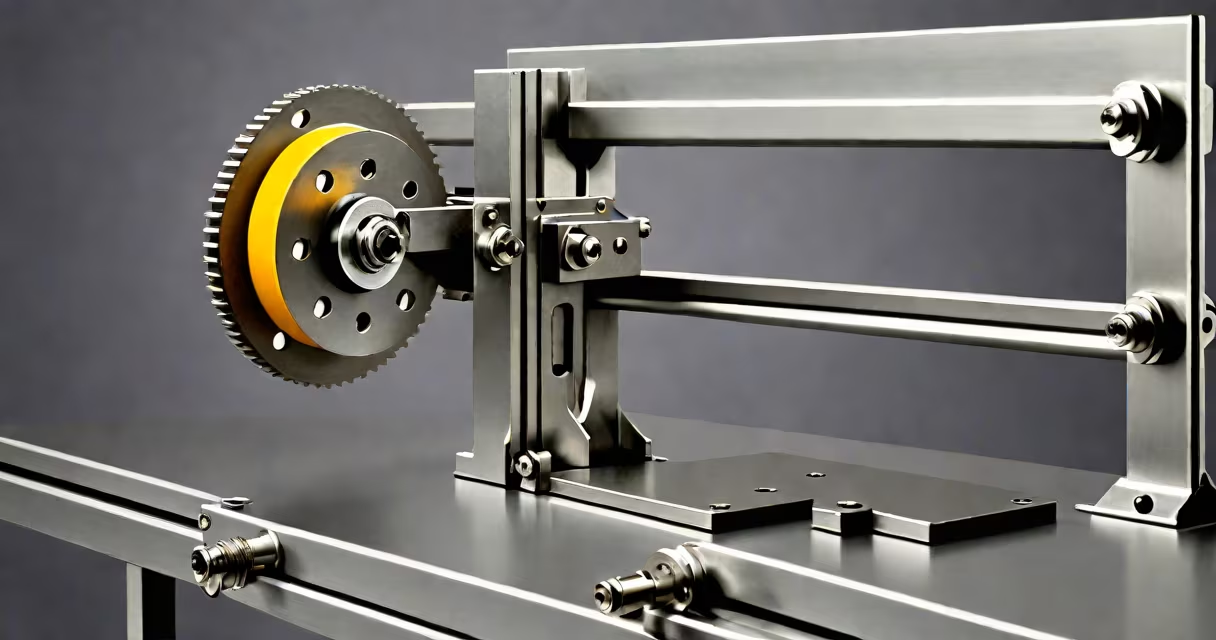
A sheet metal brake is a mechanical or hydraulic tool used to bend flat sheets of metal along a straight axis, typically at 90-degree angles. It holds the metal securely while applying force to create precise, consistent folds. This tool is fundamental in metal fabrication for making enclosures, ductwork, brackets, and custom panels.
Sheet metal brakes operate by clamping the metal against a rigid edge-the back gauge-and then pressing the free edge downward using a lever or hydraulic ram. The bend occurs along the contact line between the metal and the back gauge. Most models allow adjustments for bend angle and position, enabling accurate results across various thicknesses and materials.
Common types include bar brakes (manual, lightweight), box and pan brakes (for complex folds), and press brakes (industrial-grade, computer-controlled). Each serves different scales of production and precision requirements. For example, a small workshop might use a manual bar brake for bending aluminum flashing, while a factory uses a CNC press brake to produce hundreds of identical parts daily.
The core function of a sheet metal brake relies on controlled use or pressure applied to a metal sheet clamped against a fixed edge. When the operator lowers the moveable arm, the metal deforms plastically along the back gauge, forming a permanent fold. The angle of the bend is determined by how far the arm is lowered and the positioning of the stop block.
Modern brakes often feature a back gauge-a movable stop-that sets the distance from the edge of the metal to the bend line. This ensures repeatability. A 90-degree bend on a 12-inch piece requires setting the back gauge to 12 inches from the front edge. After clamping, the operator presses the lever or activates the foot pedal, forcing the metal into the desired angle.
For thicker metals (over 16-gauge steel), multiple passes may be needed to avoid cracking or warping. The material must yield under stress without fracturing. This property is called ductility. Aluminum, for instance, bends smoothly at room temperature, while hardened steel may require heating to reduce brittleness.
Different brakes suit specific tasks based on size, material, and volume. Here's a breakdown:
| Type | Best For | Typical Thickness Range | Examples |
|---|---|---|---|
| Bar Brake | Light-duty bends, prototyping | 18-22 gauge | Handheld models for HVAC work |
| Box and Pan Brake | Creating corners, channels, boxes | 16-20 gauge | Used in electrical enclosures |
| Press Brake | High-volume, precise bends | 10-3/16 inch | CNC-controlled machines in auto plants |
Bar brakes are portable and affordable, ideal for hobbyists and small workshops. Box and pan brakes add a second folding station, allowing sequential bends to form sides of a box. Press brakes use hydraulic cylinders and computer controls to apply thousands of pounds of force with sub-millimeter accuracy.
One non-obvious fact: the bend radius-the inner curve of the fold-is not zero. Even with a sharp edge, metal stretches slightly during bending. The minimum inside radius depends on the material's tensile strength and thickness. For example, 18-gauge mild steel typically has a minimum inside radius of 0.062 inches. Exceeding this causes cracking or deformation.
Many assume a sheet metal brake can cut metal. It cannot. Cutting requires shears, saws, or plasma cutters. The brake only bends. Confusing it with a cutter leads to damaged tools and unsafe conditions.
Another error is ignoring material springback-the tendency of bent metal to return slightly to its original shape after pressure is released. To compensate, operators often over-bend by 2-5 degrees depending on the alloy. For instance, aluminum springs back less than steel, so a 90-degree bend may require only a 92-degree input.
I once set up a bar brake to make a 12-inch square frame from 20-gauge aluminum. I forgot to account for springback and ended up with a 93-degree corner. The frame wouldn't close properly. After recalculating the angle and adjusting the stop, the fit was perfect. This taught me that even simple tools demand attention to detail.
Sheet metal brakes are standard in industries requiring durable, customizable enclosures. They appear in electronics manufacturing (for control cabinets), automotive repair (for fenders and trim), and HVAC systems (for duct joints).
For example, a technician building a custom ventilation hood for a kitchen uses a box and pan brake to fold four panels into a rectangular box. Each panel is bent at 90 degrees, then welded or riveted together. Without a brake, achieving consistent angles would take hours with hand tools and result in uneven seams.
According to the American Welding Society, proper bending techniques reduce joint failure rates by up to 40% in fabricated assemblies. Accurate bends minimize stress concentrations and improve structural integrity. This makes the brake not just a shaping tool but a quality control device.
For home users, a basic bar brake costs $150-$400 and handles most DIY projects. A 24-inch model can bend up to 16-gauge steel. Larger industrial units cost $5,000-$50,000 and support automated workflows.
Sheet metal brakes differ from rollers, punches, and shears in both function and output. Rollers form curved shapes, not straight folds. Punches remove material to create holes or patterns. Shears cut metal into pieces. Only the brake changes the shape without removing material.
Some confuse the brake with a miter saw or angle grinder. These tools cut or grind metal, not bend it. Using a grinder to shape a bend introduces heat distortion and weakens the grain structure. A brake preserves the material's integrity.
Another distinction: a sheet metal brake creates a single, clean fold. A hammer and dolly may achieve similar results but with inconsistent angles and surface marks. Precision demands a dedicated tool.
Sheet metal brakes are indispensable in transforming flat metal into functional components. Whether in a garage or a factory, they enable accurate, repeatable bends critical to safety and performance. The correct choice of brake type, material, and technique ensures success in every project.