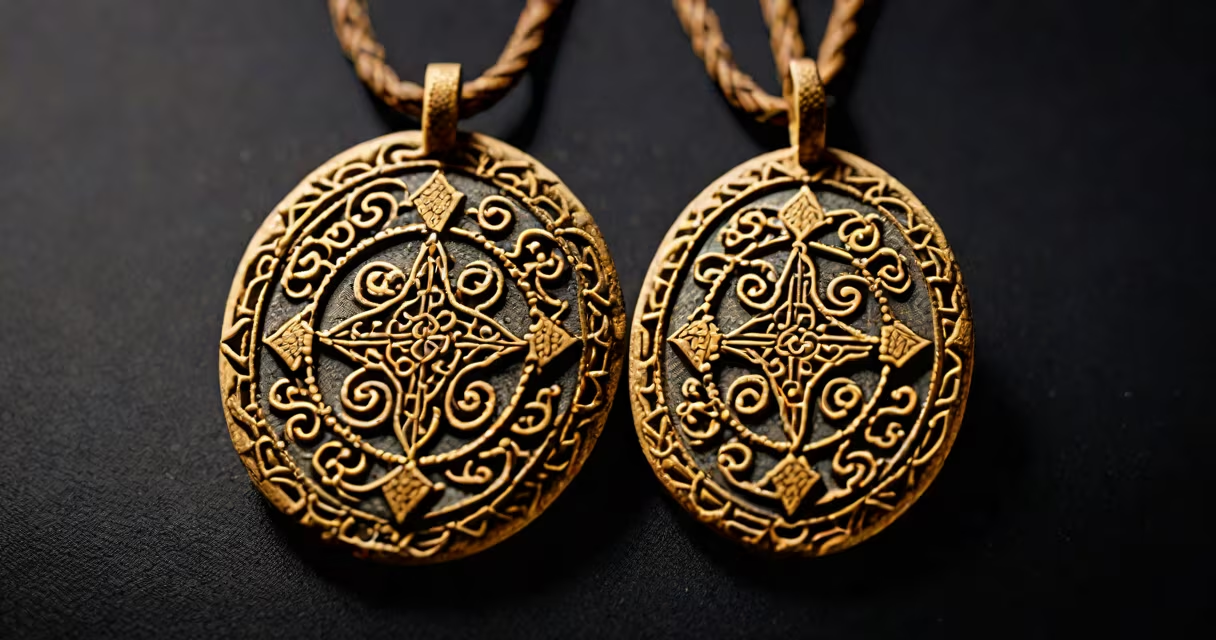
An amulet is a small object worn or carried for protection against harm, evil spirits, or misfortune. It often contains symbols, inscriptions, or materials believed to hold spiritual power. The term "amulet meaning" refers to the symbolic weight and cultural context behind such objects.
Amulets have existed in human societies for at least 30,000 years. Archaeological evidence from Paleolithic sites shows engraved stones and animal bones used as protective tokens. These early forms were not just decorative-they served as tools to manage uncertainty in environments where disease, predators, and natural disasters posed constant threats.
Modern amulets vary widely in form. A simple metal pendant with a cross may serve as a Christian protective symbol. A Hamsa hand worn around the neck appears in Middle Eastern cultures as a ward against the evil eye. In West Africa, beads tied with specific colors and knots carry meanings related to health, fertility, or ancestral connection. Each object functions within a belief system that assigns it protective or lucky properties.
Amulets operate through a combination of material form, ritual activation, and shared cultural belief. The physical object acts as a vessel for intent. For example, a silver ring inscribed with a Hebrew blessing may be worn during childbirth to ensure safe delivery. The metal's perceived purity, the language of the inscription, and the act of wearing it together create a layered protective mechanism.
Rituals often precede or accompany amulet use. In some Hindu traditions, a Yantra-a geometric diagram-is drawn on paper, then placed inside a cloth pouch and worn close to the body. The drawing process involves chanting mantras, which imbues the design with sacred energy. Once completed, the amulet is considered active until removed or destroyed.
Scientific studies show that people who wear amulets report lower anxiety levels during stressful events. A 2018 study published in *Psychology of Religion and Spirituality* found that individuals who carried culturally significant objects experienced reduced cortisol levels during public speaking tasks. The effect wasn't due to the object itself, but to the psychological comfort derived from believing in its protective function.
Amulets differ based on origin, material, and intended purpose. Below is a comparison of common types:
| Type | Common Materials | Symbolic Meaning | Cultural Origin |
|---|---|---|---|
| Evil Eye Charm | Blue glass, ceramic | Protection from envy and ill will | Mediterranean, Middle East |
| Hamsa Hand | Gold, silver, enamel | Divine protection, strength, good fortune | North Africa, Arab world |
| Yantra | Paper, cloth, metal | Focus for meditation, divine presence | India, Nepal |
| Grimoire Pendant | Iron, lead, copper | Spell protection, warding off curses | Medieval Europe |
Each type reflects local cosmologies. The Hamsa, for instance, is not merely decorative-it represents the hand of God in Islamic tradition and is believed to absorb negative energy. In contrast, a Yantra aims to align the wearer's mind with cosmic patterns through precise geometry.
People often confuse amulets with talismans. While both are protective objects, a talisman is typically created for a specific purpose-like attracting wealth or ensuring success-and is often personalized through rituals involving dates, names, or astrological signs. An amulet, by contrast, is generally mass-produced or passed down through generations. Its power comes from collective belief, not individual customization.
Another misconception is that amulets work automatically. They don't. Their effectiveness relies on the user's faith and consistent use. A 2021 ethnographic study in rural Ghana showed that villagers who stopped wearing their traditional bead amulets reported increased feelings of vulnerability-even when no adverse event occurred. This suggests that the psychological anchoring of the object matters more than any inherent property.
A lesser-known fact: many amulets are intentionally imperfect. In Islamic art, symmetry is valued, but religious texts discourage creating perfect images of living beings. As a result, amulets often feature slight asymmetry or intentional flaws. This reflects the idea that only God can create flawlessly. The imperfection becomes part of the object's protective identity.
I once visited a market in Marrakech where artisans sold handmade amulets. One vendor offered me a small leather pouch containing a piece of turquoise and a stitched thread. He said it was for travelers. When I asked how it worked, he replied, "It doesn't work. You believe it does." That moment clarified something I'd overlooked: the power of an amulet lies not in its material but in the act of trusting it.
That same pouch later accompanied me on a long train process through Morocco. I didn't feel safer because of the stone. But when I reached a remote station late at night, I touched the pouch and felt calmer. Not because the object changed reality-but because my attention shifted. The amulet became a ritual anchor.
The meaning of an amulet is shaped by context. A necklace with a skull pendant may represent death in Western funerary art, but in Mexican Día de Muertos traditions, it symbolizes remembrance and continuity. The same object carries different emotional weight depending on cultural framing.
When interpreting amulet meaning, avoid assuming universal symbolism. A red string tied around the wrist in Chinese culture signifies protection from bad luck. In some New Age circles, it's seen as a sign of spiritual alignment. But in a Buddhist temple in Thailand, the same string is used during ceremonies to mark temporary vows. The same object, different meaning.
Amulet meaning is not fixed. It emerges from belief, history, and lived experience. Whether worn for safety, memory, or identity, the object serves as a bridge between the visible world and the unseen forces people rely on.