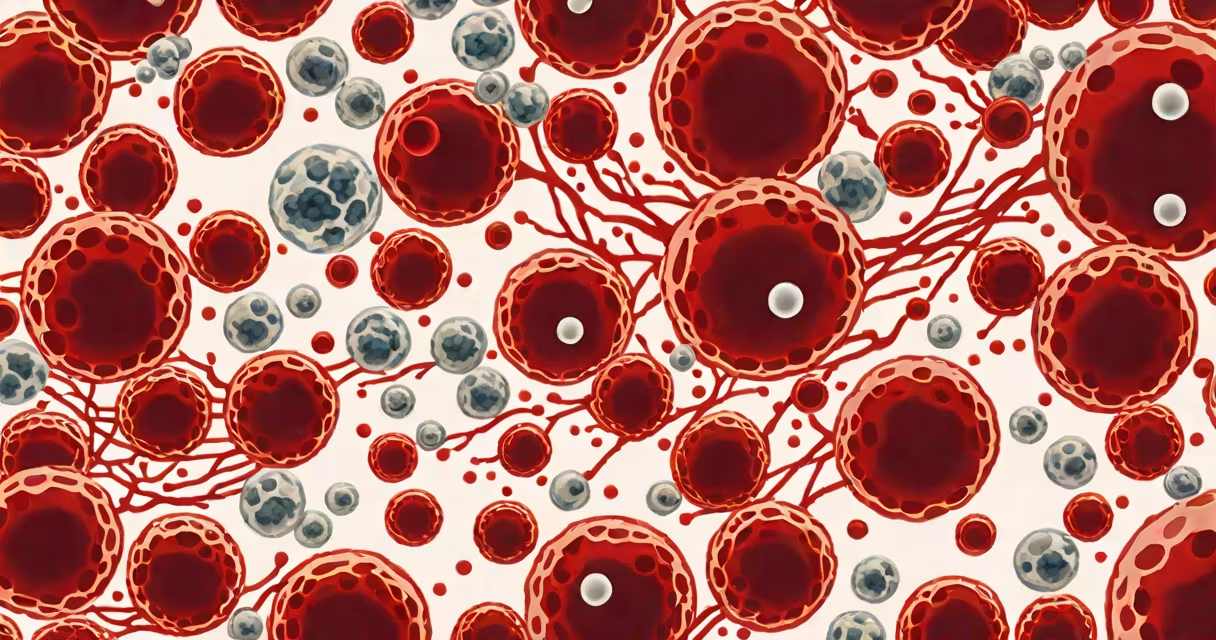
Another name for thrombocyte is platelet. This blood cell plays a central role in stopping bleeding by forming clots at injury sites.
Platelets are small, colorless fragments produced in the bone marrow from large precursor cells called megakaryocytes. They circulate in the bloodstream until activated by vascular damage. Upon activation, they change shape, release chemical signals, and aggregate to form a plug that seals broken vessels.
The term thrombocyte originates from Greek roots: *thrombos* meaning "clot" and *kytos* meaning "cell." It reflects the cell's function in clot formation. Modern medicine uses "platelet" more widely in clinical documentation and research, though both terms refer to the same biological entity.
When a blood vessel is injured, exposed collagen triggers platelet adhesion. Platelets bind via glycoprotein receptors such as GPIb and GPVI. Once attached, they become activated and undergo shape change spheres, increasing surface area for interaction.
Activated platelets release granules containing ADP, serotonin, and thromboxane A2. These substances recruit additional platelets to the site, amplifying the response. The process forms a temporary plug that stabilizes the wound while coagulation factors build a fibrin mesh for long-term repair.
A single healthy adult produces about 150 billion platelets daily. Normal levels range between 150,000 and 450,000 per microliter of blood. Levels below 100,000 indicate thrombocytopenia, which increases bleeding risk.
Platelets originate from megakaryocytes in the red bone marrow. These large cells extend cytoplasmic projections called proplatelets into sinusoidal capillaries. Fragmentation of these projections releases thousands of platelets per megakaryocyte.
Platelets are not complete cells-they lack nuclei and cannot divide. Their lifespan averages 7 to 10 days. Old platelets are removed by macrophages in the spleen and liver.
| Term | Meaning | Usage Context |
|---|---|---|
| Thrombocyte | Scientific term for platelet; derived from Greek | Used in academic literature, especially in European medical texts |
| Platelet | Common English term; widely accepted in U.S. clinical practice | Standard in American textbooks, hospital records, and drug labeling |
Despite shared function, the naming difference persists due to historical usage patterns. For example, the National Institutes of Health (NIH) uses "platelet" in its public health materials, while journals like *Blood* may use "thrombocyte" in specialized articles.
Some assume thrombocyte refers to a different cell type because of its less familiar name. This confusion arises from inconsistent terminology across regions and institutions. In reality, thrombocyte and platelet are interchangeable in clinical and scientific contexts.
A non-obvious distinction: While "platelet" is standard in U.S. healthcare settings, "thrombocyte" appears in certain diagnostic reports from Canada and parts of Europe. A patient receiving care in multiple countries might see both terms on separate lab results-this does not indicate differing diagnoses.
I once reviewed a patient's lab report from a German clinic where "thrombocyten" was listed. The values matched standard platelet counts. When cross-referenced with U.S. guidelines from the American Society of Hematology, the interpretation remained consistent. This confirmed that terminology variation doesn't affect clinical decision-making when context is understood.
Mixing up terms can lead to errors in medication orders, research reporting, or patient education. For instance, prescribing antiplatelet drugs like clopidogrel requires knowing that the target is platelets-not thrombocytes-as the mechanism involves inhibiting platelet aggregation.
Understanding that thrombocyte = platelet ensures clarity in communication between clinicians, researchers, and patients. It prevents misinterpretation during emergencies or when reviewing international studies.