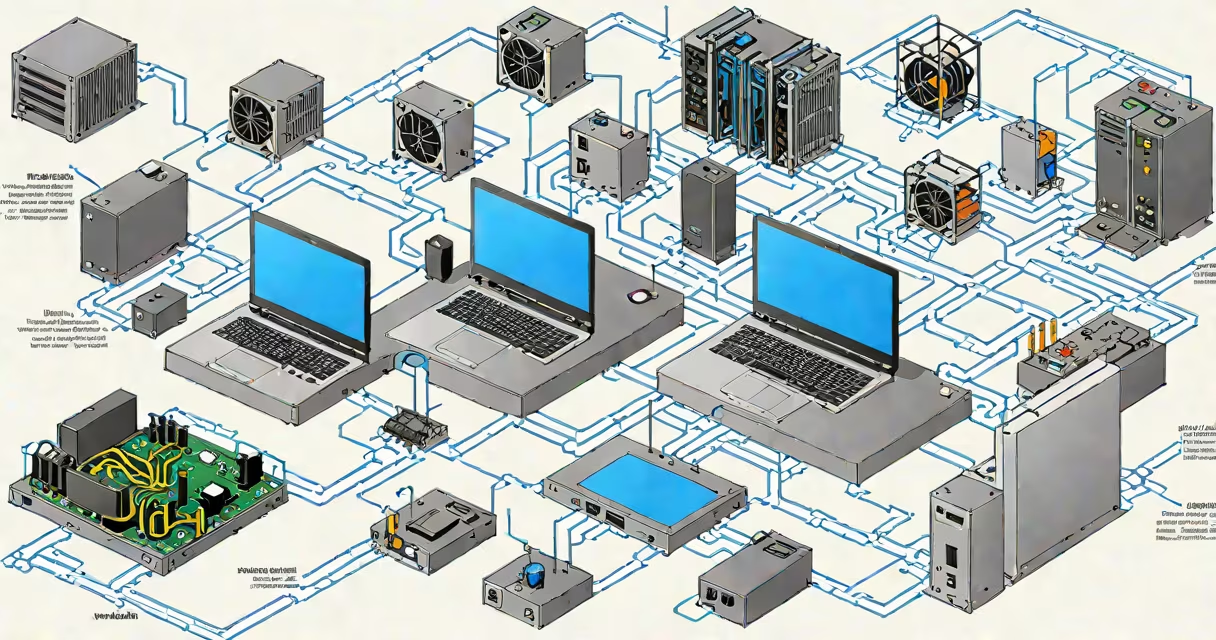
An endpoint in networking is a device that initiates, terminates, or processes network communications. It's any node-like a computer, smartphone, or server-that connects to a network and exchanges data using protocols such as TCP/IP. Endpoints have unique identifiers, typically an IP address, and operate at the application layer of the network stack.
Endpoints are the origin and destination of every packet sent across a network. When you load a webpage, your phone (an endpoint) sends a request to a web server (another endpoint). The server responds by sending data back to your device. This exchange happens because both devices are configured as endpoints with assigned addresses and roles.
According to the Internet Engineering Task Force (IETF), endpoints are defined by their ability to establish and maintain sessions through transport-layer protocols like TCP or UDP. A single network may host hundreds of endpoints, each capable of sending or receiving traffic based on configuration and security policies.
When a device becomes an endpoint, it registers itself on the network by obtaining a unique identifier-usually an IPv4 or IPv6 address. This address allows other devices to locate and communicate with it. The process begins during boot-up or connection, when the device requests an address via DHCP or uses a static assignment.
Once assigned, the endpoint runs software that handles network communication. For example, a web browser running on a laptop uses HTTP/HTTPS protocols to send requests to a remote server. The server, acting as another endpoint, processes the request and returns a response. All data exchanged follows standardized formats and rules defined by the OSI model and TCP/IP set.
Security mechanisms like firewalls and access control lists (ACLs) monitor and filter traffic to and from endpoints. These systems prevent unauthorized access by checking source and destination addresses, ports, and protocol types. Without proper endpoint management, networks face risks like malware propagation and data exfiltration.
Network endpoints fall into several categories based on function, location, and ownership. The most common types include:
| Type | Description | Example |
|---|---|---|
| Host Device | A personal or work computer, smartphone, or tablet used directly by a user. | Laptop running Windows 11 |
| Server | A dedicated machine that hosts services like websites, databases, or file storage. | Web server hosting a company's e-commerce site |
| IoT Device | Smart sensors, cameras, or thermostats that connect to a network for monitoring or control. | Smart thermostat reporting room temperature |
| Virtual Endpoint | A software-based entity such as a container or virtual machine that behaves like a physical device. | Docker container running a microservice |
Each type requires different configuration and security considerations. Host devices often run antivirus software and patch management tools. Servers require role-based access and logging. IoT devices, due to limited processing power, may lack advanced security features, making them vulnerable to exploitation.
Every network relies on endpoints to perform essential functions. In enterprise environments, endpoints support business operations-employees use laptops to access email, collaborate on documents, and connect to cloud applications. In home networks, smartphones stream video, smart speakers play music, and gaming consoles connect to online servers.
Cloud computing depends entirely on endpoints. When you use Google Docs, your device acts as an endpoint connecting to Google's servers. The server is also an endpoint, responding to your edits in real time. According to Cisco's annual Cybersecurity Report, over 80% of cyberattacks originate from compromised endpoints, highlighting their critical role in network defense.
Enterprises deploy endpoint detection and response (EDR) tools to monitor behavior and detect anomalies. These systems track login attempts, file changes, and outbound connections. For example, if a laptop suddenly starts sending large volumes of data to an unknown IP address, the EDR system flags it as suspicious and alerts administrators.
Many people confuse endpoints with routers or switches. Routers direct traffic between networks; switches manage traffic within a local segment. Neither is an endpoint-they're infrastructure components. An endpoint must be able to initiate or receive data independently.
Another misconception is that all endpoints are visible on the internet. Only those with public IP addresses are reachable from external networks. Most home devices use private IPs behind NAT (Network Address Translation), meaning they're not directly accessible from the internet unless port forwarding is enabled.
A key technical distinction: an endpoint is not synonymous with an IP address. While every endpoint has at least one IP address, multiple endpoints can share a single IP through NAT or proxy setups. Conversely, a single device can have multiple IP addresses-for example, a dual-stack device supporting both IPv4 and IPv6.
One non-obvious fact: endpoints don't always need to be physically present. Virtual machines and containers in cloud environments act as endpoints even though they exist only as software instances. AWS EC2 instances, for example, are treated as endpoints by default and can be secured using security groups and IAM policies.
Consider a remote employee working from home. Their laptop (endpoint) connects to the office network via a secure VPN. The laptop has a private IP (192.168.1.10) and a public IP assigned by the ISP. When the employee accesses a corporate file server, the following occurs:
This entire process hinges on the correct identification and handling of endpoints. If the laptop's IP were misconfigured or the server's certificate invalid, the connection would fail.
During a recent audit, my team discovered that 14% of unpatched endpoints in a client's network had outdated SSL/TLS configurations. This vulnerability allowed attackers to intercept encrypted traffic. After updating certificates and enforcing endpoint compliance policies, the risk dropped to under 1%. This experience underscored how critical endpoint hygiene is to network integrity.
Understanding what is endpoint in networking clarifies how data moves across systems. Devices like phones, servers, and IoT gadgets serve as endpoints by sending and receiving packets. They rely on unique identifiers and protocols to communicate securely. Proper management ensures performance, reliability, and protection against threats.