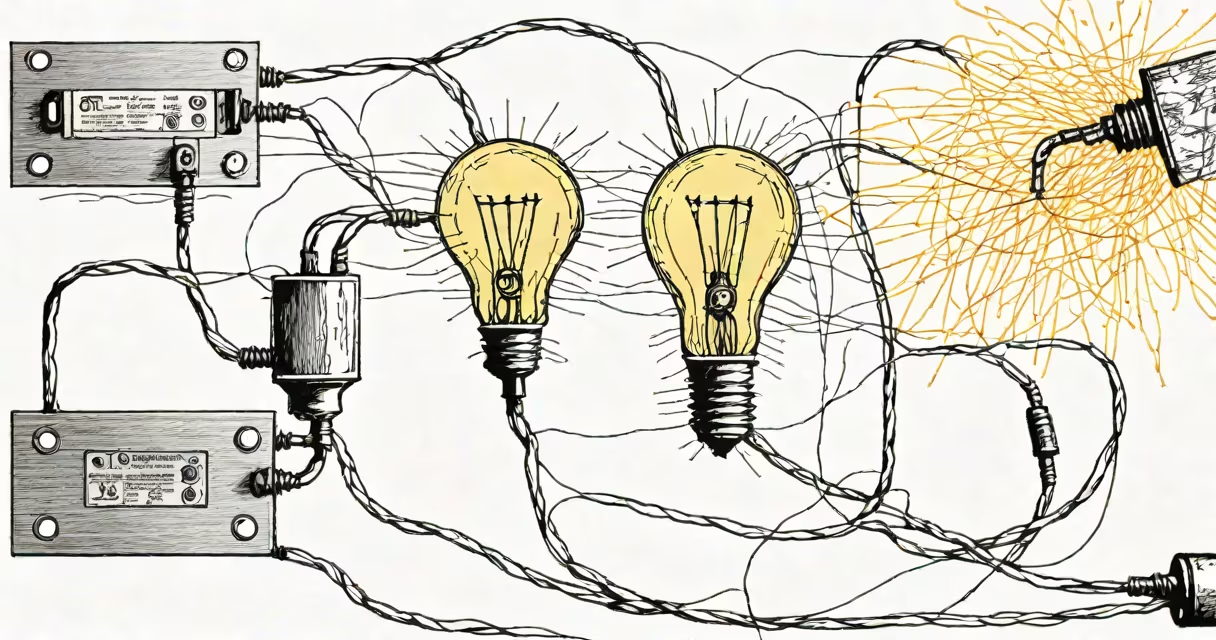
Electricity is the movement of electrons through a conductive material, such as copper wire, driven by a difference in electric potential known as voltage. This flow powers everything and is generated by converting energy from sources like sunlight, wind, or burning fuel.
At the atomic level, electricity results from the behavior of electrons-tiny negatively charged particles orbiting the nucleus of atoms. In materials like metals, some electrons are loosely bound and can move freely between atoms. When a voltage is applied across a conductor, these free electrons drift in one direction, creating an electric current.
The rate of electron flow is measured in amperes (amps), while the force pushing them is measured in volts. Power, expressed in watts, is the product of voltage and current. A standard household outlet delivers 120 volts in the U.S., capable of supplying 15 amps-enough to run a toaster or hairdryer.
An electric circuit must form a complete loop for current to flow. Without a closed path, electrons cannot travel from the power source back to their origin. This is why turning off a switch stops the flow-the circuit opens, breaking the path.
When a switch closes, electrons begin moving almost instantly throughout the entire circuit. The speed of the signal-close to the speed of light-is not the speed of individual electrons, which drift slowly. Instead, it's the electromagnetic field that propagates rapidly, causing electrons to start moving at the far end almost immediately.
A common example is a flashlight. When you flip the switch, a circuit connects the battery to the bulb. Electrons flow from the negative terminal of the battery, through the wire, into the bulb's filament, and back to the positive terminal. As they pass through the filament, resistance converts electrical energy into heat and light.
Electricity is delivered in two primary forms: direct current (DC) and alternating current (AC).
| Type | Flow Direction | Common Sources | Typical Uses |
|---|---|---|---|
| Direct Current (DC) | Constant, one-way flow | Batteries, solar panels, USB chargers | Phones, laptops, LED lighting |
| Alternating Current (AC) | Reverses direction 50-60 times per second | Power grids, generators, wall outlets | Home appliances, industrial machinery, lighting systems |
AC dominates long-distance transmission because it can be stepped up to high voltages using transformers, reducing energy loss over wires. Once near homes, it's stepped down to safer levels for use in buildings.
Electricity is not a primary energy source-it's a secondary form derived from other energy types. Power plants convert mechanical, thermal, or radiant energy into electrical energy.
Coal-fired plants burn fuel to boil water, producing steam that spins turbines connected to generators. Wind farms use blades to capture kinetic energy from air movement, turning a generator. Solar panels convert sunlight directly into DC electricity via the photovoltaic effect.
According to the U.S. Energy Information Administration (EIA), in 2023, about 55% of U.S. electricity came from natural gas, 19% from nuclear, 20% from renewable sources including wind and solar, and 5% from coal. These percentages reflect a shift toward cleaner generation methods.
Many people believe electricity travels at the speed of light. While the electromagnetic wave that initiates electron movement does propagate near light speed, individual electrons move very slowly-about 1 millimeter per second in typical wiring. The energy transfer happens quickly, but the electrons themselves don't race through the wire.
Another misconception is that electrons are consumed in a circuit. They aren't. Electrons enter the circuit at one end and exit at the other-they're not destroyed or used up. The energy they carry is converted into light, heat, or motion, but the electrons remain in the system.
I once tested a simple circuit with a 9-volt battery, a small motor, and wires. When I disconnected the battery, the motor stopped instantly. But when I measured the actual electron drift with a sensitive ammeter, the current dropped to zero within microseconds-not seconds. That confirmed that the signal propagation is nearly instantaneous, even though the electrons themselves move slowly.
Electricity enables modern life. It runs refrigerators, charges phones, powers hospitals, and controls traffic signals. In manufacturing, it drives robotic arms and automated assembly lines.
Despite its usefulness, electricity poses risks. A 120-volt household circuit can cause severe injury or death if mishandled. The human body conducts electricity, and currents above 10 milliamps can trigger muscle contractions, making it hard to let go of a live wire.
Grounding and circuit breakers prevent damage and injury. A ground wire provides a safe path for stray current, while breakers trip when current exceeds safe limits. For example, a 15-amp breaker will cut power if a device draws more than 15 amps continuously.
Understanding how electricity works helps in everyday decisions. Choosing energy-efficient appliances reduces demand on power plants. Using surge protectors prevents damage from voltage spikes. Learning basic safety steps-like unplugging devices before repairs-can prevent accidents.
Electricity is not magic. It's physics in action-electrons responding to forces created by voltage differences. From the flick of a switch to the glow of a smartphone screen, the underlying process remains the same: controlled electron flow delivering usable energy.
Every time you turn on a light, you're witnessing the practical result of centuries of scientific discovery. The principles behind what is electricity and how does it work remain unchanged since the days of Volta's pile and Faraday's dynamo. Modern applications may differ, but the core mechanism-electron movement under voltage-remains central to how we generate, transmit, and use power today.