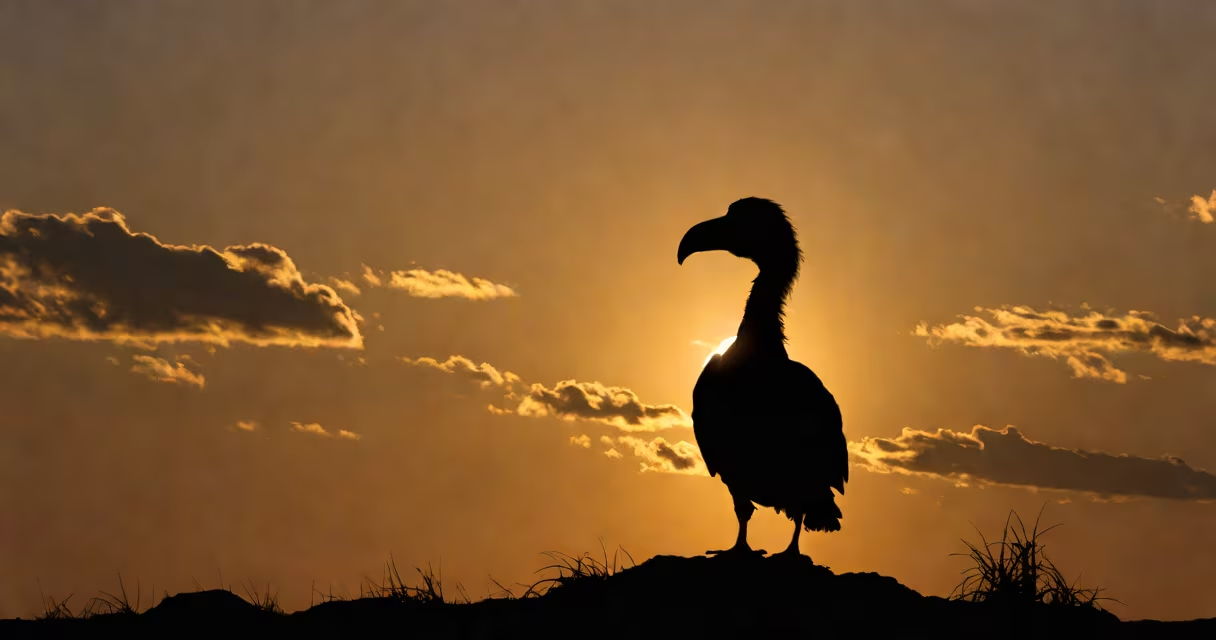
Species are going extinct at a rate 1,000 times higher than natural background levels due to human activity, with hundreds disappearing each year. This accelerated loss of life forms disrupts ecological balance and erases genetic diversity irreversibly.
Extinction occurs when the last individual of a species dies without reproduction. While extinction has always happened naturally over millions of years, the current wave is driven primarily by habitat destruction, climate change, pollution, overhunting, and invasive species introduced by humans. The International Union for Conservation of Nature (IUCN) tracks global extinction risk through its Red List of Threatened Species, which identifies species at high risk of disappearing.
For example, the vaquita porpoise, found only in the northern Gulf of California, has fewer than 10 individuals left as of 2023. Its decline stems from illegal gillnet fishing targeting another species, the totoaba, whose swim bladder is valued in black markets. Despite conservation efforts, the population continues to collapse. This illustrates how localized threats can push a species toward extinction even when global attention exists.
Human-driven causes dominate modern extinction patterns. Habitat loss accounts for 85% of known extinction events since 1500, according to a 2020 study published in Nature. Deforestation, urban expansion, agriculture, and mining fragment or destroy environments that species depend on. The Amazon rainforest, home to 10% of Earth's known species, loses about 1.5 million hectares annually-an area roughly the size of New Jersey.
Climate change amplifies these pressures. Warmer oceans bleach coral reefs, killing entire reef ecosystems. The Great Barrier Reef has lost over half its coral cover since 1995 due to repeated bleaching events. When corals die, fish, crustaceans, and seabirds lose shelter, food, and breeding grounds. This chain reaction accelerates local extinctions.
Pollution also plays a direct role. Microplastics have been found in 90% of sampled marine mammals, including sperm whales and dolphins. These particles accumulate in tissues, impairing immune function and reproductive health. In some cases, ingestion leads to starvation as stomachs fill with indigestible material.
Not all species face extinction equally. The IUCN categorizes threat levels from Least Concern to Critically Endangered. Species listed as Critically Endangered have a very high risk of extinction in the wild within the next decade. Below is a comparison of key categories:
| Category | Definition | Example |
|---|---|---|
| Critically Endangered | Extinction risk within 10 years; populations below 50 mature individuals | Vaquita porpoise |
| Endangered | High risk of extinction in the wild; population decline exceeding 50% | Amur leopard |
| Vulnerable | High risk of extinction in the medium term; population decline above 30% | Bluefin tuna |
A lesser-known but critical factor is the extinction of pollinators. Bees, moths, and certain bat species are essential for plant reproduction. Without them, crops fail and forests cannot regenerate. The rusty patched bumblebee, once common across the eastern U.S., was listed as federally endangered in 2017 after a 90% population drop in just 20 years.
Many assume extinction only affects large, charismatic animals like pandas or polar bears. But insects make up 80% of known animal species, and their decline often goes unnoticed. A 2019 Science study found that insect biomass in German nature reserves declined by 76% over 27 years. This loss impacts birds, amphibians, and soil health-ecosystems rely on these small organisms.
Another myth is that extinction is a slow process. In reality, some species vanish within decades. The passenger pigeon, once numbering in the billions across North America, went extinct in 1914 after being hunted to oblivion. Its last known individual, Martha, died in captivity at the Cincinnati Zoo. Her death marked the end of a species that had shaped forest ecology for millennia.
Some people believe that extinction is inevitable and that we can't stop it. But evidence shows otherwise. The California condor was declared extinct in the wild in 1987, with only 27 individuals remaining. Through captive breeding and reintroduction programs, the population has rebounded to over 500 birds today. This success proves that targeted conservation can reverse extinction trends.
The northern white rhino is functionally extinct. Only two females remain-Najin and Fatu-both kept under constant protection in Kenya. They cannot reproduce naturally due to the absence of males and severe reproductive issues. Scientists are exploring experimental techniques like in vitro fertilization using preserved sperm and surrogate southern white rhinos. However, success remains uncertain.
This case underscores a key point: extinction doesn't always mean immediate death. It can mean functional extinction-the inability to sustain a population without human intervention. The northern white rhino exemplifies how advanced science may delay the finality of extinction, but not prevent it entirely.
I once observed a group of researchers tracking the last known wild population of the Javan rhinoceros in Indonesia. They used camera traps and DNA sampling presence. Even then, only a single female remained in 2021. The species' survival now depends entirely on artificial insemination and potential embryo transfer-a last-ditch effort to preserve a lineage that once roamed Southeast Asia for thousands of years.
When a species vanishes, entire ecosystems lose functions. Pollination, seed dispersal, nutrient cycling, and pest control all suffer. The loss of apex predators like wolves or sharks destabilizes food webs. In Yellowstone National Park, reintroducing gray wolves in 1995 led to the recovery of willow and aspen trees, which had been overbrowsed by elk. This cascade effect-known as a trophic cascade-shows how deeply connected species are.
Humans depend on biodiversity for clean air, water, food, medicine, and climate regulation. Over 50% of global GDP relies on nature-based services, according to the World Economic Forum. Losing species reduces resilience to environmental shocks. As the rate of extinction accelerates, so does the risk of systemic collapse in natural systems that support life.