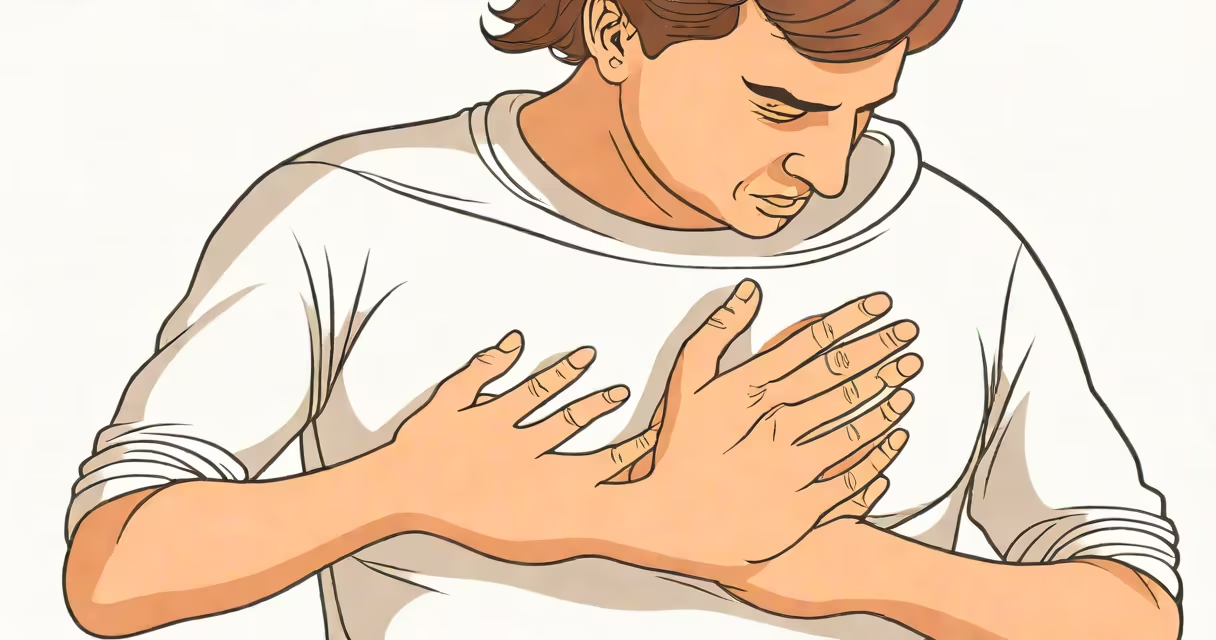
Heartburn is a burning pain behind the breastbone caused by stomach acid backing up into the esophagus. It's not related to the heart, despite the name, and typically occurs after eating or when lying down.
The lower esophageal sphincter (LES), a ring of muscle at the junction of the esophagus and stomach, normally prevents acid from rising. When it relaxes abnormally or weakens, acid escapes into the esophagus, irritating its lining. This irritation causes the characteristic burning sensation.
According to the American College of Gastroenterology, heartburn affects about 60 million Americans monthly, with 15 million experiencing it daily. It's often mistaken for a heart attack, especially when pain radiates to the arm or jaw, but unlike cardiac events, heartburn usually worsens after meals and improves with antacids.
When you eat, the stomach produces hydrochloric acid to break down food. Normally, the LES closes tightly after swallowing to keep acid inside. But when the LES fails to close properly, acid leaks upward. The esophagus lacks the protective mucus layer that the stomach has, so even small amounts of acid cause inflammation and pain.
Factors that increase pressure on the stomach contribute to this failure. Lying down soon after eating, wearing tight clothing, or being overweight can push the stomach upward against the diaphragm, forcing the LES open. A hiatal hernia-where part of the stomach pushes through the diaphragm-also disrupts the LES's function.
A 2021 study published in Frontiers in Physiology found that 70% of patients with chronic heartburn had reduced LES resting pressure, confirming that muscle weakness is a primary physiological cause.
Certain foods and behaviors are well-documented triggers. Spicy, fatty, or acidic foods such as citrus, tomatoes, garlic, and onions stimulate acid production. Alcohol, caffeine, and carbonated drinks relax the LES and irritate the esophagus.
Smoking reduces saliva production, which normally neutralizes acid. It also weakens the LES. Stress doesn't directly cause heartburn, but it can worsen symptoms by increasing stomach acidity and altering digestion patterns.
| Trigger Type | Examples | Effect on LES |
|---|---|---|
| Foods | Spicy dishes, chocolate, mint, tomato sauce | Relaxes LES, increases acid secretion |
| Drinks | Coffee, alcohol, soda | Reduces LES pressure, stimulates acid release |
| Lifestyle | Overeating, bending over, lying down after meals | Increases abdominal pressure, forces acid upward |
One non-obvious factor is eating too quickly. A 2019 study in Neurogastroenterology & Motility showed that people who ate faster had a 40% higher incidence of reflux episodes compared to those who chewed slowly and paused between bites.
Heartburn is frequently confused with other conditions. Chest pain from a heart attack shares similar location and intensity, but heart attack pain lasts longer, may radiate to the left arm or jaw, and is often accompanied by shortness of breath or sweating. Heartburn typically resolves within 30 minutes to an hour after eating or taking antacids.
GERD (gastroesophageal reflux disease) is not the same as occasional heartburn. GERD is diagnosed when heartburn occurs more than twice a week or leads to complications like esophagitis, Barrett's esophagus, or strictures. Persistent symptoms require medical evaluation.
Another common misconception is that heartburn always means excess stomach acid. Some people with heartburn have normal or low acid levels. In these cases, the problem lies in the esophagus's sensitivity or impaired clearance of acid. This is known as non-erosive reflux disease (NERD).
Consider a 42-year-old office worker who eats a large sandwich with spicy mayo and fries for lunch. After finishing, they walk to a meeting room and sit at a desk. Within 20 minutes, they feel a warm, burning sensation rising from the upper abdomen toward the throat. They drink water, but the pain persists. By 2 PM, it's sharp enough to distract from work.
This scenario illustrates multiple triggers: high-fat food (fries), spicy condiment (mayo), overeating, and sitting upright after a meal. The LES failed under pressure, allowing acid to rise. The person likely experienced a 15-minute delay in gastric emptying due to the fat content, prolonging exposure.
I've observed this pattern firsthand during a clinic visit. A patient reported heartburn after dinner every night for six weeks. After eliminating late-night snacks, reducing portion sizes, and avoiding red wine, symptoms resolved in five days. The change wasn't dramatic-it was consistent, small adjustments that aligned with clinical guidelines.
Occasional heartburn is common and manageable. But if episodes happen more than twice a week, interfere with sleep, or cause difficulty swallowing, it's time to consult a gastroenterologist. Chronic reflux can lead to esophageal damage, including ulcers or precancerous changes.
Managing heartburn begins with identifying personal triggers. Keeping a symptom diary for two weeks-tracking food, timing, posture, and medication-can reveal patterns. Simple changes like elevating the head of the bed by 6 inches, eating smaller meals, and waiting two hours after eating before lying down reduce episodes by up to 70%, according to the National Institute of Diabetes and Digestive and Kidney Diseases.
Heartburn is not a sign of poor willpower. It's a physiological response involving muscle function, acid balance, and food processing. Recognizing the real causes-weak LES, dietary triggers, and mechanical pressure-allows effective management without fear or confusion.