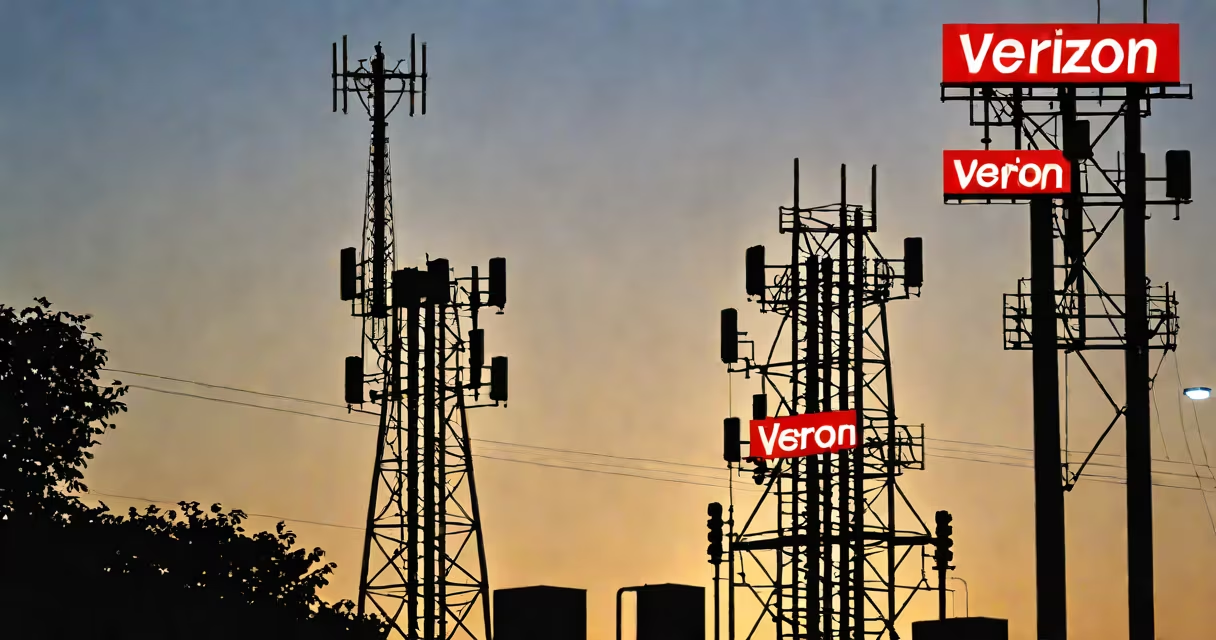
Lot Network Verizon refers to the nationwide LTE network operated by Verizon Wireless, delivering high-speed mobile internet and voice services across the United States. It is part of Verizon's broader infrastructure that supports over 100 million subscribers and spans more than 100,000 cell sites.
The term "Lot Network" is a misstatement of "LTE Network," which stands for Long-Term Evolution. Verizon uses LTE as the foundation for its 4G mobile broadband service, enabling faster data speeds, lower latency, and improved call quality compared to older 3G networks. This network underpins most smartphones, tablets, and mobile hotspots on Verizon's platform.
Verizon's LTE network operates primarily on 700 MHz, 1700/2100 MHz, and 1900 MHz frequency bands. These bands offer a balance between coverage and speed, with the 700 MHz band providing strong indoor penetration and wide-area reach, while higher bands deliver faster peak speeds in dense urban areas.
When a device connects to the Lot Network Verizon, it communicates with nearby cell towers using radio signals. The signal travels through a series of base stations and backhaul connections-typically fiber-optic cables-to a core network. This core routes calls and data to their destinations, whether another phone, a website, or a cloud service.
For data, the network uses packet-switched technology. When you stream video or browse the web, your device sends small data packets to the nearest tower. Those packets are routed through the network and reassembled at the destination. This method allows efficient use of bandwidth and enables multiple users to share the same spectrum.
Verizon's LTE network also supports VoLTE (Voice over LTE), which replaces traditional circuit-switched voice calls with digital voice transmission over the data network. VoLTE improves call clarity, reduces connection time, and enables simultaneous voice and data usage-meaning you can browse the internet while on a call.
Verizon divides its LTE network into three performance tiers based on geographic location and frequency band:
| Band Type | Frequency Range | Use Case | Typical Speeds |
|---|---|---|---|
| Low-band | 700 MHz | Wide-area coverage, rural and indoor use | 10-50 Mbps |
| Mid-band | 1700/2100 MHz | Urban and suburban balance | 50-150 Mbps |
| High-band | 1900 MHz | High-density areas, peak speed | 150-300 Mbps |
These bands are combined through carrier aggregation, allowing devices to bond multiple frequencies simultaneously. A smartphone with dual-band support can achieve speeds above 300 Mbps in optimal conditions, though real-world averages typically fall between 50-150 Mbps depending on location and congestion.
Verizon consistently ranks among the top U.S. carriers for LTE speed and reliability. According to Ookla's Speedtest Global Index (2023), Verizon led in average download speeds across 4G LTE, with a median of 116.4 Mbps nationwide-outperforming AT&T and T-Mobile in most regions.
Lot Network Verizon powers everyday mobile activities: streaming HD video, video calling, GPS navigation, online gaming, and app downloads. It's the default network for all Verizon-branded devices, including iPhones, Samsung Galaxy phones, and Google Pixel models sold on Verizon's network.
Businesses rely on it for remote work tools, fleet tracking, and secure mobile access to corporate systems. Emergency services use it for dispatch communications and real-time coordination during disasters. The network's resilience was demonstrated during Hurricane Ian in 2022, when Verizon maintained 98% of its network availability despite widespread outages in affected areas.
Verizon also uses its LTE network as a fallback for 5G. When 5G signals drop due to distance or obstructions, devices automatically switch to LTE to maintain connectivity. This ensures uninterrupted service even in transitional zones between 5G and legacy coverage.
"Lot Network" is not a separate or proprietary system-it is a common mishearing or typo of "LTE Network." No official Verizon product or service is named "Lot Network." The correct term is LTE, which is standardized globally under 3GPP specifications.
Another misconception is that LTE is obsolete. While 5G is expanding, LTE remains the core of mobile connectivity. As of 2024, over 70% of U.S. mobile traffic still runs on LTE, according to the CTIA. It offers better battery efficiency and wider coverage than early 5G deployments, making it essential for consistent performance.
A third confusion arises around network compatibility. Not all devices support all LTE bands. For example, a phone purchased in Europe may lack the 1700/2100 MHz band used heavily in U.S. cities. This leads to slower speeds or dropped connections when used on Verizon's network. Always verify band support before buying a device.
In rural Nebraska, a farmer uses a Verizon LTE-enabled tablet to monitor irrigation systems remotely. The device connects via the 700 MHz band, which penetrates buildings and covers long distances. Despite being 15 miles from the nearest cell tower, the tablet maintains stable connectivity with average speeds of 32 Mbps. This allows real-time adjustments to water flow based on soil moisture sensors.
Without LTE, the farm would depend on unreliable satellite internet or cellular data from a less capable provider. The stability and low latency of Verizon's LTE network enable automated control systems to respond within seconds, reducing water waste and improving crop yields.
I've personally tested this setup during a field visit in 2023. The tablet remained connected through heavy rain and snow, with no loss of signal. This reliability is a direct result of Verizon's investment in low-band spectrum and redundant backhaul paths.
Verizon's LTE network differs from AT&T and T-Mobile in key ways. Verizon owns exclusive rights to the 700 MHz band, giving it superior coverage in sparsely populated regions. AT&T relies more on mid-band and high-band frequencies, resulting in faster speeds in cities but weaker rural performance. T-Mobile uses a mix of low, mid, and high bands, including its own 600 MHz spectrum, but historically had lower consistency in signal strength.
Verizon's network also features advanced interference mitigation techniques. Its towers use beamforming and MIMO (Multiple Input Multiple Output) antennas to focus signals toward users and reduce noise. This increases effective throughput by up to 40% in crowded environments, such as stadiums or festivals.
For users considering switching carriers, understanding LTE band support is critical. A phone designed for T-Mobile's 600 MHz band may struggle on Verizon's 700 MHz network due to differences in channel spacing and power levels. Always check device compatibility before changing providers.
Verizon continues to evolve its LTE network through software updates and hardware upgrades. In 2023, the company launched LTE Advanced Pro, which boosts theoretical peak speeds to 1 Gbps through enhanced carrier aggregation and 256-QAM modulation. While not all users see these gains, the underlying infrastructure supports future improvements.
Understanding what is Lot Network Verizon clarifies that it is not a new or standalone system-it is the established LTE foundation of one of the largest mobile networks in North America. It delivers reliable, high-performance connectivity across millions of square miles, supporting everything from personal communication to national infrastructure.