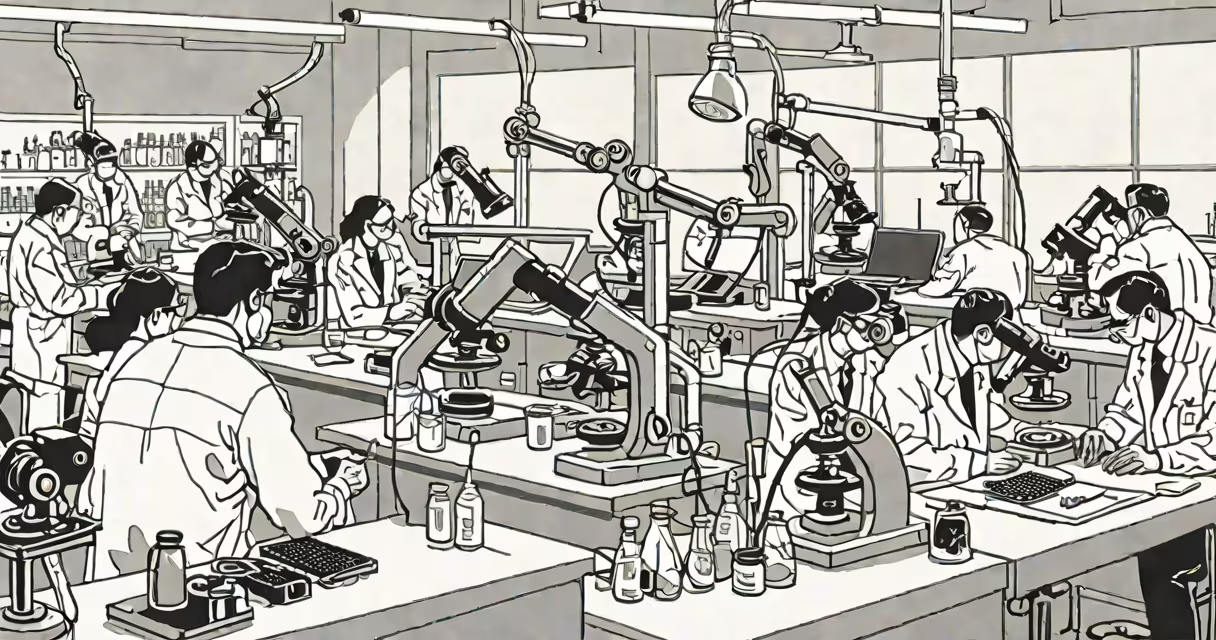
Science and technology refer to systematic study of the natural world through observation and experimentation, paired with the practical application of knowledge to create tools, systems, and processes that solve real-world problems. This dual structure drives discovery, innovation, and societal advancement.
Science begins with questions about how the universe works-why objects fall, how diseases spread, or what makes stars shine. Scientists collect data, test hypotheses, and build theories supported by evidence. Technology applies scientific understanding to design solutions: vaccines, smartphones, renewable energy systems, and artificial intelligence.
The two fields are interdependent. Without science, technology would lack foundation. Without technology, science would struggle to gather data or scale experiments. For example, the Human Genome Project relied on both genetic science and high-performance computing to map human DNA.
Scientific inquiry follows a structured method: observe, hypothesize, experiment, analyze, and conclude. This process ensures findings are reproducible and verifiable. Technology enables this cycle by providing instruments like electron microscopes, particle accelerators, and satellite imaging systems.
When a scientist discovers that a compound inhibits bacterial growth, technology turns that insight into a drug. Pharmaceutical companies use bioreactors, automated synthesis machines, and clinical trial software to develop, test, and distribute antibiotics. The FDA evaluates safety and efficacy using data collected via advanced medical devices.
Consider the development of mRNA vaccines during the COVID-19 pandemic. Scientists identified the spike protein structure of SARS-CoV-2 (science). Engineers then designed lipid nanoparticles to deliver synthetic mRNA into human cells (technology). This collaboration reduced vaccine development time.
Science divides into natural sciences (physics, chemistry, biology), social sciences (psychology, sociology), and formal sciences (mathematics, logic). Technology includes hardware (machines, circuits), software (algorithms, apps), and infrastructure (power grids, transportation networks).
Some technologies emerge directly from scientific breakthroughs. Others evolve incrementally through engineering. For example:
| Type | Origin | Example |
|---|---|---|
| Applied science | Research-driven | CRISPR gene editing |
| Incremental tech | Engineering improvements | Smartphone camera enhancements |
| Disruptive innovation | Unexpected breakthrough | Internet of Things (IoT) |
Not all technology stems from pure science. Some innovations arise from trial and error, cultural needs, or economic demand. The invention of the printing press was driven by religious and educational demands, not a prior theory of information dissemination.
Science is not just facts-it's a process. A common misunderstanding is equating scientific consensus with absolute certainty. Scientific knowledge evolves. Newtonian physics remains useful for everyday engineering, but Einstein's relativity corrected its limits at extreme speeds and masses.
Technology is not inherently good or bad. Nuclear power generates clean energy but poses risks if mismanaged. Artificial intelligence improves diagnostics but can amplify bias if trained on flawed datasets. Ethical oversight is essential.
A key distinction: science seeks truth; technology seeks utility. A physicist may study quantum entanglement for its implications on reality. An engineer may use quantum principles to build faster computers. Both contribute, but their goals differ.
In agriculture, soil science identifies nutrient deficiencies. Precision farming technology uses GPS-guided tractors and sensors to apply fertilizer only where needed. This reduces waste and environmental impact. U.S. Department of Agriculture data shows such methods increased crop yields by 12% while cutting nitrogen runoff by 30% between 2010 and 2020.
Urban planning integrates climate science with smart city technology. Cities like Copenhagen use weather modeling and traffic sensors to adjust street lighting and public transport schedules in real time. These systems reduce emissions and improve commute times.
I once visited a research facility in Nairobi where local scientists collaborated with engineers to develop low-cost water purification units using solar-powered filtration. The project combined microbiological testing (science) with plastic 3D-printed components (technology). Units were deployed in rural villages, cutting waterborne illness rates by 40% within six months.
Science and technology underpin modern healthcare, energy, communication, and food security. The World Health Organization reports that 70% of global disease control efforts rely on scientific surveillance and diagnostic technology. In sub-Saharan Africa, mobile health platforms powered by satellite data have expanded access to maternal care in remote regions.
Nations invest heavily in science and technology to boost economic resilience. South Korea's GDP grew 3.8% annually, fueled by semiconductor exports and government-funded R&D. The U.S. National Science Foundation estimates that every $1 invested in basic research returns $3 in long-term economic value.
Higher education institutions play a central role. The African University of Science and Technology trains researchers in materials science and sustainable engineering. Its graduates work on projects ranging from solar-powered irrigation to AI-based early warning systems for droughts.
Science and technology are not synonymous with progress. Not every new device or theory leads to better outcomes. The proliferation of social media algorithms optimized for engagement contributed to misinformation and mental health decline among teens, according to a 2022 study by the American Psychological Association.
Also, science does not claim to answer moral questions. Climate change is scientifically established, but policy responses depend on political and ethical choices. Technology can enable solutions, but implementation requires public trust and governance.
Understanding what is meant by science and technology clarifies how knowledge and tools shape our lives. From diagnosing illnesses to launching satellites, this pairing defines modern existence.