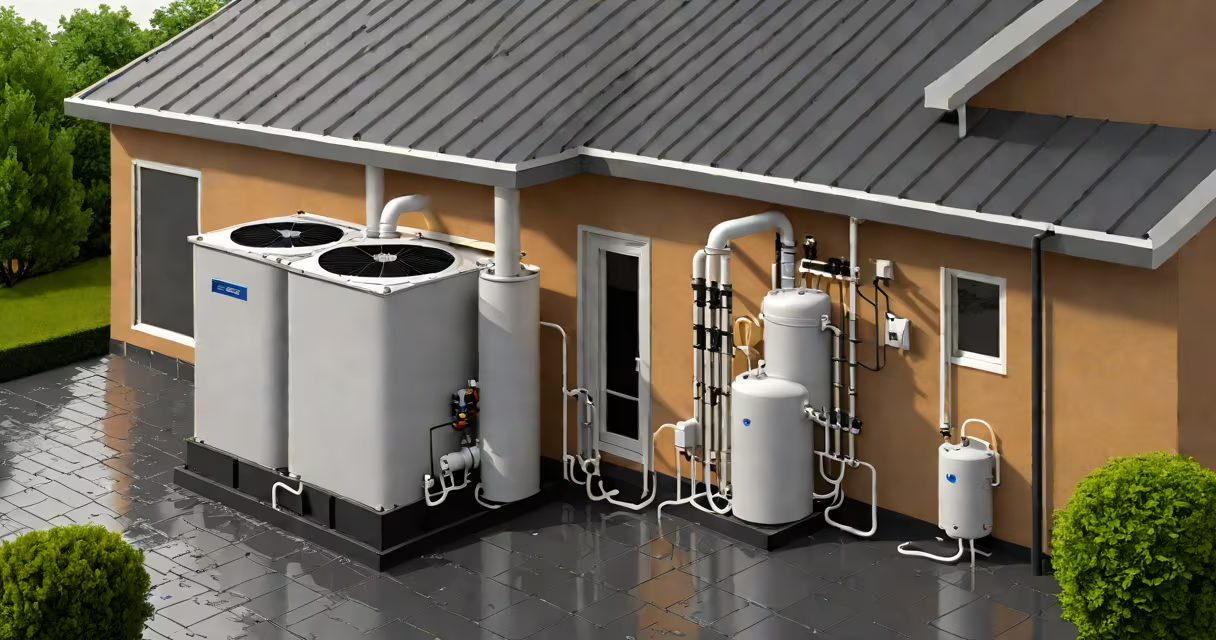
Rain harvesting captures and stores rainfall for later use, typically through rooftop catchment systems connected to storage tanks. It reduces demand on public water supplies and supports water security during dry periods.
Rain harvesting is not new. Ancient civilizations in India, China, and the Middle East used cisterns and terraces to collect rainwater. Today, it's a practical solution for homes, farms, and cities facing water scarcity. The process begins when rain falls on a surface-usually a roof-and flows through gutters into a downspout. A filter removes debris before the water enters a storage container, such as a barrel or underground tank.
Water collected this way can be used for irrigation, flushing toilets, washing clothes, or even drinking after proper treatment. In regions with seasonal rainfall, stored water extends availability beyond the wet season. Systems vary in size and complexity, from small backyard barrels to large-scale infrastructure in schools and industrial zones.
Each system follows a consistent sequence: capture, convey, filter, store, and distribute. The roof acts as the primary catchment surface. Materials like metal, tile, or asphalt shingles are effective, but surfaces must be clean and free of contaminants such as lead paint or bird droppings.
Gutters channel water to downspouts, which direct flow into a first-flush diverter. This device discards the initial runoff-often dirty with dust, pollen, and bird waste-before it reaches the storage tank. After diversion, water passes through a mesh or screen filter to remove leaves and larger particles. The filtered water then enters the storage unit.
Storage tanks are typically made of polyethylene, fiberglass, or concrete. They may be above ground or buried underground. Underground tanks reduce evaporation and heat gain, improving water quality. When water is needed, a pump delivers it to a faucet, hose, or irrigation line. Some systems include overflow outlets to prevent flooding during heavy storms.
Systems differ based on scale, location, and intended use. The most common types are single-tank residential setups, multi-tank commercial installations, and community-scale projects.
| Type | Use Case | Capacity Range | Typical Cost |
|---|---|---|---|
| Residential Barrel System | Irrigation, garden watering | 50-200 gallons | $100-$300 |
| Underground Tank System | Toilet flushing, laundry, outdoor use | 500-5,000 gallons | $1,500-$6,000 |
| Commercial/Industrial System | Facility operations, cooling towers | 10,000+ gallons | $10,000+ |
For example, a typical suburban home in California with a 2,000 sq ft roof can collect about 1,200 gallons of rainwater annually from a 1-inch rainfall event. That's enough to irrigate a medium-sized lawn for several weeks during summer.
Rain harvesting is most common in arid and semi-arid regions. In Australia, where droughts are frequent, over 30% of homes in Perth have rainwater tanks. In Texas, the state government offers rebates for installing rain harvesting systems on homes and businesses.
Urban areas benefit from reduced stormwater runoff, which lowers flood risk and prevents pollution from entering drains. In Portland, Oregon, city ordinances require new developments to manage stormwater on-site-rain harvesting is a compliant method. The city estimates that widespread adoption could reduce sewer overflows by up to 40% during heavy rains.
On farms, rain harvesting supplements irrigation during dry spells. In Kenya, smallholder farmers using rooftop systems saw crop yields increase by 25% during dry seasons. These systems also reduce dependence on expensive diesel pumps and groundwater extraction.
Many assume rain harvesting requires complex engineering or high costs. In reality, basic systems cost less than $300 and can be assembled in a weekend. A 55-gallon barrel with a spigot and mesh cover is sufficient for small gardens.
Another myth is that harvested rainwater is unsafe for human consumption. While untreated rainwater contains microorganisms and pollutants, it can be made safe. The Centers for Disease Control and Prevention (CDC) confirms that properly filtered and disinfected rainwater meets drinking water standards. UV sterilization and carbon filtration are proven methods.
A lesser-known fact: rainwater is naturally soft and low in minerals. This reduces scaling in pipes and appliances. In areas with hard water, rain harvesting can extend the life of water heaters and dishwashers by up to 30%, according to a 2021 study by the Water Research Foundation.
In 2022, I installed a 1,000-gallon underground tank at my home in Austin, Texas. The system included a first-flush diverter, a 10-micron filter, and a pressure pump. Over one year, it collected 1,800 gallons during the rainy season. I used it exclusively for field irrigation and toilet flushing. My water bill dropped by 37% compared to the previous year. The system required minimal maintenance-just cleaning the filter twice a year.
Rain harvesting is often confused with stormwater management or greywater reuse. Stormwater systems handle runoff from streets and parking lots, usually directing it to sewers or retention ponds. They're designed for flood control, not water reuse.
Greywater systems recycle water from sinks, showers, and laundry. This water contains soap and pathogens, making it unsuitable for drinking or direct plant irrigation. Rain harvesting uses fresh, uncontaminated water from the sky.
While both practices conserve water, rain harvesting is more predictable. Rainfall patterns are measurable and seasonal. Greywater volume depends on household habits and varies daily. Rain harvesting also avoids the need for chemical disinfection, unlike greywater systems.