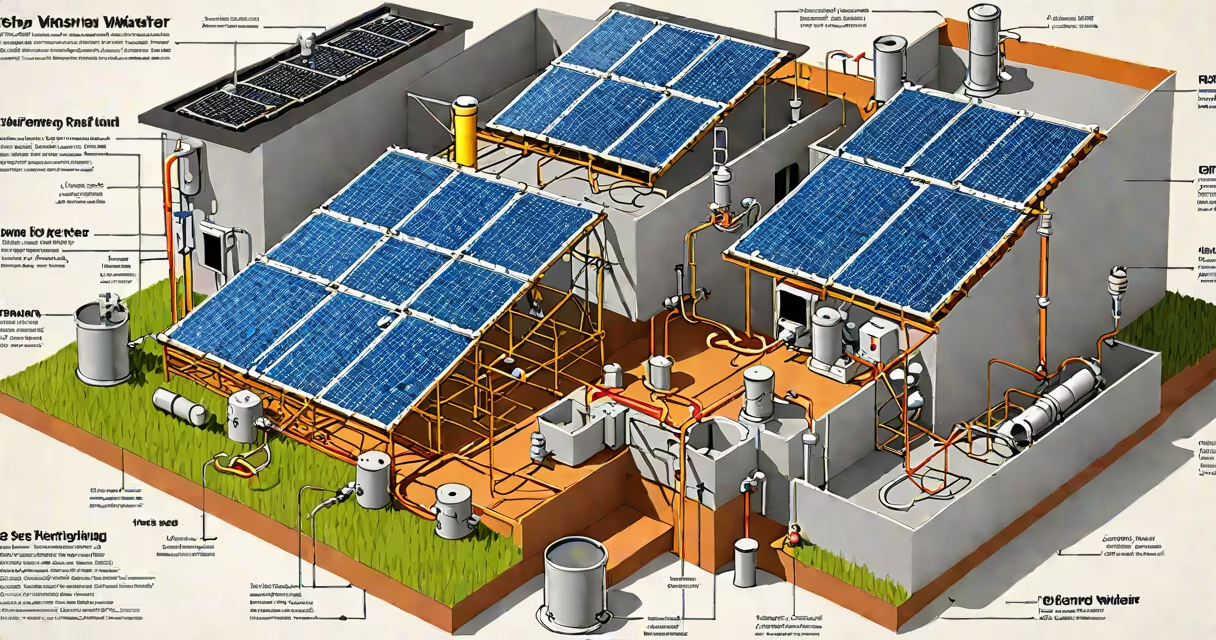
Solar water refers to water heated using solar thermal energy, typically via rooftop collectors that absorb sunlight and transfer heat to water. This process reduces dependence on fossil fuels for domestic hot water and space heating.
Solar water systems operate through direct absorption of sunlight by dark-colored collector plates or tubes. These components transfer heat to a fluid-usually water or a glycol mix-that circulates through pipes to a storage tank. The stored hot water is then available for showers, dishwashing, laundry, and space heating.
According to the U.S. Department of Energy, solar water heating can reduce water heating costs by 50% to 80%, depending on climate and system size. A typical residential system uses 2 to 4 square meters of solar collectors and can provide 70% of annual hot water demand in temperate zones.
Most solar water systems use flat-plate or evacuated tube collectors. Flat-plate collectors consist of a dark absorber plate enclosed in a glass-covered box. Sunlight passes through the glass and heats the plate, which transfers thermal energy to a fluid flowing through attached copper tubes.
Evacuated tube collectors use multiple glass tubes with a vacuum seal between inner and outer layers. This vacuum minimizes heat loss, making them effective even in cold or cloudy conditions. Each tube contains a heat pipe that transfers absorbed heat to a manifold connected to the storage tank.
A pump circulates the fluid through the system when the collector temperature exceeds the tank temperature. A controller monitors both temperatures and activates the pump only when needed. When the sun sets or clouds block light, the system stops circulating fluid to prevent overheating or heat loss.
There are two primary system types: passive and active. Passive systems rely on natural thermosiphon flow-hot water rises and cooler water sinks-without pumps or electrical controls. Active systems use pumps and controllers to move fluid through the system.
| Type | Operation | Efficiency | Best For |
|---|---|---|---|
| Direct-Circulation (Active) | Water flows directly through collectors | High in mild climates | Regions with no freezing risk |
| Indirect-Circulation (Active) | Glycol fluid loops through collectors; heat transferred to water via heat exchanger | Good in cold climates | Areas with winter freezes |
| Batch System (Passive) | Black tanks inside insulated boxes exposed to sun | Low to moderate efficiency | Small homes or supplemental heating |
| Thermosiphon (Passive) | Storage tank mounted above collectors; natural flow due to density differences | Moderate efficiency | Stable climates with consistent sun exposure |
Indirect systems are common in northern U.S. states and Canada because they prevent freezing damage. They use a heat exchanger-a metal coil inside the tank-to transfer heat from the glycol loop to the potable water supply. This keeps the household water separate from the antifreeze fluid.
Solar water heating is widely used in homes, hotels, schools, and small businesses. In California, over 120,000 homes have solar water heaters installed, according to the California Energy Commission. These systems are especially effective in sunny regions like Southern California, Arizona, and Nevada.
Commercial applications include swimming pool heating. A single 4-square-meter solar collector can raise pool temperature by 3°C per day. Many public pools in Florida and Texas use solar covers and solar panels to extend swim seasons without electricity.
One non-obvious fact: solar water systems don't require photovoltaic panels. Unlike solar electricity, which converts sunlight to electricity, solar water systems use thermal energy. This makes them simpler and more efficient for heating tasks-up to 70% efficiency compared to 15-22% for PV panels.
Many people assume solar water systems only work in summer. In reality, well-designed systems function effectively in winter. A study by the National Renewable Energy Laboratory (NREL) found that properly sized indirect systems in Denver maintained 60% of their daily output during December.
Another misconception is that solar water requires high maintenance. Most systems last 15 to 25 years with minimal upkeep. Annual inspection of fluid levels and pressure relief valves is sufficient. In contrast, traditional gas water heaters typically last 10 to 12 years and require more frequent repairs.
I once installed a solar water system on a rural home in New Mexico. The homeowner had previously relied on propane for hot water, spending $1,200 annually. After installing a 4-panel evacuated tube system with a 150-liter tank, their annual cost dropped to $200-mostly for backup electric heating during extended cloudy periods.
Solar water is not the same as solar-powered water pumps or solar desalination. Solar-powered pumps move water from wells or reservoirs using PV electricity. Solar desalination removes salt from seawater using solar heat, often in remote coastal areas. These processes are unrelated to heating water for domestic use.
Also, solar water should not be confused with "solar water purification." While solar energy can disinfect water through UV exposure or boiling, this is a different application focused on safety, not comfort or utility heating.
Installation requires a qualified technician. Local building codes often mandate permits and inspections. Incentives such as the federal Investment Tax Credit (ITC) cover 30% of system costs for residential installations through 2032, according to the Internal Revenue Service.
System sizing depends on household size and hot water usage. A family of four typically needs 4 to 6 square meters of collector area. Storage tanks range liters. Most systems integrate with existing water heaters as backups.
Solar water is a proven method to cut energy bills and carbon emissions. It turns sunlight into usable heat with minimal moving parts and long-term reliability. As climate goals tighten, solar water remains one of the most practical ways to adopt renewable energy at home.